
Learning how to make a small apartment more accessible for seniors doesn’t mean knocking down walls or spending thousands on renovations. A few sensible changes can make everyday activities safer and easier, even when floor space is limited.
This guide is for older adults, caregivers, and families who want practical, affordable improvements based on established accessibility and fall-prevention guidance. I’ve focused on small apartments, including rental properties where permanent modifications aren’t always possible.
Quick Comparison of Small Apartment Accessibility Improvements
| Improvement | Best for | Space needed | Cost level |
|---|---|---|---|
| Motion sensor lights | Nighttime visibility | Minimal | Budget |
| Toilet safety rails | Safer toilet transfers | Compact | Budget to mid-range |
| Compact shower chair | Seated bathing | Small shower area | Mid-range |
| Wall-mounted grab bars | Bathroom stability | Minimal floor space | Budget to mid-range |
| Compact walker | Indoor walking support | Clear walking routes | Mid-range |
| Accessible cabinet organizers | Easier storage access | Existing cupboards | Budget |
| Threshold ramp | Small doorway transitions | Depends on doorway | Budget to mid-range |
| Supportive armchair | Easier sitting and standing | Chair footprint | Mid-range |
For most small apartments, I’d start with clear walking routes, bathroom safety, and better lighting before buying additional equipment.
Why Small Apartments Can Be Challenging for Seniors
Small apartments have advantages. There’s less cleaning, fewer rooms to maintain, and most everyday essentials are close together.
Unfortunately, limited floor space can create accessibility problems for older adults with reduced mobility, poor balance, or difficulty bending and reaching.
A narrow hallway might be manageable for someone walking independently but awkward for a person using a walker. A compact bathroom may have enough space for a toilet and shower but very little room for safe transfers.
Common accessibility challenges include narrow doorways, awkward furniture arrangements, limited storage, slippery bathroom floors, poor lighting, and raised thresholds.
One mistake I’d avoid is assuming that buying more accessibility equipment automatically makes a small apartment safer.
Sometimes the opposite happens.
An oversized shower chair, bulky recliner, or wide mobility aid can make a cramped room harder to use.
The better approach is to assess how the person moves around the apartment before deciding what needs changing.
15 Ways to Make a Small Apartment More Accessible for Seniors
These 15 practical improvements focus on making everyday activities easier while keeping as much usable floor space as possible.
1. Create Clear Walking Paths
Start by checking the routes between the bedroom, bathroom, kitchen, and living room.
These are the areas an older adult will use most frequently.
Move unnecessary furniture away from doorways and remove decorative items from the floor.
Pay particular attention to narrow passages beside beds, sofas, and kitchen cabinets.
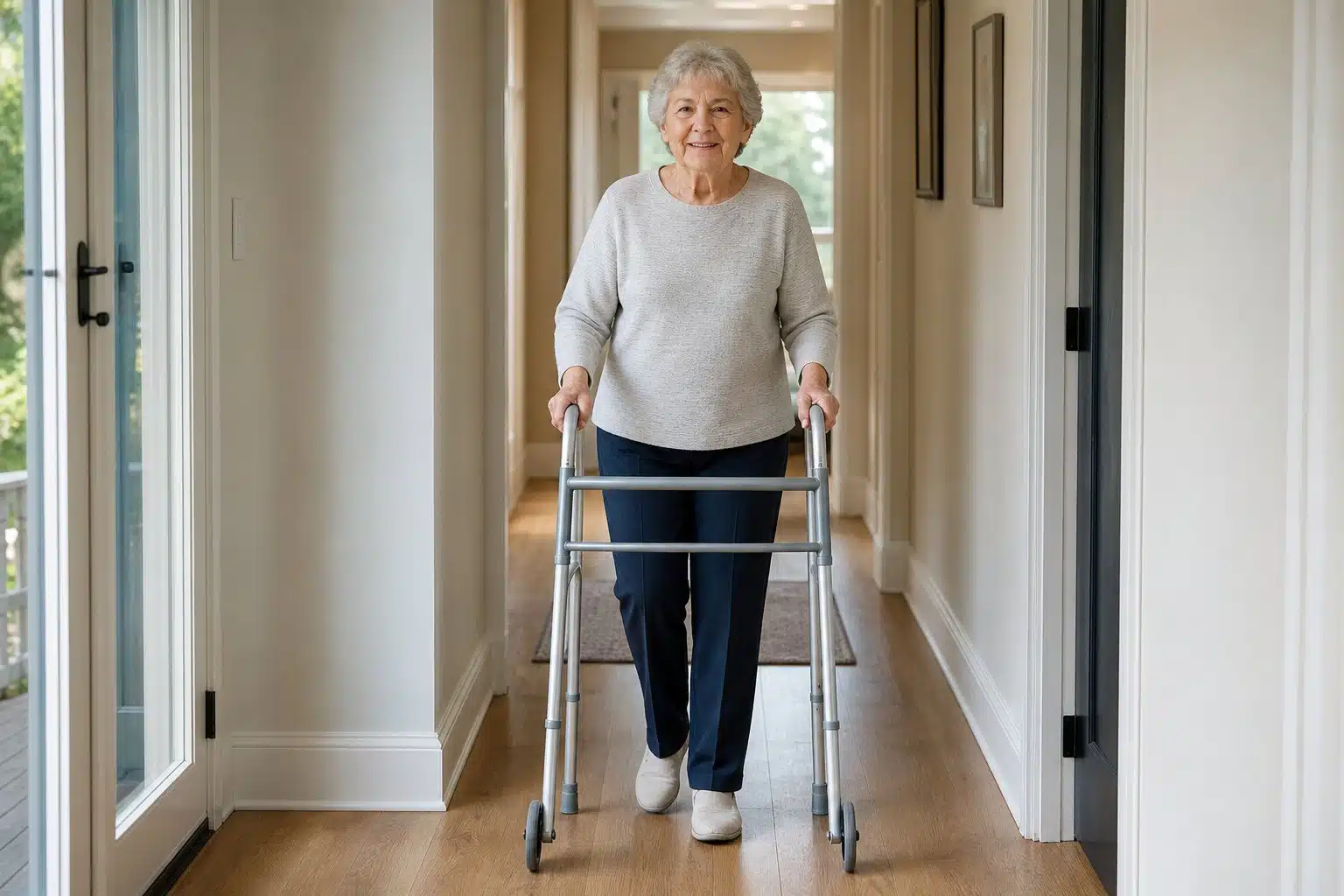
If someone uses a walker, make sure they can move along each route without turning sideways or lifting the walker around obstacles.
Wheelchair users may need additional clearance for turning and approaching furniture.
The ADA Accessibility Standards provide useful reference measurements, although individual needs and residential requirements vary.
For example, accessible routes commonly require a minimum clear width of 36 inches under ADA standards, subject to specific exceptions.
I’d measure the narrowest parts of the apartment before purchasing any mobility equipment.
2. Rearrange Furniture for Easier Movement
A senior-friendly living room layout should make sitting, standing, and walking as straightforward as possible.
You don’t necessarily need new furniture.
Moving the sofa closer to a wall, removing an unnecessary side table, or repositioning an armchair may create valuable walking space.
Avoid low coffee tables positioned directly in walking routes.
I’d also avoid lightweight furniture that slides when someone grabs it for support.
Chairs should have stable frames and supportive armrests.
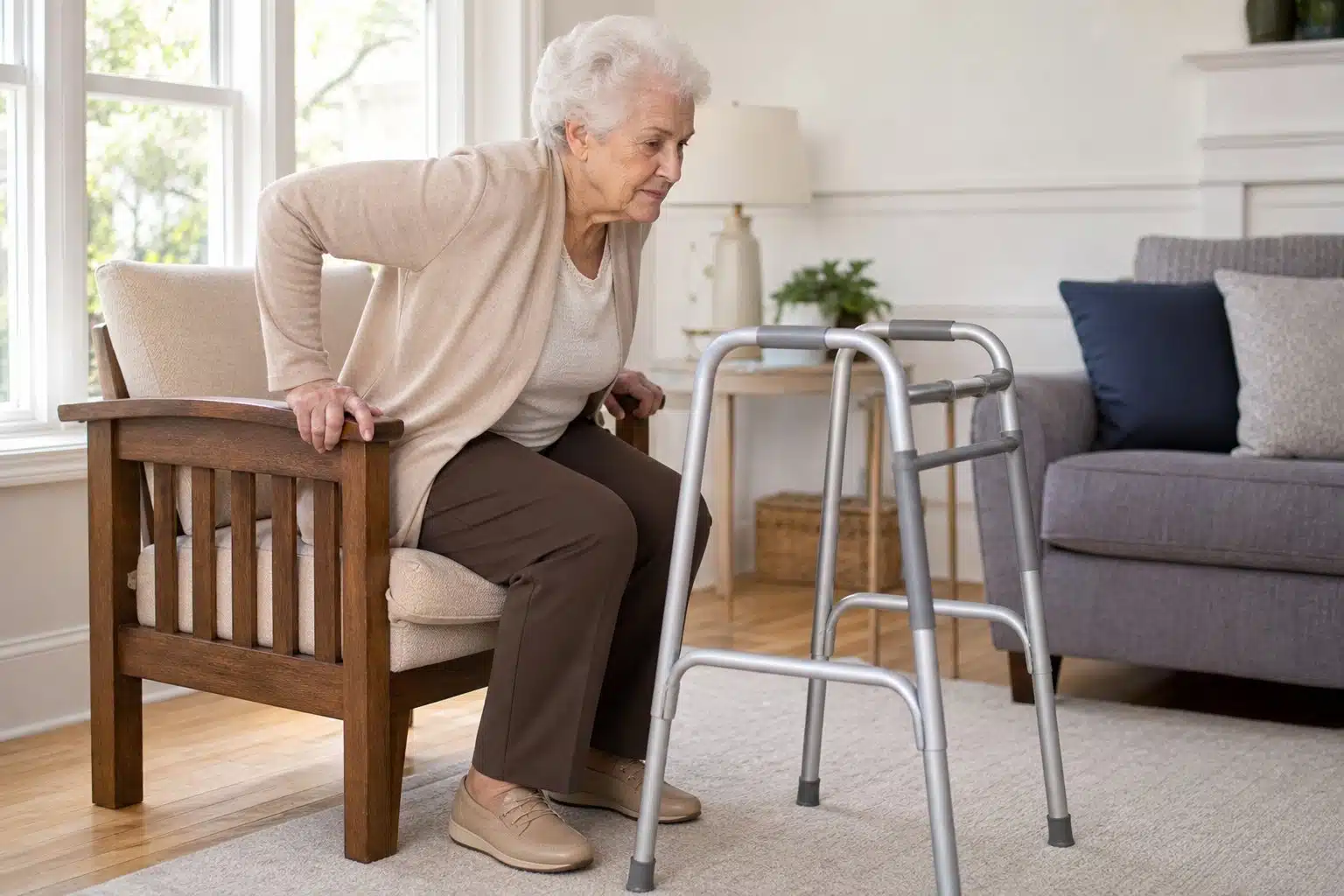
Deep, soft sofas may be comfortable for watching television but difficult for someone with weak leg muscles to get out of.
If standing from a chair has become difficult, an occupational therapist can recommend suitable seating and transfer techniques.
3. Improve Bathroom Accessibility
Bathrooms deserve particular attention because wet surfaces, restricted movement, and awkward transfers can increase fall risks.
Small bathroom accessibility for seniors often starts with carefully selected equipment.
Useful improvements include properly installed grab bars, a compact shower chair, a handheld showerhead, and suitable toilet safety rails.
Avoid relying on towel rails for support.
A towel rail is designed to hold towels, not someone’s body weight.
Permanent grab bars should be securely fixed to appropriate structural supports or approved fixing systems.
Suction grab bars shouldn’t replace properly installed support bars for weight-bearing transfers.
For renters, permanent installation may require landlord approval.
If the bathroom is particularly cramped, measure the shower and toilet areas before buying equipment.
A shower chair with wide armrests may offer useful support but leave too little room for safe movement.
For more advice, read How to Make a Small Bathroom Accessible for Seniors.
4. Make the Kitchen Easier to Use
A small kitchen can become difficult to manage when bending, reaching, or standing for long periods becomes uncomfortable.
I’d start by reorganizing storage.
Move frequently used plates, mugs, cooking utensils, and food items to shelves between approximately waist and shoulder height.
Keep heavy cookware in accessible lower drawers rather than overhead cabinets.
Pull-out cabinet organizers can make deep cupboards easier to use.
Easy-grip utensils may also help seniors with reduced hand strength.
Avoid storing everyday items above the refrigerator or on high shelves.
Using a step stool to reach a heavy saucepan is an unnecessary risk for someone with balance difficulties.
For seniors who tire easily, a suitable seated food preparation area may help.
The chair must be stable, and the work surface should be at a comfortable height.
5. Choose Space-Saving Mobility Aids
Not every walker works well inside a small apartment.
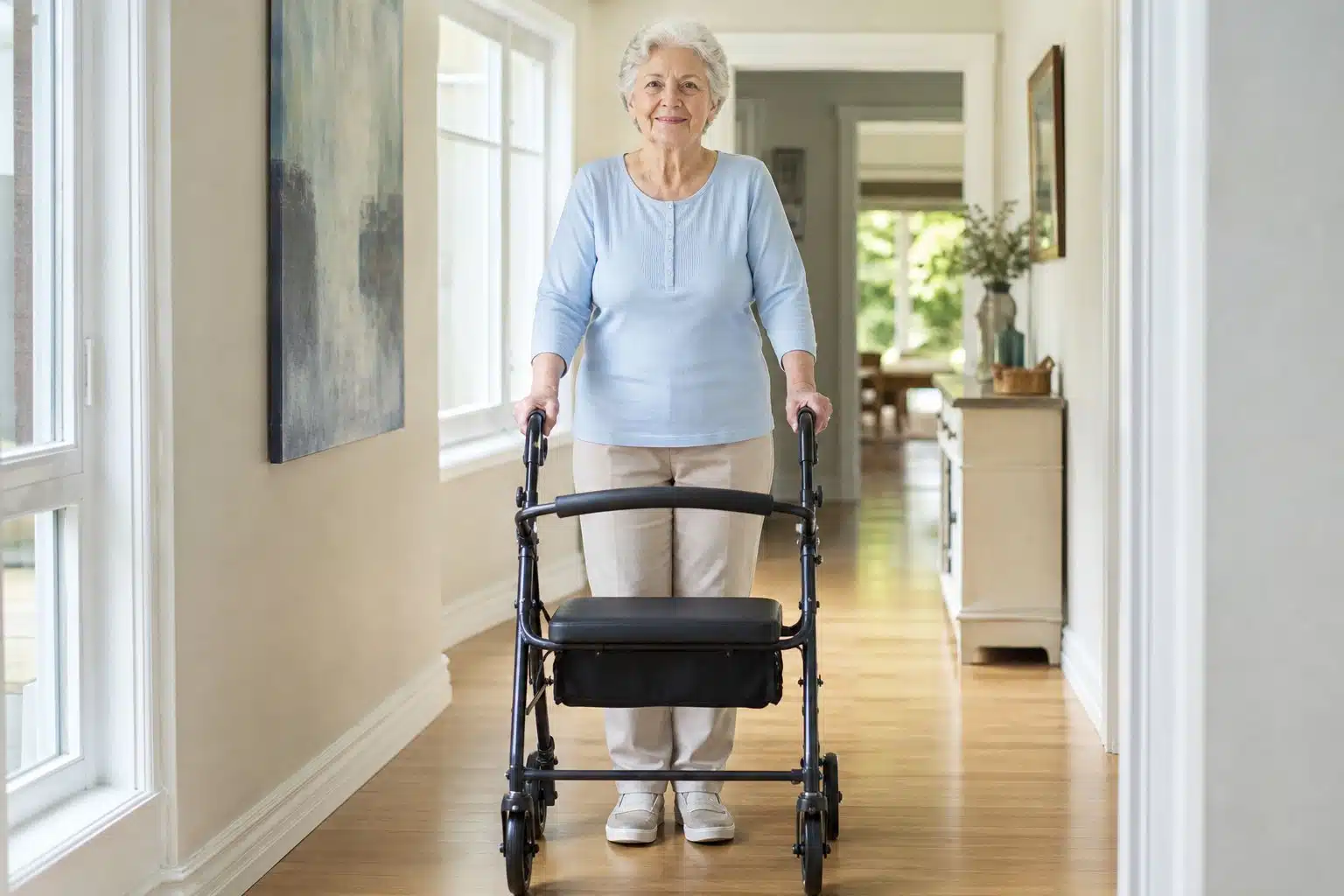
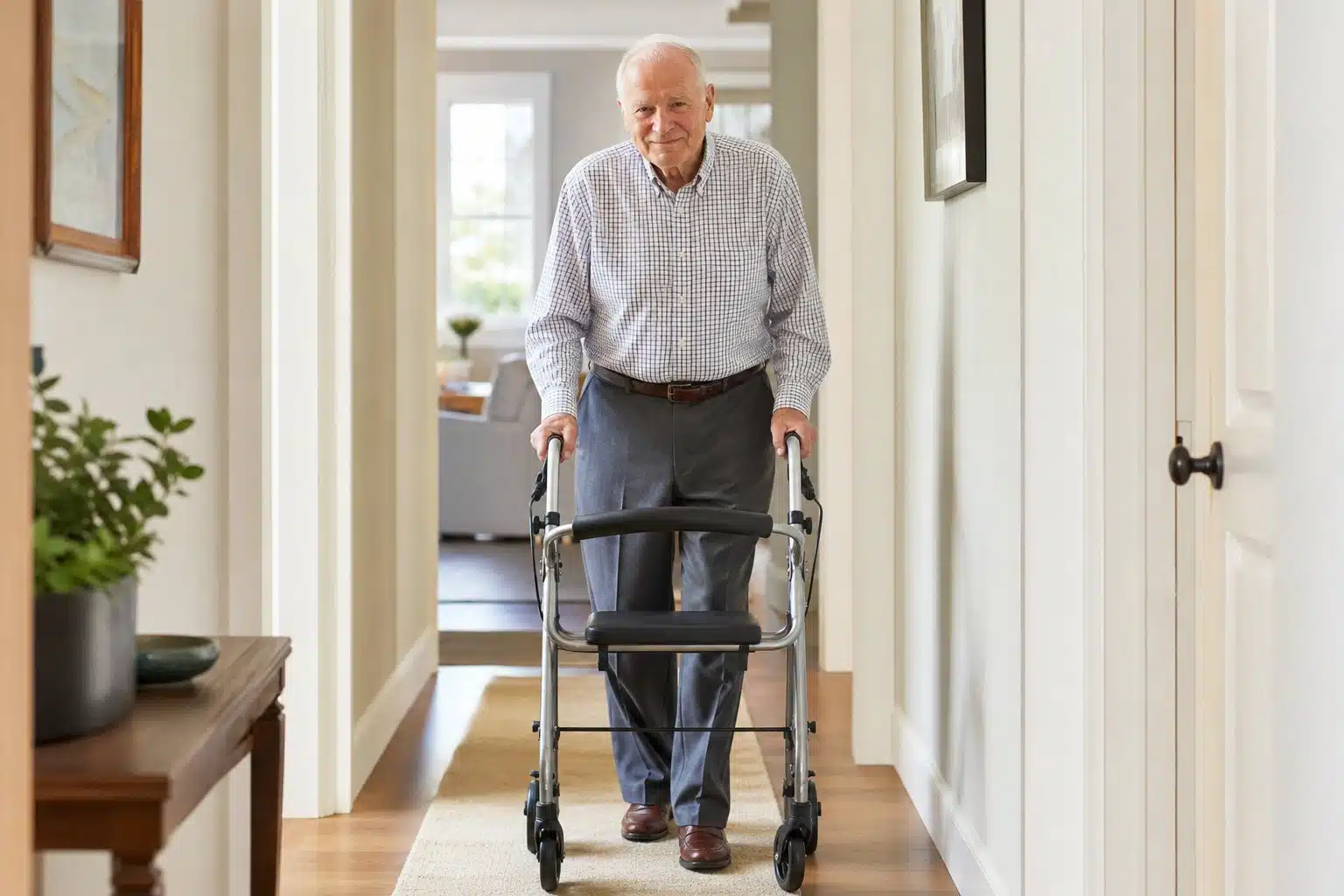
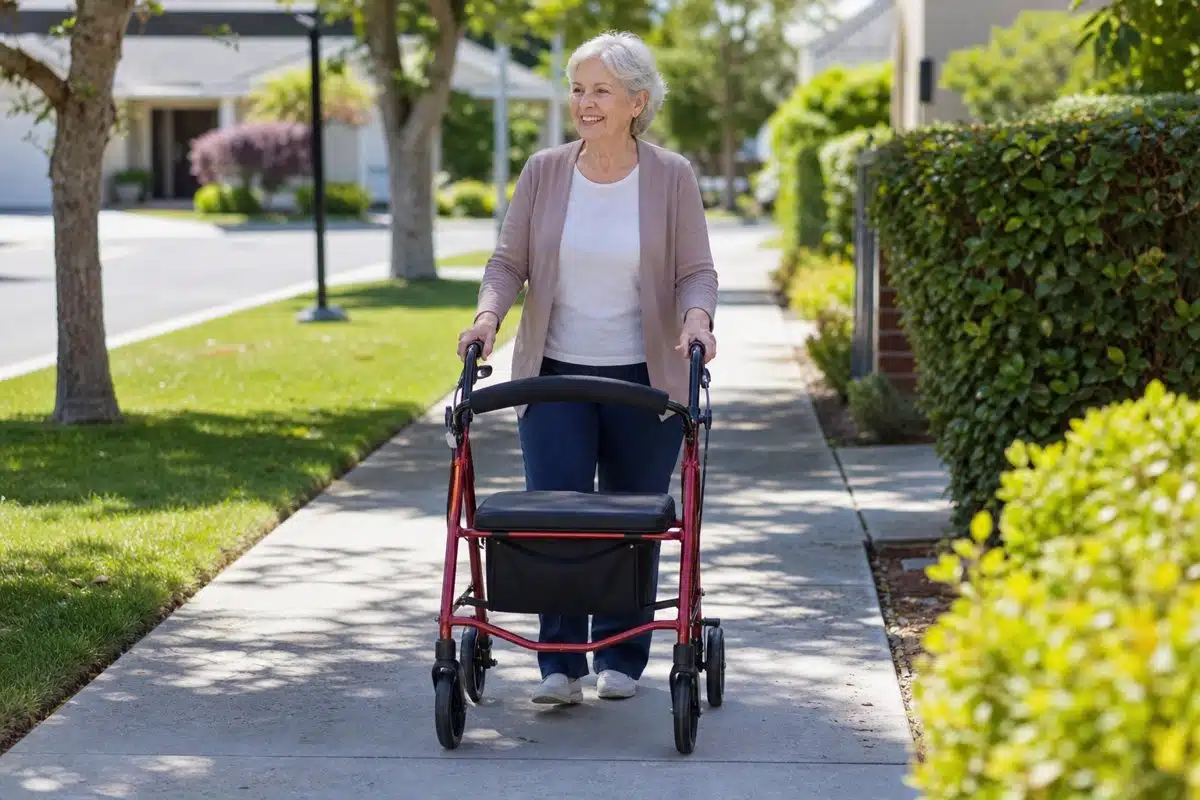
Some rollators have wide frames, large wheels, and storage baskets that are useful outdoors but awkward around narrow furniture.
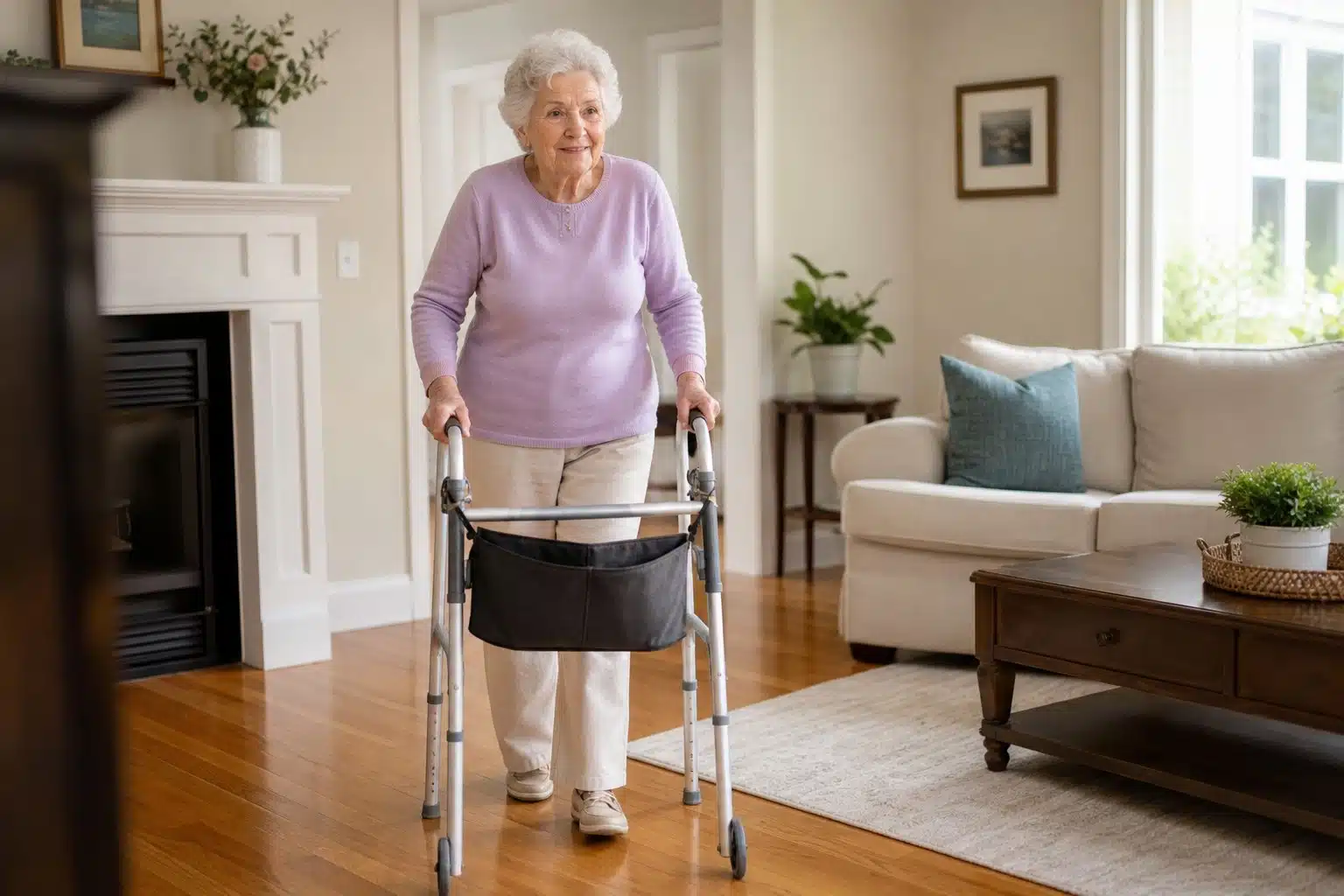
A compact standard walker may be more suitable for some indoor environments.
A two-wheel walker may help someone who needs walking support but finds lifting a standard walker difficult.
The correct choice depends on balance, strength, walking ability, and the apartment layout.
Before buying a walker, measure the narrowest doorway, the space between furniture, the bathroom entrance, and the turning area beside the bed.
Don’t choose a walker simply because the manufacturer describes it as compact.
The person still needs enough space to use the equipment correctly.
An occupational or physical therapist can help identify the most suitable walking aid.
Read [INTERNAL LINK: How to Choose the Right Walker for an Elderly Person] for more guidance.
6. Improve Bedroom Safety
Bedroom accessibility becomes particularly important during nighttime bathroom visits.
Keep the route between the bed and bedroom door free from furniture, shoes, and electrical cables.
Position a bedside lamp or accessible light switch within easy reach.
Motion sensor nightlights can provide additional visibility without requiring someone to search for a switch.
Bed height matters too.
A bed that’s too low may make standing difficult, while a bed that’s too high can make sitting and transferring unsafe.
As a general guide, the person should be able to sit near the edge of the bed with their feet supported on the floor.
Individual mobility needs may require a different arrangement.
I’d be cautious about using furniture risers without checking stability and transfer requirements.
An adjustable bed may help some seniors, but these beds require sufficient floor space and may be expensive.
Professional advice is sensible when someone regularly struggles to get in or out of bed.
7. Remove Loose Rugs and Trip Hazards
Loose rugs are among the first things I’d remove from a small apartment.
They can curl at the edges, slide across smooth flooring, or catch the feet of a walker.
Electrical cables create similar problems.
Route cables behind furniture or along walls using suitable cable-management products.
Avoid extension leads crossing walking routes.
Check flooring transitions too.
An uneven edge between carpet and hard flooring may be barely noticeable to someone walking confidently but troublesome for a person who shuffles or uses a mobility aid.
For apartment fall prevention, keeping floors clear is usually more useful than adding extra accessories.
The CDC’s Older Adult Fall Prevention resources provide further guidance on reducing fall risks.
8. Improve Lighting Throughout the Apartment
Good lighting can make everyday movement easier.
Older adults may need brighter, more evenly distributed lighting to see obstacles clearly.
Focus on the entrance, hallway, bathroom, kitchen, and route between the bedroom and toilet.
Useful options include plug-in motion sensor nightlights, battery-operated cupboard lights, suitable LED bulbs, and under-cabinet kitchen lighting.
Choose lighting that reduces dark areas without producing uncomfortable glare.
I’d avoid rechargeable lights that require cables to stretch across walking routes.
For renters, battery-operated or plug-in lighting is often more practical than installing permanent electrical fixtures.
9. Make Doors Easier to Open
Heavy doors and difficult handles can create daily frustration.
Lever-style handles are generally easier to operate than round knobs for someone with arthritis or reduced grip strength.
Check whether doors swing into important walking or turning spaces.
A bathroom door that opens inward may make access difficult if someone falls behind it.
Changing the direction of a door or installing a sliding door requires careful assessment and, in rental properties, landlord approval.
Never remove or alter fire-rated apartment entrance doors without appropriate professional advice.
Their closing mechanisms and seals may be essential for building safety.
10. Reduce Problems With Doorway Thresholds
Even a small raised threshold can become an obstacle for walker and wheelchair users.
A suitable threshold ramp may make movement easier where a height difference exists.
But not every ramp works safely with every doorway.
The correct solution depends on the height difference, available floor space, mobility equipment, and door operation.
A ramp that’s too steep can make wheelchair movement dangerous.
Never install a ramp that obstructs a door or emergency exit.
For wheelchair users, an accessibility professional should assess the doorway before a ramp is selected.
11. Use Accessible Storage Solutions
Small apartments often rely on high shelves and tightly packed cupboards.
Unfortunately, these arrangements aren’t always suitable for seniors with limited mobility.
Keep everyday items in easily reached locations.
Pull-out organizers can help with kitchen cabinets, while shallow drawers make smaller items easier to find.
Choose storage units that are stable and properly secured.
Avoid freestanding shelving that might tip if someone accidentally grabs it for support.
Wall-mounted storage can free up floor space, although installation may require landlord permission.
The aim is to reduce unnecessary bending, stretching, and climbing.
12. Choose Supportive, Compact Seating
A comfortable chair can make independent living easier.
But oversized recliners aren’t always suitable for small apartments.
Look for a chair with a stable frame, supportive armrests, and a seat height appropriate for the person using it.
The user should be able to sit down and stand up without excessive effort.
A lift chair may help some older adults who struggle to rise.
These chairs need enough clearance to operate safely.
Measure the available space with the chair fully reclined or raised, rather than relying only on its upright dimensions.
Also check that the power cable won’t cross a walking route.
I’d prioritize safe transfers and proper fit over extra features.
13. Keep Frequently Used Items Within Reach
Think about the things an older adult uses every day.
Glasses, medications, telephone, television remote, water bottle, and reading materials should have predictable storage locations.
A bedside organizer or small table can help.
In the living room, keep essential items close to the usual chair.
This reduces unnecessary trips across the apartment and discourages awkward reaching from seated positions.
For medications, follow storage instructions and keep medicines secure where children or visitors might access them.
14. Make the Entrance Safer
Apartment entrances often have limited space for coats, shoes, bags, and mobility equipment.
Keep this area clear.
Use a suitable wall-mounted coat rack rather than a freestanding rack that takes up valuable floor space.
Provide a stable place to sit when putting on shoes if there’s enough room.
Check that the entrance has adequate lighting and that the door is easy to unlock and operate.
If the building has shared corridors, don’t store walkers, scooters, or furniture where they obstruct emergency exits.
For seniors who struggle with keys, an accessible locking system may help.
Any changes must comply with building rules and emergency access requirements.
15. Add Simple Emergency and Communication Features
Independent living also means being able to contact someone when assistance is needed.
A charged mobile phone should be accessible throughout the apartment.
For seniors at greater risk of falling, a personal emergency response system may provide additional reassurance.
Some systems include wearable buttons or automatic fall-detection features.
Fall detection isn’t completely reliable, so users should understand its limitations.
Smart speakers may also help with hands-free calls, reminders, and lighting controls.
I’d avoid filling a small apartment with unnecessary gadgets.
Choose technology the person understands and feels comfortable using.
Accessibility Improvements for Seniors Who Rent
Renting introduces an extra challenge.
You may know exactly what needs changing but have limited permission to alter walls, doors, plumbing, or flooring.
Fortunately, many renter-friendly home modifications for seniors don’t require major construction.
Accessibility Changes Without Remodeling
Start with furniture arrangements, better lighting, accessible storage, and removing trip hazards.
Portable shower equipment and compatible toilet safety frames may also be suitable.
Always follow manufacturer instructions and confirm that equipment fits the existing fixtures.
Avoid temporary products that rely on weak attachments for weight-bearing support.
Suction grab bars, for example, shouldn’t be treated as substitutes for securely installed structural grab bars.
Modifications That May Need Landlord Approval
More substantial improvements include installing permanent grab bars, widening doorways, altering bathroom fixtures, replacing flooring, and installing permanent ramps.
In the United States, the Fair Housing Act may provide rights to reasonable accommodations and reasonable modifications for eligible people with disabilities.
The rules differ depending on the property, housing program, and individual circumstances.
The U.S. Department of Housing and Urban Development provides information about these rights.
Ask for written permission where required and clarify who will pay for installation and any restoration work.
Making a Small Apartment Accessible for Walker Users
A small apartment layout for walker users needs careful planning.
The main concern isn’t simply whether the walker fits through a doorway.
The person must also be able to turn, approach furniture, and use the bathroom safely.
Measure the Actual Walking Routes
Start with the narrowest passage.
Measure the clear width between furniture, door frames, and other obstacles.
Compare those measurements with the walker’s overall dimensions.
Allow additional room for hands, movement, and turning.
A walker that technically fits through a gap may still be difficult to use comfortably.
Standard Walker or Rollator?
Standard walkers provide a different type of support from four-wheel rollators.
A standard walker generally requires lifting or controlled advancement, depending on the model.
Rollators roll continuously and usually include hand brakes.
For some users, a rollator is easier to move. For others, its wheels and braking requirements make it less suitable.
An occupational or physical therapist can recommend the appropriate equipment based on mobility needs.
Read [INTERNAL LINK: Rollator vs. Standard Walker: Which Is Better for Seniors?] before deciding.
Can a Small Apartment Be Wheelchair Accessible?
Yes, some small apartments can accommodate wheelchair users.
But available floor area alone doesn’t determine accessibility.
Doorway widths, turning space, bathroom arrangements, kitchen access, and building entrances all matter.
Check Doorways and Turning Space
The ADA Standards use a 32-inch minimum clear doorway opening in many accessible settings.
They also include a 60-inch diameter circular turning space as one recognized wheelchair turning configuration.
These measurements are useful references, but they don’t mean every residential apartment must meet the same specifications.
Different wheelchair types and individual needs can require more space.
Think Beyond the Apartment Door
An accessible apartment isn’t particularly useful if the building entrance has unavoidable stairs.
Check step-free building access, elevator availability and dimensions, hallway widths, accessible parking or transportation access, and emergency evacuation arrangements.
For a wheelchair user, a professional accessibility assessment is sensible before committing to major modifications.
Affordable Accessibility Products for Small Apartments
Buying the right equipment can help, but I’d avoid purchasing everything at once.
Start with the problems that affect daily movement and safety.
Motion Sensor Nightlights
Motion sensor nightlights are useful for seniors who make nighttime bathroom visits.
Compact models can illuminate hallways without requiring permanent wiring.
Look for suitable brightness, reliable activation, and safe placement.
I’d avoid models that need charging cables stretched across the floor.
Toilet Safety Rails
Toilet safety rails can help seniors who need additional support when sitting down or standing up.
Some models attach to existing toilet fittings, while others stand around the toilet.
Check compatibility, floor space, stability, and the manufacturer’s weight capacity.
A compact model may work better than a wide freestanding frame in a small bathroom.
Compact Shower Chairs
Compact shower chairs can help seniors who have difficulty standing throughout a shower.
Choose a chair that fits inside the shower while leaving adequate room for safe transfers.
Look for stable, non-slip feet, suitable weight capacity, and an appropriate seat height.
Armrests and backrests may help some users but can make the chair wider.
Motion-Activated Cabinet Lighting
Battery-operated cabinet lights can improve visibility without taking up storage space.
They’re particularly useful in deep kitchen cabinets and wardrobes.
Choose models with straightforward controls and suitable battery access.
Threshold Ramps
Threshold ramps can help with small changes in floor height that interfere with walker or wheelchair movement.
Choose a ramp based on the actual threshold and mobility equipment.
Professional advice is appropriate where wheelchair access, steep gradients, or doorway safety is involved.
Furniture Risers
Furniture risers may help with selected furniture that’s too low, but only after confirming suitability.
They aren’t appropriate for every bed or chair.
Risers must be compatible, stable, and installed according to the manufacturer’s instructions.
I’d avoid them if the furniture rocks, has unsuitable legs, or is used for difficult transfers without professional assessment.
Which Accessibility Improvements Should You Prioritize?
Not every apartment needs the same changes.
I’d prioritize improvements based on the person’s daily difficulties rather than buying equipment simply because it’s marketed to seniors.
For Seniors Living Independently
Start with clear floors, accessible storage, reliable lighting, and safer bathroom arrangements.
These improvements often require little floor space.
For Seniors Using a Walker
Focus on walking routes, doorway clearance, stable seating, and safe turning space.
Choose mobility equipment based on a professional assessment rather than size alone.
For Seniors With Limited Mobility
Bathroom transfers, bed access, and supportive seating may be the most pressing concerns.
An occupational therapist can assess which equipment will make everyday activities safer.
For Renters on a Tight Budget
Start with rearranging furniture, removing loose rugs, moving essential items to reachable shelves, and improving lighting.
These changes usually involve little or no structural work.
Small Apartment Accessibility Checklist
Use this checklist to identify areas that need attention.
| Area | Accessibility check |
|---|---|
| Entrance | Clear route with suitable lighting |
| Hallway | No loose rugs or trailing cables |
| Living room | Stable seating and clear walking space |
| Bedroom | Safe bed transfers and reachable lighting |
| Bathroom | Suitable grab bars and safe bathing equipment |
| Kitchen | Frequently used items within easy reach |
| Doorways | Adequate clearance for mobility equipment |
| Flooring | Even, secure surfaces without loose edges |
| Storage | No routine need to climb or overreach |
| Emergency access | Telephone or alert device within reach |
| Building access | Safe entry, exit, and evacuation arrangements |
Walk through the apartment during the day and again after dark.
You may notice different problems depending on lighting and daily routines.
For a broader assessment, see [INTERNAL LINK: Home Safety Checklist for Seniors].
Frequently Asked Questions
What Is the Cheapest Way to Make a Small Apartment Safer for Seniors?
Start by removing loose rugs, clearing walking routes, improving lighting, and moving frequently used items to reachable shelves.
Many of these changes cost little or nothing and address common household hazards.
Can You Make a Rental Apartment Accessible Without Remodeling?
Yes. Furniture rearrangement, portable lighting, accessible storage, and certain compatible bathroom aids can improve accessibility without major building work.
Permanent changes such as grab bars and doorway alterations may require landlord approval.
What Is the Best Walker for a Small Apartment?
The best walker depends on the person’s balance, strength, walking pattern, and available space.
A compact standard or two-wheel walker may suit some apartments, but a physical therapist should help determine the safest option.
How Much Space Does a Wheelchair Need in an Apartment?
Many accessible design standards reference a 32-inch minimum clear doorway opening and a 60-inch circular turning space.
These are planning references rather than universal requirements for every apartment, and actual needs depend on the wheelchair and user.
Are Suction Grab Bars Safe for Elderly Adults?
Suction grab bars may provide a temporary handhold on compatible surfaces, but they can lose attachment and shouldn’t be relied upon for weight-bearing support or fall prevention.
Properly installed structural grab bars are the safer choice for transfers and balance support.
Making a Small Apartment Work for Independent Living
A small apartment doesn’t automatically mean giving up independence.
The most useful changes are often straightforward. Remove obstacles, improve visibility, make essential items easier to reach, and choose mobility equipment that suits the available space.
I’d start with the bathroom and the main walking routes, then assess the bedroom and kitchen.
Make one improvement at a time and check whether daily activities become easier.
For seniors with significant mobility limitations, repeated falls, or difficulty transferring between surfaces, an occupational therapist can help identify safer solutions.
The goal is a home that works for the person living there, without filling every spare corner with equipment.