
Walking with a rollator, step by step
Learning to walk with a rollator safely is mostly about three habits: an upright posture, keeping the frame close, and using the brakes before you ever sit or stand.
A rollator (a four-wheeled walker with hand brakes and a seat) makes walking easier, but because it rolls so freely it can also run away from you. This guide explains the technique physical therapists teach, the mistakes that cause stumbles, and how families can help.
- Checking your rollator before you set off
- Posture and stepping technique for better balance
- Using the brakes when sitting, standing and on slopes
- Turns, doorways and curbs
- Common mistakes and when to ask for help
Key takeaways
- Stand tall Keep your back straight, look ahead rather than at your feet, and walk inside the frame instead of chasing it.
- Keep it close Push the rollator only a short, comfortable distance ahead; letting it roll too far forward pulls you off balance.
- Lock before you sit Always lock both parking brakes before sitting down or standing up, ideally with the rollator backed against a wall.
- Never ride the seat The seat is for resting only. Being pushed on it can cause a serious fall.
- Get it checked Ask a physical therapist to set the handle height and teach you the technique if you are new to a rollator.
How to Walk With a Rollator Without Losing Your Balance
If you want to walk with a rollator confidently, it helps to understand what the device is designed to do. A rollator gives you a light, stable frame to steady yourself against while you walk at a natural pace. Unlike a standard walker, you never lift it: the wheels are meant to glide along the floor. That smooth rolling is exactly what makes it both helpful and, used carelessly, a little risky.
Why rollators feel different from standard walkers
A standard frame walker stops every time you put it down. A rollator does not. The University of Arizona Center on Aging notes in its guide to choosing the correct walker that a rollator is easy to propel, which also means it "can roll away from a patient," and that using one well takes reasonable core strength. The same guide stresses that rollators enhance balance but are not designed to take your full body weight, so they suit people who need steadiness more than heavy support.
Who a rollator suits best
Rollators tend to work well for people who can walk without leaning hard on their arms, who tire easily and value a seat for rest breaks, and who can reliably squeeze and lock the hand brakes. If you are still deciding between devices, our comparison of a rollator vs standard walker explains which situations favor each one. If you lean heavily on your hands or your legs give way without warning, talk to your doctor or therapist before switching to wheels.
Set up your rollator before you walk
Pre-walk rollator safety checks
- Check the handle height
Stand upright inside the frame with arms relaxed at your sides. The handgrips should line up with the crease of your wrist, so your elbows bend slightly when you hold them.
- Test both brakes
Squeeze each brake lever to slow the wheels, then push the levers down until they click into the parking (locked) position. The rollator should not roll when you push it gently.
- Look at the wheels
Make sure the wheels turn freely, are free of hair or fluff, and are not cracked or badly worn.
- Fold-out locks and seat
Confirm the frame is fully unfolded and locked open, and that the seat and backrest are secure.
- Load the basket, not your hands
Put your phone, keys or a drink in the basket or bag so both hands stay on the grips.
Fold and unfold the rollator on level ground with the brakes locked so it cannot roll away.

Walk with good posture and short steps
How to take each step
- Stand inside the frame
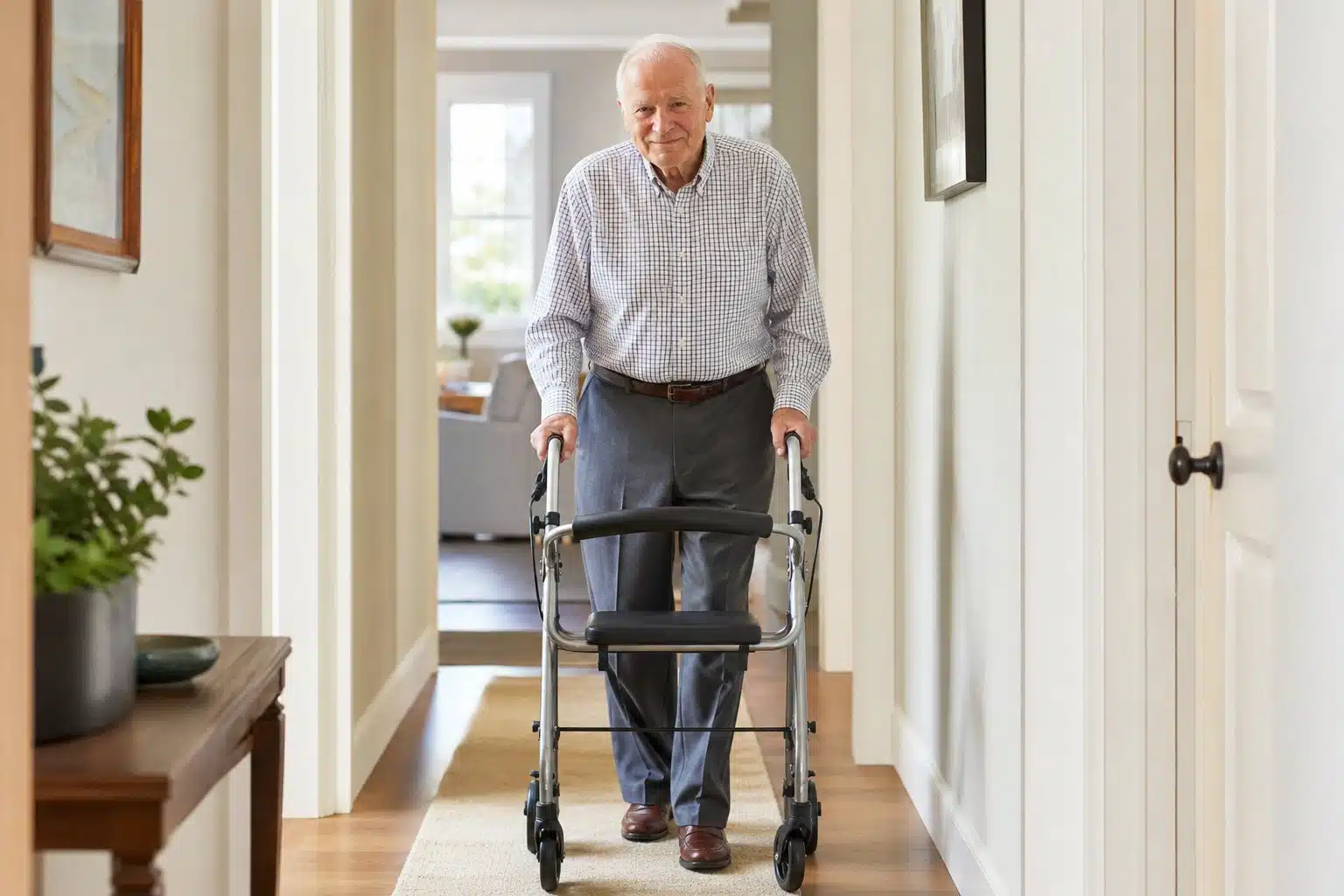
Start with your feet between the rear wheels and your hands resting lightly on both grips.
- Release the brakes
Unlock the parking brakes and keep your fingers near the levers so you can slow down quickly.
- Push a short distance
Roll the rollator a comfortable short distance ahead, keeping it close enough that you never have to reach or lean forward.
- Step into the frame
Step forward with your weaker leg first, then bring the stronger leg through, keeping your toes behind the front of the frame.
- Look ahead and keep a steady rhythm
Keep your head up, shoulders back and pace even. Slow down with the brakes rather than by pulling back.
Keeping Your Balance When You Walk With a Rollator
Good balance comes from keeping your body weight over your feet, not out over the handles. MedlinePlus advises in its patient guide to using a walker that you go slowly, keep your back straight and keep your toes inside the frame, because stepping too close to the front can make you lose your balance. Cleveland Clinic adds that you should face forward and avoid looking down at your feet, and that a step is simply whatever distance feels comfortable.
Posture checkpoints
Every so often as you walk with a rollator, pause and check yourself. Are your shoulders level and relaxed? Are your elbows slightly bent rather than locked straight? Is the rollator close enough that you could stop it within one step? If you notice yourself hunching or speeding up to keep pace with the wheels, stop, lock the brakes and reset. Fatigue is a common reason posture slips, so use the seat for a short rest before you feel exhausted.
Rollator brakes are for control
Think of your rollator brakes the way a cyclist does: you squeeze them to slow down on a gentle downhill or when someone steps in front of you, and you lock them whenever you stop. The University of Arizona guide warns that you should not rely on the brakes alone to stop a rollator that has run ahead of you, which is another reason to keep the frame close.

Sit down and stand up safely
How to sit on and stand up from a rollator
- Back it against something solid
Where possible, park the rollator with its back against a wall or sturdy piece of furniture so it cannot slide.
- Lock both brakes
Push both brake levers down into the parking position and check the rollator does not move.
- Turn around slowly
Keep one hand on a grip as you turn, then hold both grips with your feet about shoulder-width apart.
- Lower yourself with control
Bend at your knees and hips and sit down slowly, reaching back for the seat if that feels steadier.
- Stand up the same way
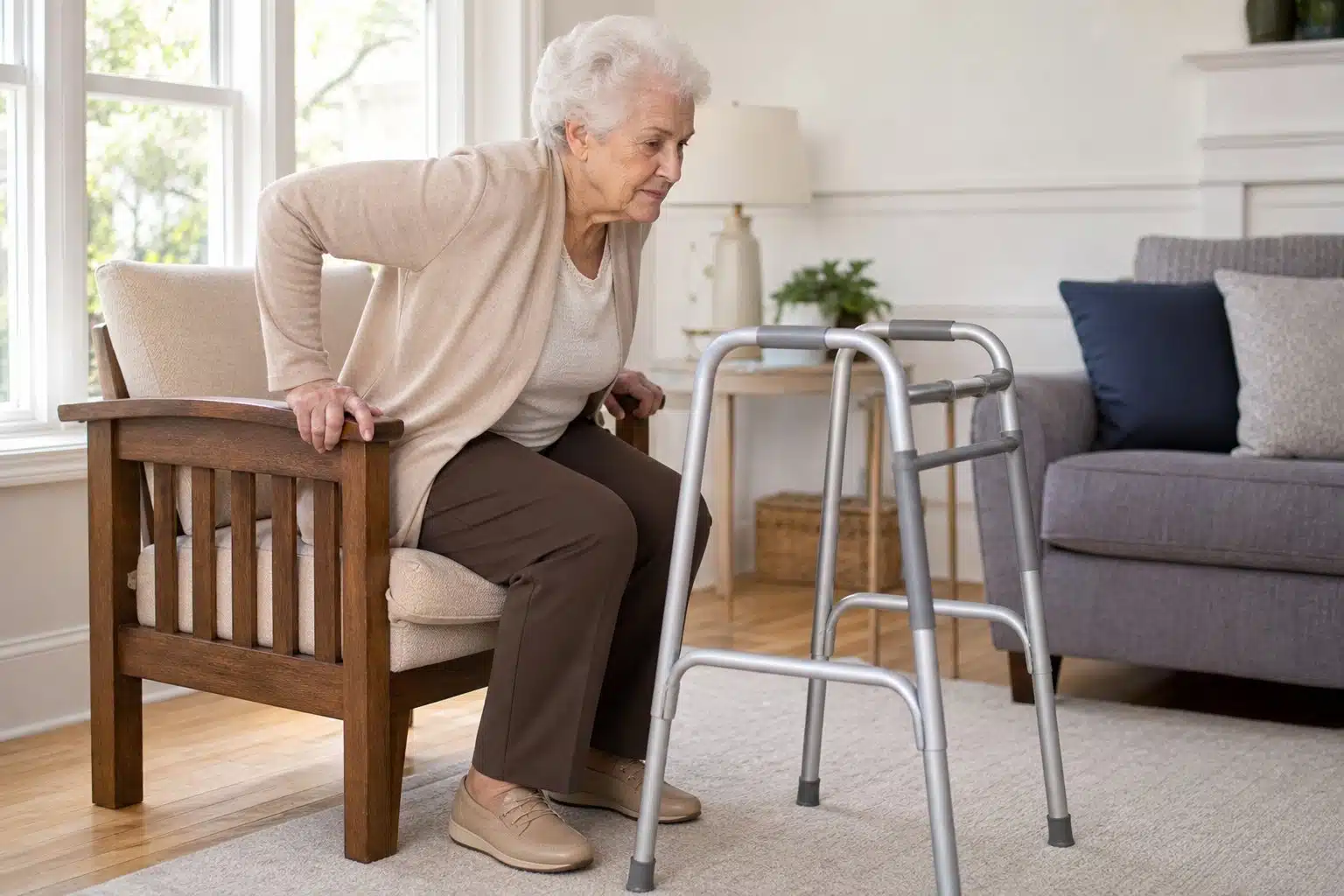
Keep the brakes locked, scoot forward, lean slightly forward and push up through your legs. Turn to face the handles, then unlock the brakes before walking.
Do not pull on the handles to haul yourself up from a chair; push up from the chair’s armrests instead.

Rollators are not built to carry a seated passenger. The University of Arizona Center on Aging warns that being transported on the seat is a setup for a serious fall and possible head injury. If someone needs to be pushed, use a transport chair or wheelchair instead.
Turns, Doorways, Slopes and Curbs
Turning is easier when you walk with a rollator than with a standard walker because the front wheels swivel, but it is also where people tend to twist and lose their footing. Turn in a wide, gentle arc with small steps, keeping your feet moving with the frame rather than pivoting on one foot. In tight hallways, slow right down and make several small turns.
Doorways and thresholds
Approach a doorway straight on, open the door fully, and walk through with the rollator ahead of you. For a door that swings toward you, lock the brakes, open it, and keep it propped open before you move. Raised thresholds can catch the small front wheels, so slow down and lift the front slightly by tipping back on the rear wheels only if your therapist has shown you how.
Slopes and curbs
On a gentle downhill, keep the rollator close and use the rollator brakes lightly to control the speed. On an uphill, take shorter steps. For curbs and steps, both MedlinePlus and Cleveland Clinic teach "up with the good, down with the bad": the device goes first, then your stronger leg leads going up and your weaker leg leads going down. Practice curbs with a physical therapist before trying them alone, and avoid stairs and escalators with a rollator.
Rollator myths that cause falls
Keeping it close is safer. When the frame runs ahead, your weight shifts forward and you can lose your balance.
Most forward stumbles happen when the user chases the rollator.
Lock the parking brakes every time you stop, sit or stand.
An unlocked rollator can roll out from under you as you lower yourself onto the seat.
Rollators are designed to support balance, not to bear heavy weight through the arms.
If you lean hard on the handles, a standard walker may be safer.
Use the basket or a bag designed for the frame and keep heavy loads low.
Weight on the handles can tip the rollator or interfere with the brakes.
Common Mistakes to Avoid With Rollator Safety
Most rollator safety problems come from small habits rather than the device itself. The first is hunching over the handles, which usually means the handle height is wrong or the frame is being pushed too far ahead. The second is forgetting to lock the brakes before sitting, often when someone is tired and in a hurry. The third is carrying things in one hand, which leaves only one hand to steer and brake. MedlinePlus suggests attaching a small bag or basket so both hands stay on the walker.
Other common slip-ups include walking in socks, slippers or smooth leather soles, ignoring loose rugs and trailing cords, and putting off maintenance. Check the wheels and brakes regularly, and replace worn parts promptly. Our guide on how to use a walker safely around the house covers room-by-room hazards that matter just as much when you walk with a rollator, and these practical steps to prevent falls at home for seniors help you tackle trip hazards, lighting and footwear.
Rollator terms explained
- Rollator
A wheeled walker, usually with four wheels, hand brakes and a built-in seat; some three-wheel models have no seat.
- Loop brakes
Hand levers under the grips that you squeeze to slow the wheels, much like bicycle brakes.
- Parking brake
The locked position of the brake levers, usually reached by pushing them down until they click, which stops the wheels from turning.
- Swivel casters
Front wheels that rotate freely so the rollator can turn easily.
Getting the Details Right Before You Walk With a Rollator
A rollator only keeps you steady if it fits you and is in good working order. The handle height is the most important setting. Cleveland Clinic’s guide on how to use a walker explains that most walkers adjust over a range of 5 to 10 inches and that your arms should be only slightly bent, about 15 to 25 degrees, when you hold the grips. Our step-by-step guide on how to measure walker height walks you through the measurement at home.
Beyond the fit, rollator safety also depends on where you will use the frame most. Narrow hallways, thick carpet and outdoor paths all place different demands on wheels and turning. A physical or occupational therapist can watch you walk, adjust the frame and suggest changes at home. The checklist below sums up what a safe setup looks like and the warning signs that mean it is time for a review.
Signs your rollator setup is right
Grips should meet the wrist crease when you stand tall with arms relaxed.
Both brakes should slow the wheels evenly and lock firmly.
You need to be able to squeeze and lock the brakes reliably.
Wheels should roll and swivel freely, and the frame should feel solid.
Watch for changes in how you walk with the rollator over time.
This guide offers general information and is not a substitute for advice from your doctor, physical therapist or occupational therapist. If you have had a fall, feel dizzy, or are unsure whether a rollator is right for you, ask a health professional to assess you.
Rollator balance questions
How far in front of me should my rollator be?
Close enough that your feet stay between the rear wheels and you never reach forward. Push it a short, comfortable distance and step into the frame.
Should I lock the brakes every time I stop?
Yes. Lock both parking brakes whenever you stop to rest, sit on the seat or stand up, and unlock them only when you are ready to walk again.
Can I use a rollator on stairs?
No. Rollators are not designed for stairs or escalators. Use the handrail or a different plan agreed with your therapist.
Why do I feel like the rollator is running away from me?
It is usually pushed too far ahead, the handles are too low, or you are tired. Slow down, keep it close and have the height checked.
Is a rollator safe for someone who leans heavily on their hands?
Often not. Rollators support balance rather than heavy weight through the arms. A standard walker may be safer, so ask a physical therapist.
Walk tall, keep it close, lock before you sit
- Set the handles at wrist height and check the brakes before every outing.
- Walk upright inside the frame with short, comfortable steps.
- Lock both brakes before sitting or standing, ideally against a wall.
- Never ride on the seat, and avoid stairs and escalators.
- Ask a physical therapist for training and regular check-ups.
A rollator can give you the confidence to keep moving at home and outdoors. With the right fit, steady posture and consistent brake habits, it becomes a reliable partner rather than something that pulls you off balance.