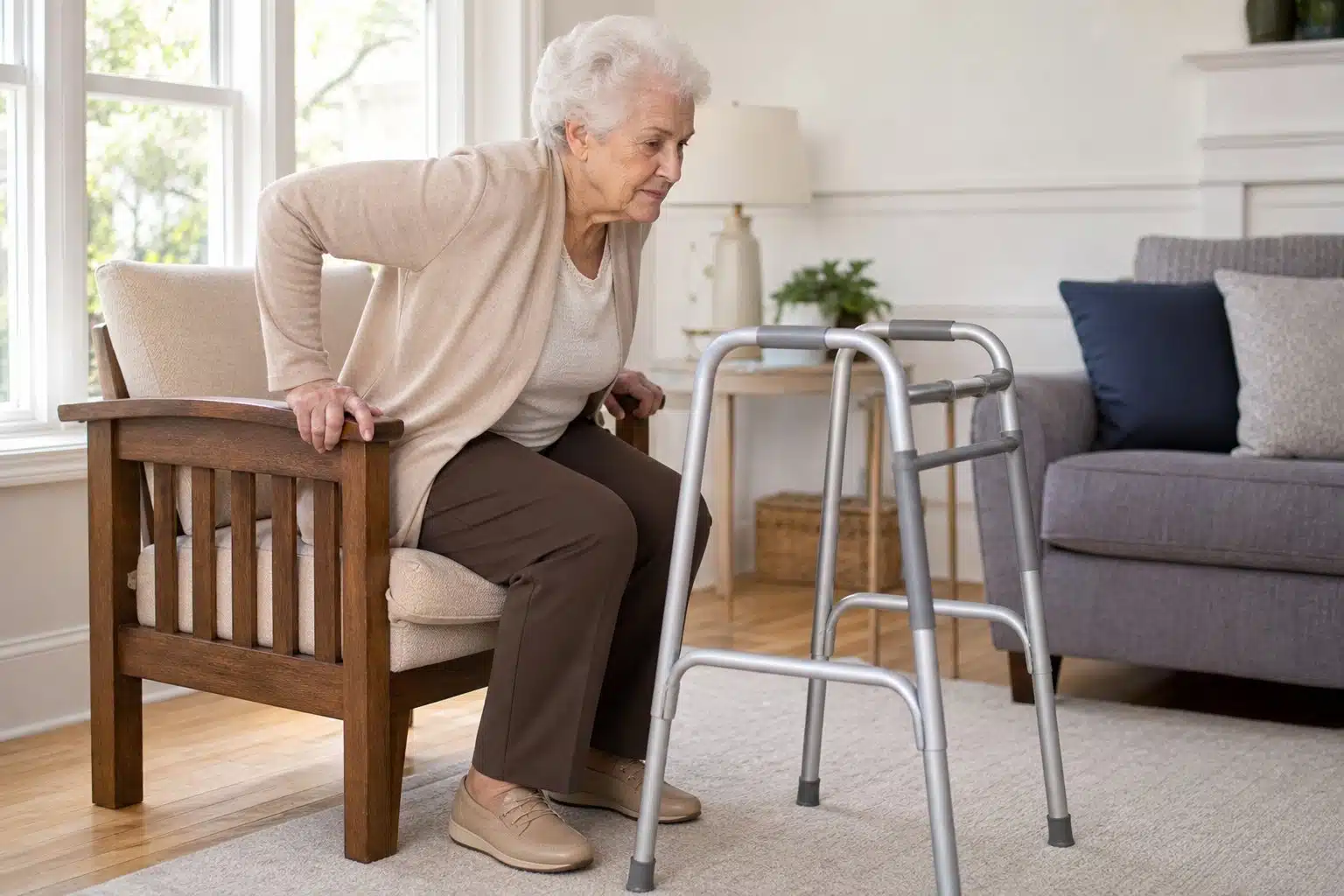

The best transfer bench can make bathing easier for seniors who struggle to step over a bathtub wall. I’ve compared six bathtub transfer benches for older adults, wheelchair users and caregivers, looking at their designs, safety features, ease of use and practical limitations.
This guide is based on product information and published guidance, rather than hands-on testing.
I’ll explain where a basic bench makes sense, when a sliding seat is useful and which designs deserve a closer look before buying.
Best Bathtub Transfer Benches Compared
| Product | Best for | Weight capacity | Price tier |
|---|---|---|---|
| Drive Medical Transfer Bench | Everyday bathtub transfers | Check model specification | Budget |
| VEVOR Sliding Transfer Bench | Sliding and rotating transfers | Check model specification | Mid-range |
| Eagle Health Tub-Mount Bench | Bathtubs with limited floor space | Check model specification | Premium |
| Medline Microban Transfer Bench | Everyday bathing and hygiene | Check model specification | Budget |
| Drive Medical Combination Bench | Bathing and toileting support | Check model specification | Mid-range |
| Carousel Sliding Transfer Bench | Padded sliding and pivoting transfers | Check model specification | Premium |
Weight limits, dimensions and exact features should be confirmed on the current manufacturer’s specification before ordering.
How to Choose a Bathtub Transfer Bench
A bathtub transfer bench sits partly inside the tub and partly outside. You sit on the outer section, move across the seat and bring your legs over the bathtub wall while remaining seated.
That’s the main difference between a transfer bench and an ordinary shower chair. You don’t have to step over the tub wall while standing.
Still, choosing the wrong bench can leave you with a seat that blocks the bathroom doorway, doesn’t fit the bathtub or feels awkward to transfer onto.
Standard vs Sliding Transfer Benches
A standard transfer bench has a fixed seat. You sit down and move yourself sideways across the surface.
These benches usually have fewer moving parts and are relatively straightforward to maintain. They suit people with enough upper-body strength and seated balance to move across the bench safely.
A sliding transfer bench for bathtub use has a seat that travels along a track. Instead of shifting across a stationary surface, you move with the seat.
This can reduce the effort needed to move sideways, particularly for someone with limited leg strength.
The trade-off is extra mechanical parts. You’ll need to check that the sliding mechanism works smoothly and that the seat locks securely at the required positions.
Swivel Seats and Rotating Chairs
A swivel transfer bench has a rotating seat that changes the direction you’re facing.
This can help when someone finds turning their body difficult because of arthritis, restricted hip movement or general stiffness.
Some models combine a sliding seat with a rotating chair.
I would pay particular attention to the locking mechanism. A rotating seat that moves unexpectedly during a transfer presents a serious safety concern.
Seat Height and Adjustment
Seat height matters more than many buyers expect.
If the bench is too low, standing up can be difficult. If it’s too high, your feet might not reach the floor securely when you’re sitting outside the bathtub.
Look for adjustable legs that allow the seat to sit level, with all feet supported correctly.
Don’t assume that every adjustable bench will work with your bathtub. The height of the tub wall, the floor inside the tub and the bathroom floor all affect the fit.
Weight Capacity and Seat Width
Every bathtub transfer bench has a maximum supported user weight.
Choose a bench with a manufacturer-rated capacity above the user’s weight. Also check the usable seat width and whether the frame provides enough room for comfortable transfers.
A heavy-duty bathtub transfer bench may offer a wider seat and stronger frame, but larger models can take up considerably more bathroom space.
Non-Slip Feet and Frame Stability
Look for rubber or suction-style feet designed for wet bathroom surfaces.
The bench should remain stable when someone sits down, moves across and stands up.
Check the manufacturer’s instructions for compatible floor and bathtub surfaces. Suction feet may not grip textured surfaces reliably.
Also check whether the bench has a backrest, drainage holes and a handle positioned where the user can reach safely.
Bathroom Size and Tub Compatibility
Before buying, measure the bathtub and the surrounding floor.
Check the space beside the tub, the bathtub wall width and the clearance needed for a wheelchair or walker.
Sliding and swivel benches may require additional space for the seat to travel or rotate.
A compact bathroom doesn’t automatically rule out a transfer bench, but it does make careful measuring essential.
: How to Make a Small Bathroom Accessible for Seniors
Drive Medical Transfer Bench: Best for Everyday Bathtub Use
The Drive Medical Transfer Bench is my first choice for someone who wants a straightforward bathtub transfer bench without a sliding or rotating seat.
Aluminum Tub Transfer Bench Offers Comfortable Backrest and Height Adjustable Design, 350 Lb Capacity

Its adjustable frame, molded seat and backrest make it a practical option for seniors who need to sit while moving across the bathtub wall.
The main advantage is simplicity. There are no sliding tracks or rotating mechanisms to operate.
For someone with reasonable upper-body strength and seated balance, that can be a good thing.
The trade-off is that the user must move sideways across the fixed seat. That movement may be difficult for someone with severe arthritis, limited arm strength or poor trunk control.
I particularly like the adjustable-height design because bathtub dimensions vary considerably between homes.
What works
- Fixed seat avoids complicated moving mechanisms.
- Adjustable legs help accommodate different bathtub heights.
- Backrest provides seated support.
- Straightforward design suits everyday bathing.
What doesn’t
- Users must move themselves across the seat.
- The frame extends outside the bathtub.
- Less suitable for people who cannot shift their weight safely.
Who it suits
I’d recommend considering this model for older adults who can sit independently and move sideways without significant difficulty.
It’s also a sensible starting point for caregivers comparing the best shower transfer bench for elderly family members.
VEVOR Sliding Transfer Bench: Best for Sliding and Rotating
The VEVOR Sliding Transfer Bench is aimed at people who find moving across a fixed bathtub seat difficult.
Height Adjustable Bathtub Transfer Bench with Armrest & Safety Belt, Non-Slip Rotating Shower Chair for Elderly Disabled, 400LBS Capacity

The product listing identifies a sliding and rotating design. This makes it worth considering for older adults with reduced leg strength or difficulty turning while seated.
Instead of repeatedly shifting your body across a stationary bench, the sliding mechanism allows the seat to travel along its frame.
The rotating function may also make positioning easier when entering or leaving the bathtub.
That combination sounds appealing, particularly for caregivers assisting someone with limited mobility.
My main concern with this type of bench is the locking system. You need to understand how the seat locks, when the user can safely rotate and how to prevent unwanted movement.
I wouldn’t choose a sliding swivel bench purely because it offers more features. The user’s transfer ability and bathroom layout matter more.
What works
- Sliding design reduces the need to scoot across a fixed seat.
- Rotating function can help with positioning.
- Worth considering for assisted bathing routines.
- May suit people with restricted leg movement.
What doesn’t
- More mechanisms require checking and cleaning.
- Locking controls may be awkward for people with weak hands.
- Sliding and rotating clearance must be measured carefully.
Who it suits
This is an option for seniors who have difficulty shifting sideways but can maintain an appropriate seated position during a transfer.
For someone who needs physical assistance, I’d have an occupational therapist assess the transfer before choosing a sliding bench.
Eagle Health Tub-Mount Bench: Best for Limited Floor Space
The Eagle Health Supplies Tub-Mount Heavy-Duty model takes a different approach to bathtub transfers.
Space-Saving Design | Eagle Health Supplies Shower Chair for Elderly and Disabled, FSA/HSA eligible, Height Adjustable

Instead of relying on the conventional four-legged bench arrangement, its tub-mounted design makes the bathtub wall itself an important part of the installation.
That makes this model particularly interesting for bathrooms where a traditional bench would occupy too much floor space.
But there’s an important catch.
Tub-mounted equipment depends heavily on the shape, dimensions and construction of the bathtub wall.
You need to confirm that your bathtub meets the manufacturer’s mounting requirements. A thick, curved or unusually shaped tub edge may prevent proper fitting.
I wouldn’t assume this is suitable for every small bathroom simply because it uses a different mounting arrangement.
What works
- Tub-mounted design offers an alternative to floor-standing benches.
- Worth investigating where floor clearance is restricted.
- Heavy-duty construction is a focus of this model.
- May help avoid some of the placement problems associated with conventional benches.
What doesn’t
- Bathtub compatibility is particularly important.
- Not every tub wall is suitable for mounting.
- Installation requires careful attention to the manufacturer’s instructions.
- A tub-mounted design won’t suit every transfer method.
Who it suits
I’d shortlist this for people with limited bathroom floor space who have a compatible bathtub.
Before ordering, check the permitted tub-wall dimensions, weight capacity and mounting method.
Medline Microban Transfer Bench: Best for Everyday Hygiene
The Medline Microban model is worth considering for households where the transfer bench will see regular use.
Adjustable Shower Bench and Bath Seat For Seniors And Elderly, 350 lb. Weight Capacity, Light Blue

The product listing highlights Microban antimicrobial protection. This type of treatment is intended to help inhibit bacterial growth on treated surfaces, subject to the manufacturer’s specific claims.
That doesn’t make the bench self-cleaning.
You’ll still need to wash and dry the seat, inspect the feet and clean around the joints.
For me, the more important buying questions concern the seat height, frame dimensions and whether the bench supports the user’s preferred transfer direction.
An antimicrobial feature is useful to consider, but it shouldn’t take priority over stability and correct fitting.
What works
- Microban-treated surfaces are a distinguishing feature.
- Designed for seated bathtub transfers.
- Worth considering for regularly used bathrooms.
- Conventional transfer-bench arrangement avoids the complexity of a sliding mechanism.
What doesn’t
- Antimicrobial treatment doesn’t replace cleaning.
- A fixed seat still requires sideways movement.
- Dimensions and exact configuration need checking before purchase.
Who it suits
This model is worth comparing for seniors who want a conventional bathtub transfer bench and place additional value on treated seat surfaces.
I’d prioritise the frame fit and user weight capacity before considering the hygiene treatment.
Drive Medical Combination Bench: Best for Bathing and Toileting
The Drive Medical Combination Transfer Bench and Commode is designed for people who need bathing assistance and additional toileting support.
Padded Transfer Bench Commode Chair Offers Comfortable, Stable Support for Toilet Use and Access

Its distinguishing feature is the combination of a transfer bench with a commode-style opening.
For someone with restricted mobility, this arrangement may be useful when ordinary bathroom equipment is difficult to access.
I can see the appeal for caregivers managing several daily care needs.
But the commode opening changes the seat design. That matters because users need enough support around their hips and thighs to sit comfortably and transfer safely.
The combination design also means cleaning requirements deserve more attention.
I’d check how the commode components are accessed, removed and cleaned before deciding whether this model suits the household.
What works
- Combines transfer-bench and commode functions.
- May reduce the need for separate bathroom equipment.
- Worth considering for people with more complex personal care needs.
- Designed for assisted bathing and toileting arrangements.
What doesn’t
- Commode opening may not suit every user’s seating needs.
- Cleaning takes additional consideration.
- Larger combination equipment may be awkward in smaller bathrooms.
Who it suits
This model makes sense for someone who needs both bathtub transfer assistance and toileting support.
For users recovering from surgery or managing significant mobility limitations, an occupational therapist can help determine whether a combination bench is appropriate.
Carousel Sliding Transfer Bench: Best for Padded Sliding Transfers
The Carousel Sliding Transfer Bench is one of the more specialised options in this comparison.
Reclining Backrest, Premium Padded with Pivoting Arms, High Capacity, Heavy Duty for Tubs, Inside Shower, for Handicap & Seniors

Its product listing describes a sliding seat with a pivoting function, making it particularly relevant for people who struggle to reposition themselves on a standard bench.
The main attraction is the ability to change position without repeatedly lifting and shifting the body across a fixed surface.
For someone with reduced strength, that can make the transfer process more manageable, provided the user can maintain safe seated balance.
The padded seating arrangement is another feature worth considering.
Hard plastic seats can feel uncomfortable during longer bathing routines, particularly for someone with sensitive skin or reduced tolerance for pressure.
Padding can improve comfort, although the seat material needs appropriate cleaning and drying.
I’d also check the pivoting and sliding locks carefully. More moving parts mean more opportunities for incorrect operation.
What works
- Sliding mechanism helps with sideways positioning.
- Pivoting seat offers another way to align the body.
- Padded design may improve seated comfort.
- Worth considering for assisted transfers.
What doesn’t
- Requires familiarity with multiple locking controls.
- Sliding tracks and moving parts need maintenance.
- May require additional bathroom clearance.
- More complex than a standard fixed bench.
Who it suits
I’d consider the Carousel for seniors who need sliding and pivoting assistance and have an appropriate transfer plan.
It may also appeal to caregivers who want to reduce the amount of manual repositioning involved in bathing.
Sliding vs Standard Transfer Bench: Which Is Better?
Choosing between a sliding and fixed bathtub transfer bench depends largely on how easily someone can move their body while seated.
| Feature | Standard transfer bench | Sliding transfer bench |
|---|---|---|
| Seat movement | Fixed | Moves along a track |
| User effort | Requires sideways repositioning | Reduces sideways scooting |
| Mechanical parts | Fewer | More |
| Cleaning | Generally straightforward | Tracks need attention |
| Bathroom clearance | Depends on frame | Depends on frame and seat travel |
| Best suited to | People who can reposition independently | People who need help moving sideways |
A fixed bench is often sufficient for someone who can move across a seat using their arms and maintain balance.
A sliding bench may be more appropriate when that movement is difficult.
Neither type automatically makes transfers safe for someone who cannot support themselves while seated.
Transfer Bench vs Shower Chair: What’s the Difference?
These products solve different problems.
A shower chair provides a seat inside a shower or bathtub. It’s useful for someone who can enter the bathing area but struggles to stand throughout a shower.
A transfer bench extends across the bathtub wall, allowing someone to sit outside the tub before moving across.
For seniors who cannot safely step over the bathtub wall, a transfer bench is generally the more relevant option.
| Feature | Transfer bench | Shower chair |
|---|---|---|
| Extends over bathtub wall | Yes | Usually no |
| Helps with entering a bathtub | Yes | Not directly |
| Supports seated showering | Yes | Yes |
| Suitable for walk-in showers | Depends on design | Often |
| Requires space outside tub | Usually | Usually not |
If the user can enter a walk-in shower safely and simply needs seated support, a shower chair may be easier to accommodate.
: Best Shower Chairs for Seniors With Limited Mobility
How to Measure Your Bathtub for a Transfer Bench
One of the most common buying mistakes is checking the bench dimensions without measuring the bathroom.
Before ordering, take these measurements.
1. Bathtub Wall Height
Measure from the bathroom floor to the top of the bathtub wall.
Then measure from the bathtub floor to the top of the wall.
These measurements help determine whether the bench’s adjustable legs can position the seat correctly.
2. Available Floor Space
Measure the clear floor area beside the bathtub.
Remember that the outside legs need a stable surface and must not block essential movement routes.
If someone uses a wheelchair or walker, allow space for positioning the mobility aid and transferring.
3. Bathtub Interior Width
Measure the flat, usable section of the bathtub floor where the inside legs will stand.
Don’t rely only on the overall width of the bathtub.
Curved sides and sloping surfaces can reduce the available space considerably.
4. Seat Height and Leg Adjustment
Check the manufacturer’s minimum and maximum seat heights.
The bench needs to sit level with its feet properly supported.
Never improvise leg extensions or place blocks underneath the feet to compensate for an unsuitable height.
5. Sliding and Swivel Clearance
For sliding models, check the full travel distance.
For swivel models, measure the space required to rotate the seat with the user sitting on it.
A bench might physically fit into the bathroom but still lack enough room to operate.
: How to Make a Small Bathroom Accessible for Seniors
How to Use a Bathtub Transfer Bench Safely
A transfer bench can reduce the need to step over a bathtub wall, but correct positioning and transfer technique still matter.
Before the first use, follow the manufacturer’s assembly instructions and have the setup assessed if the user’s mobility is limited.
- Position the bench so its legs stand securely on the bathroom floor and inside the bathtub.
- Adjust the legs according to the manufacturer’s instructions so the seat is level and stable.
- Check that all locking pins, seat locks and backrest attachments are secure.
- Make sure the bathroom floor is dry and free from loose mats.
- Approach the outside seat using the transfer technique recommended for the user’s mobility needs.
- Sit down with controlled movement, using appropriate support.
- Move across the bench while seated, bringing the legs over the bathtub wall without rushing.
- For sliding or rotating models, follow the manufacturer’s exact locking and movement sequence.
- Check the seat is secured before beginning to wash.
- Reverse the transfer process when leaving the bathtub.
Don’t use a towel rail, shower curtain rod or unsecured fixture as a grab handle.
A properly installed grab bar may provide useful support, but its location should match the person’s transfer needs.
For someone with poor seated balance, recent hip surgery or significant weakness, ask an occupational therapist or physical therapist to demonstrate an appropriate transfer method before attempting independent bathing.
: How to Prevent Slips and Falls in the Bathroom
Which One Should You Buy?
Best for Independent Seniors
I’d start with the Drive Medical Transfer Bench.
Its conventional design makes sense for someone who can sit safely and move across a fixed seat without excessive effort.
There’s little reason to pay for a sliding mechanism if the person doesn’t need one.
Best for Seniors With Limited Leg Strength
I’d compare the VEVOR Sliding Transfer Bench and Carousel Sliding Transfer Bench.
Both offer sliding designs, while their rotating or pivoting functions may help with positioning.
The better choice depends on the person’s transfer abilities, the controls and the available bathroom space.
Best for Small Bathrooms
The Eagle Health Tub-Mount model deserves a closer look.
Its mounting arrangement may suit some bathrooms where a traditional floor-standing bench would be awkward.
I wouldn’t buy it without first confirming bathtub compatibility.
Best for Caregivers
The Carousel is worth investigating when someone needs help repositioning during a seated transfer.
The Drive Medical Combination Bench is another option when toileting support is also required.
Neither replaces an assessment of the person’s support needs.
Best for a Tight Budget
I’d compare the Drive Medical standard bench with the Medline Microban model.
A straightforward fixed bench is usually the first design I’d investigate before considering more complicated alternatives.
Current Amazon prices will determine which offers better value.
Common Questions About Transfer Benches
What is the best transfer bench for seniors?
For seniors who can move sideways while seated, a standard adjustable bathtub transfer bench is often a sensible choice.
The Drive Medical model is a good starting point, while sliding models such as VEVOR and Carousel are worth considering when sideways movement is difficult.
What is the best sliding transfer bench for bathtub use?
The VEVOR and Carousel models are both worth comparing. Look closely at the sliding distance, locking controls, seat comfort and bathroom clearance before choosing either.
Can a wheelchair user use a bathtub transfer bench?
Some wheelchair users can transfer onto a bathtub bench using an appropriate lateral transfer technique. The wheelchair seat height, bench position, transfer ability and available floor space all matter, so an occupational therapist’s assessment is advisable.
Does Medicare cover bathtub transfer benches?
Original Medicare generally doesn’t cover bathroom safety equipment such as bathtub seats and transfer benches. Some Medicare Advantage plans offer supplemental benefits that include transfer benches, so check your plan’s specific coverage before buying.
Are sliding transfer benches safer than standard benches?
A sliding bench can reduce the amount of sideways body movement required, which may help certain users. That doesn’t automatically make it safer, because the seat must be controlled and locked correctly during transfers.
Final Recommendation
For most seniors who can move sideways while seated, I’d start by comparing the Drive Medical Transfer Bench with other conventional adjustable models.
For someone who struggles to reposition themselves, the VEVOR and Carousel sliding benches deserve more attention.
If floor space is the biggest concern, investigate the Eagle Health tub-mounted option, but check compatibility carefully.
The best transfer bench is the one that fits your bathtub, supports your weight and matches your ability to transfer safely. A correctly fitted standard bench can be a better purchase than a complicated sliding model that the user finds difficult to operate.
For additional bathroom safety advice, read Bathroom Safety Tips for Seniors and How to Make a Bathroom Safer for Seniors.