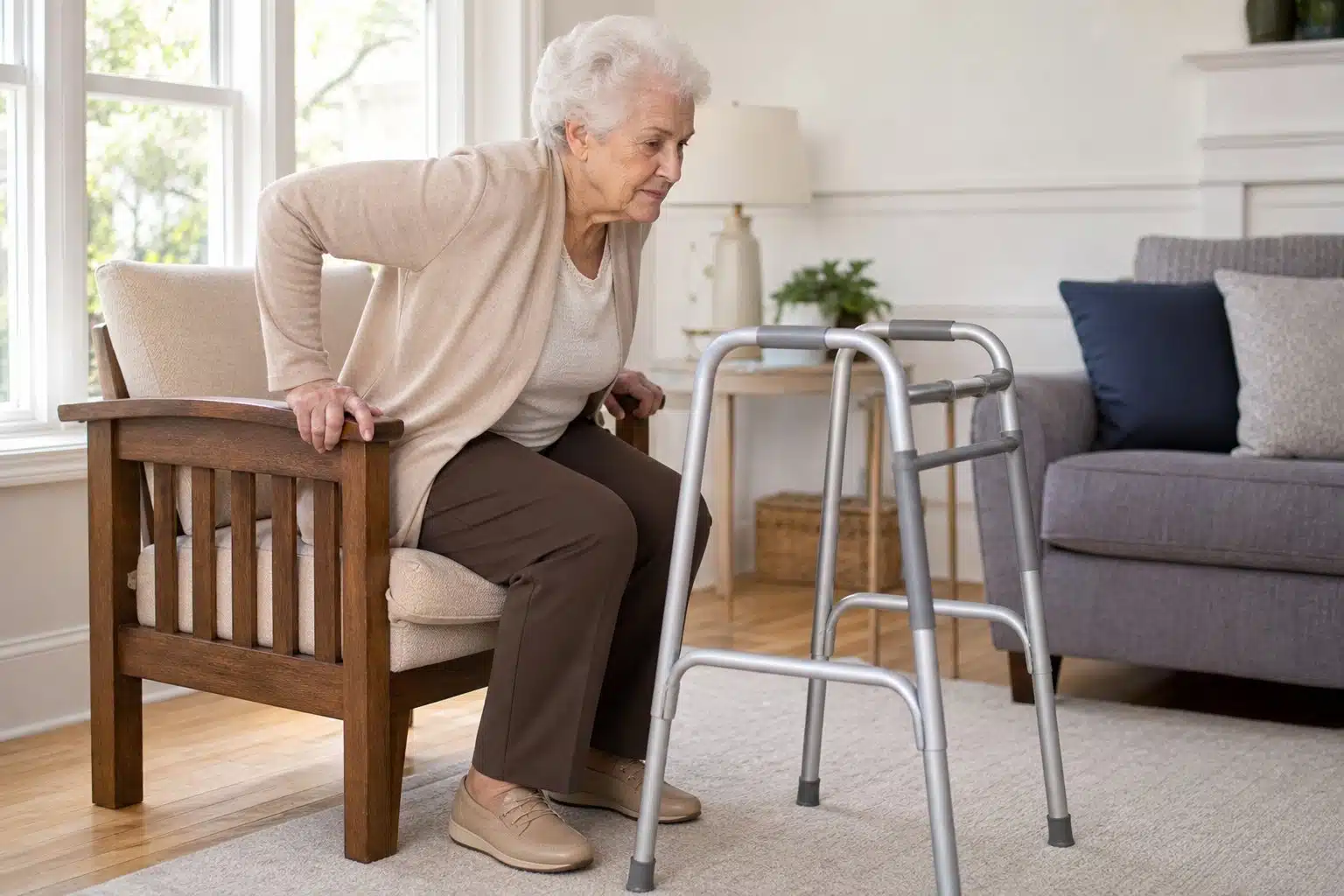

Knowing how to choose the right walker for an elderly person can make everyday movement safer and more comfortable. If you’re helping an aging parent, caring for someone with limited mobility, or looking for extra support yourself, this guide explains what matters before buying.
I’ve based these recommendations on walker designs, manufacturer specifications, established mobility guidance and practical considerations for older adults. No hands-on product testing is claimed.
A walker should provide the support someone actually needs. A lightweight rolling model might suit one person, while someone with serious balance problems may need a more stable frame without four rolling wheels.
Quick Walker Comparison
| Walker type | Best for | Typical weight | Price tier |
|---|---|---|---|
| Standard walker | Maximum frame stability when stationary | 5 to 8 lb | Budget |
| Two-wheel walker | Indoor walking with extra support | 5 to 9 lb | Budget |
| Three-wheel rollator | Tight spaces and easy turning | 10 to 18 lb | Mid-range |
| Four-wheel rollator | Longer walks and seated rest breaks | 12 to 25 lb | Mid-range |
| Upright rollator | Forearm support and a more upright walking position | 15 to 25+ lb | Premium |
Weights are approximate ranges, not specifications for particular models. Individual products vary.
How to Know When an Elderly Person Needs a Walker
There’s no set age when someone should start using a walker. Some people remain steady on their feet well into their 90s. Others benefit from walking assistance much earlier.
I’d look for changes in how someone moves rather than their age.
Common signs include:
- Holding onto furniture while walking around the house.
- Feeling unsteady when standing or turning.
- Having difficulty walking longer distances.
- Experiencing repeated trips, stumbles or falls.
- Struggling with leg weakness or fatigue.
- Needing more support than a walking cane provides.
If you’ve noticed your parent reaching for walls or furniture, don’t automatically order the first walker you find online.
A physical therapist can assess balance, walking ability and strength. They can also determine whether a walker is suitable or whether another mobility aid would provide safer support.
Sudden difficulty walking, new weakness or unexplained falls should be medically assessed rather than treated as a simple equipment problem.
Understanding the Different Types of Walkers
One of the biggest mistakes I see in walker buying advice is treating every walking aid as though it performs the same job.
The differences matter, particularly for someone with poor balance or weak legs.
Standard Walkers
A standard walker has four legs with rubber tips. You lift the frame, move it forward and step into the supported space.
This design offers a stable base when all four feet are firmly on the ground. The downside is that lifting the frame repeatedly takes coordination and upper-body strength.
I’d consider a standard walker for someone who needs substantial support and can safely lift and position the frame.
What I’d check:
- Whether the person can lift the walker without losing balance.
- Whether the rubber tips grip the flooring.
- Whether the frame fits through doorways.
- Whether the handles adjust to the correct height.
Standard walkers can be awkward outdoors, especially on uneven pavement. They aren’t my first choice for someone who struggles to lift objects.
Two-Wheel Walkers
A two-wheel walker has wheels at the front and rubber tips or approved glides at the back.
You push the walker forward rather than lifting the entire frame with every step.
For many older adults, this makes indoor movement easier while retaining more controlled movement than a four-wheel rollator.
The rear tips create friction against the floor, although the amount of resistance depends on the surface and tip condition.
I’d particularly consider this design for someone with reduced lifting strength who still needs a supportive frame.
The drawback? Rear tips can catch on rugs or uneven surfaces. Glides can help on some floors, but they also change how the walker moves.
Three-Wheel Walkers
Three-wheel rollators are generally narrower and easier to maneuver than larger four-wheel models.
They can be useful in smaller homes, narrow hallways and crowded areas.
Many include hand brakes, folding frames and storage bags.
The trade-off is stability. A three-wheel design has a smaller support base than many four-wheel rollators and may tip more readily under sideways pressure.
Most also lack a built-in seat.
I’d skip this design for someone who regularly needs to put substantial weight through the handles or has significant balance problems unless a clinician has assessed its suitability.
Four-Wheel Rollator Walkers
Four-wheel rollators are popular because they roll smoothly and often include a seat.
They typically have four wheels, hand-operated brakes, a storage pouch and a backrest.
For someone who can walk reasonably steadily but tires quickly, the seat is a genuinely useful feature.
A rollator can make a trip to the shops or a walk around the neighborhood more manageable.
But there’s an important limitation.
A four-wheel rollator isn’t designed to provide the same weight-bearing stability as a standard walker. The wheels can move unexpectedly if the user leans heavily on the frame or loses balance.
I’d only recommend one where the person’s balance, hand strength and brake control are suitable.
Upright Walkers
Upright walkers use raised handles or padded forearm supports to encourage a more upright walking position.
Some people find them more comfortable because they reduce the need to lean forward onto low handles.
They’re worth considering for older adults who struggle with conventional handle positions.
But don’t assume upright automatically means safer.
These walkers are often heavier, bulkier and more expensive. Their turning characteristics also differ from conventional walkers.
An upright walker should be fitted and assessed carefully, especially when the user has significant balance problems.
How to Choose the Right Walker for an Elderly Person
The best walker for seniors isn’t necessarily the most expensive or the one with the most features.
I’d focus on six practical factors before comparing brands.
Choose the Correct Walker Height
Walker height affects posture, arm position and how comfortably someone can move.
A walker that’s too low encourages bending forward. One that’s too high can make the shoulders rise and reduce effective support.
For a conventional walker, a common starting point is:
- Put on the shoes normally worn for walking.
- Stand upright with arms relaxed at the sides.
- Position the walker in front of the person.
- Adjust the handles to approximately wrist-crease height.
- Check that the elbows bend slightly, typically around 15 to 30 degrees, when holding the grips.
This is a starting measurement, not a substitute for professional fitting.
Upright walkers and forearm-support models use different fitting methods. Follow the manufacturer’s guidance and seek a physical therapist’s assessment.
Check Weight Capacity and Stability
Every walker has a manufacturer-specified maximum user weight.
Check this figure before buying, particularly when shopping for heavy-duty walkers for seniors.
I’d also examine the frame construction, base width and overall stability.
A walker needs to support the person safely without excessive flexing, tipping or unwanted movement.
Don’t assume that a heavier walker is automatically more stable. Design, wheel arrangement and intended use matter more than weight alone.
Consider Brakes, Wheels and Seating
For a rollator, brakes are one of the most important safety features.
Most conventional four-wheel rollators use hand brakes that require the user to squeeze the levers.
Before buying, check whether the person can operate them comfortably.
Someone with arthritis, reduced grip strength or limited hand movement may struggle with stiff brake levers.
I’d also look for parking brakes that lock securely before the user sits down.
Wheel size matters too.
Smaller wheels often work well on smooth indoor flooring. Larger wheels generally handle pavement joints and outdoor surfaces more easily, although no ordinary rollator is suitable for every uneven surface.
If the walker has a seat, check the seat height, width and manufacturer’s instructions for safe use.
Think About Where the Walker Will Be Used
A walker that works well in a large store may be awkward in a small bathroom.
Before buying, measure the narrowest doorways and walkways in the home.
Think about:
- Hallways and bathroom entrances.
- Turning space around furniture.
- Flooring transitions and rugs.
- Outdoor paths and pavement conditions.
- Storage space when the walker isn’t being used.
Narrow walkers for small spaces can help in compact homes, but a narrower frame isn’t automatically safer.
The person still needs enough room to walk naturally inside or behind the support frame.
[INTERNAL LINK: Home Safety Checklist for Seniors]
Check Folding and Portability
If the walker will travel in a car, folding matters.
I’d check how many steps are needed to fold the frame and whether the user or caregiver can lift it into the trunk.
A lightweight aluminum walker may be easier to transport than a large upright rollator.
But folded dimensions are just as important as weight.
Some rollators remain quite bulky even after folding.
Consider Grip Comfort and Hand Strength
Small details make a difference when someone uses a walker every day.
Handles should feel comfortable and allow a secure grip.
For someone with arthritis, larger ergonomic grips may reduce discomfort, although the best shape depends on hand size and joint movement.
Check whether the handles become slippery when wet and whether replacement grips are available.
On rollators, make sure the user can comfortably reach and operate both brake levers.
[INTERNAL LINK: Best Mobility Aids for Seniors with Arthritis]
Walker vs Rollator: Which Is Better for Seniors?
A standard walker and a rollator serve different mobility needs.
A conventional walker provides a stable support frame when its feet are planted on the floor. A rollator moves continuously on wheels and requires the user to control its movement.
| Feature | Standard walker | Four-wheel rollator |
|---|---|---|
| Stability | High when planted correctly | Depends on brakes and user control |
| Wheels | None | Four |
| Brakes | Not required | Usually hand-operated |
| Built-in seat | No | Usually yes |
| Lifting required | Yes | No |
| Indoor use | Good | Good with adequate space |
| Outdoor use | Limited | Often more convenient |
| Portability | Usually lightweight | Generally heavier |
| Best suited to | People needing greater walking support | People with adequate balance who need rest breaks |
My preference would be a standard or two-wheel walker for someone needing substantial balance support, subject to a professional assessment.
For someone who walks steadily but needs frequent breaks, a four-wheel rollator may be more practical.
The distinction matters because a rollator can roll away if someone leans on it incorrectly.
How to Use a Walker Safely
Buying a suitable walker is only part of the process. Learning to use it correctly matters just as much.
Walking With a Standard Walker
A standard walker should remain close enough that the user doesn’t need to stretch forward.
The usual walking sequence is:
- Stand upright and hold both handles.
- Lift the walker a short distance forward.
- Place all four feet firmly on the floor.
- Step forward into the frame without moving too close to the front bar.
- Repeat slowly, following the walking pattern recommended by a physical therapist.
Don’t move the walker too far ahead. Reaching forward can make balance more difficult.
Walking With a Rollator
Rollators work differently because the wheels stay in contact with the ground.
The user should walk within the recommended position behind the frame, keeping it close and controlling its speed.
Before sitting on a rollator seat, engage the parking brakes and check that the walker is stable.
Never use a rollator as a wheelchair unless the manufacturer specifically designed the model for transporting a seated person.
Avoid Common Walker Hazards
Loose rugs, electrical cords, cluttered hallways and wet flooring can cause problems for walker users.
I’d pay particular attention to bathroom entrances and flooring transitions.
Rubber walker tips should be checked regularly for wear. Rollator brakes also need periodic inspection and adjustment according to the manufacturer’s instructions.
[INTERNAL LINK: Bathroom Safety Tips for Seniors]
For additional advice on preventing falls, see the CDC STEADI fall prevention resources.
Common Mistakes When Buying a Walker
The wrong walker can make everyday movement harder rather than easier.
Choosing a Rollator Because It Has a Seat
A seat sounds useful, especially for someone who tires quickly.
But a four-wheel rollator isn’t suitable for everyone.
If someone has significant balance problems or needs to bear substantial weight through their arms, a standard or two-wheel walker may be more appropriate.
Buying Without Measuring
Walkers come in different sizes.
A frame that fits one person comfortably may be unsuitable for someone taller, shorter or broader.
Check handle height, overall width, weight capacity and seat dimensions before ordering.
Ignoring Hand Strength
Hand brakes aren’t helpful if someone can’t operate them reliably.
I’d check this before buying any three-wheel or four-wheel rollator, particularly for someone with painful or stiff hands.
Choosing the Lightest Walker Available
Lightweight walkers are easier to carry and transport, but weight alone doesn’t determine suitability.
A slightly heavier frame may offer features the user needs, while a lightweight model may be easier to control in other situations.
The right choice depends on the person’s strength, balance and daily environment.
Forgetting About Doorways
A walker that doesn’t fit through the bathroom door isn’t much use.
Measure the narrowest places the walker must pass through and allow enough space for safe turning.
Which One Should You Buy?
I’d narrow the choice according to how the person walks and where they spend most of their time.
For Seniors With Balance Problems
Start with a professional mobility assessment.
A standard walker or two-wheel walker may provide more appropriate support than a rollator, depending on the person’s abilities.
I’d avoid choosing a three-wheel rollator purely because it’s compact.
For Seniors Who Tire During Longer Walks
A four-wheel rollator with a seat may be suitable if the person can control the brakes and maintain balance.
Check the seat height and make sure the parking brakes work properly.
A rollator seat is useful for planned rest breaks, but the user must be able to turn and sit safely.
For Seniors Living in Small Homes
A folding two-wheel walker may be a sensible starting point.
It’s generally straightforward to store and may be easier to maneuver through narrow spaces than a large rollator.
Measure the frame width before buying.
For Seniors With Arthritis
Look for comfortable grips, suitable handle height and controls that don’t require excessive hand strength.
I’d be particularly careful with rollator brake levers.
A physical therapist or occupational therapist can assess whether the person can safely grip, steer and control the walker.
For Seniors Recovering From Surgery
Follow the surgeon’s or physical therapist’s instructions.
Some people need a standard or two-wheel walker during rehabilitation. Others have restrictions on how much weight they can place on an injured leg.
Don’t substitute a rollator for a prescribed walker without approval from the treating clinician.
For Seniors on a Tight Budget
A basic folding walker or two-wheel walker is often less expensive than a rollator.
I’d prioritize correct sizing, suitable support and reliable construction over accessories.
A storage bag is convenient. Correct support matters far more.
Common Questions
What type of walker is best for an elderly person with poor balance?
A standard walker or two-wheel walker is often considered when someone needs greater walking support. The safest choice depends on balance, strength and the ability to use the frame correctly, so professional assessment is recommended.
Is a walker better than a cane for seniors?
A walker generally offers a broader base of support than a cane. Someone who needs more support than a cane provides may benefit from a walker, but a clinician should assess the appropriate mobility aid.
How do you measure an elderly person for a walker?
For a conventional walker, start by measuring from the floor to the wrist crease while the person stands upright in their usual shoes with arms relaxed. Adjust the handles and check for a comfortable slight elbow bend, ideally with professional fitting.
Are walkers with seats safe for elderly people?
Rollators with seats can be suitable for older adults who have adequate balance and can operate the brakes safely. The parking brakes must be engaged before sitting, and the walker should remain on a firm, level surface.
How often should a senior replace their walker?
There’s no universal replacement schedule. Replace or repair a walker when the frame becomes damaged, locking mechanisms fail, wheels or brakes become unsafe, or the walker no longer suits the person’s mobility needs.
Final Thoughts on Choosing a Walker
If I were helping an older family member choose a walker, I’d start by watching how they move around the house and asking what makes walking difficult.
Do they need more balance support? Do they struggle to lift a frame? Do they tire after a short distance? Can they operate hand brakes?
Those answers matter more than the number of features on the box.
For someone needing substantial walking support, a standard or two-wheel walker is often a sensible option to discuss with a physical therapist.
For someone with adequate balance who wants to walk farther and rest occasionally, a four-wheel rollator may suit their needs.
Above all, arrange a proper fitting and make sure the person knows how to use the walker before relying on it independently.