
Knowing how to prevent falls at home for seniors can make everyday activities safer, especially for older adults who have balance problems, reduced mobility, or a history of falling.
I’ve put together this practical guide for seniors, family members, and caregivers using fall prevention advice from the Centers for Disease Control and Prevention (CDC), the National Institute on Aging (NIA), and other trusted health organizations.
The good news is that many common fall hazards can be reduced without major home renovations. A few changes to lighting, flooring, furniture, and daily routines can make a meaningful difference.
Quick Guide to Preventing Falls at Home
Before going through each room, here’s a quick look at the most useful home safety improvements.
| Home safety improvement | Best for | Difficulty | Cost level |
|---|---|---|---|
| Remove loose rugs and clutter | Reducing trip hazards | Easy | Free |
| Install grab bars | Bathroom and toilet support | Moderate | Low to medium |
| Improve lighting | Hallways, stairs and nighttime trips | Easy | Low |
| Add stair handrails | Safer stair use | Moderate | Medium |
| Use suitable walking aids | People needing mobility support | Varies | Varies |
| Wear supportive footwear | Improving grip and foot stability | Easy | Low to medium |
| Use a shower chair | People who struggle to stand while bathing | Easy | Low to medium |
| Adjust furniture placement | Creating clear walking routes | Easy | Free |
| Review medications | Identifying dizziness and balance risks | Professional review | Varies |
| Improve strength and balance | Supporting safer movement | Ongoing | Free to medium |
You don’t need to make every change at once. I’d start with hazards that create an immediate risk, particularly slippery floors, poor lighting, and obstacles along frequently used walking routes.
Why Are Falls So Common Among Older Adults?
Falls are a serious concern for older adults, particularly those aged 65 and over.
According to the CDC’s Older Adult Falls Data, more than one in four older adults in the United States reports falling each year.
Some falls cause minor bruising. Others result in fractures, head injuries, hospital visits, or a loss of confidence when walking.
Several factors can increase the risk of falling.
Reduced Strength and Balance
As people age, muscle strength and balance can decline. Standing up from a chair, climbing stairs, or stepping over an obstacle may become more difficult.
Some older adults also experience changes in walking patterns, making uneven surfaces and sudden movements harder to manage.
Vision Problems
Reduced vision makes hazards harder to spot.
A dark hallway, a change in floor level, or the edge of a stair can become dangerous when someone struggles to see clearly.
Medication Side Effects
Some prescription and over-the-counter medications can cause dizziness, sleepiness, or changes in blood pressure.
Taking several medications can increase the chance of unwanted side effects or interactions.
A doctor or pharmacist can review medications and identify possible fall risks.
Unsafe Home Environments
Loose carpets, cluttered floors, poor lighting, and slippery bathrooms are common household hazards.
These are often the easiest problems to address.
A home safety assessment is a sensible starting point because even a relatively small obstacle can cause a fall.
How to Prevent Falls at Home for Seniors: Room-by-Room Guide
Every room presents different risks.
The bathroom may have wet floors and limited space. The bedroom can become dangerous during nighttime trips to the toilet. Stairs and hallways introduce changes in height and potential obstacles.
I recommend checking the areas an older person uses most frequently before making changes elsewhere.
1. Make the Bathroom Safer
Bathrooms deserve particular attention because they combine water, hard surfaces, and activities that require bending, turning, or standing on one leg.
Getting into a bathtub or standing up from the toilet can become difficult for someone with reduced leg strength or poor balance.
Install Secure Grab Bars
Grab bars provide a stable handhold when entering a shower, using the toilet, or moving around the bathroom.
Useful locations include:
- Beside the toilet.
- Near the shower entrance.
- Along the shower wall.
- Beside a bathtub where additional support is needed.
Grab bars must be securely installed into suitable structural support or with an approved mounting system.
Ordinary towel rails and suction-mounted accessories should never be treated as substitutes for properly installed weight-bearing grab bars.
The correct position depends on the person’s needs and bathroom layout.
: Where Should Grab Bars Be Placed in a Bathroom for Seniors?
Reduce Slippery Surfaces
Wet bathroom floors create a significant slipping hazard.
Keep floors dry, clean up spills promptly, and consider suitable slip-resistant flooring.
For showers and bathtubs, choose slip-resistant surfaces designed for wet environments.
Avoid loose bath mats that slide or bunch up underfoot. Any mat used should remain flat and secure.
Consider a Shower Chair
Standing for long periods can be tiring for seniors with balance problems.
A shower chair provides a seated position while bathing and may reduce the need to stand on a wet surface.
Choose a chair with:
- A stable frame.
- Slip-resistant feet.
- A seat that fits the shower.
- A suitable weight capacity.
- A seat height that allows safe transfers.
A shower chair should stand securely on the shower floor without rocking.
Some people need a transfer bench rather than a standard shower chair, particularly when stepping over the bathtub edge is difficult.
: How to Measure Your Shower for a Shower Chair
Make the Toilet Easier to Use
Standing up from a low toilet can place considerable strain on the legs.
Toilet safety rails provide additional hand support, while a properly fitted raised toilet seat may reduce the distance someone needs to lower themselves.
The best option depends on the person’s height, strength, balance, and ability to transfer safely.
For a detailed bathroom assessment, see Bathroom Safety Tips for Seniors.
2. Prevent Falls in the Bedroom
Bedrooms may seem relatively safe, but getting out of bed can be risky, particularly at night.
Poor lighting, dizziness after standing, and objects left on the floor can all contribute to falls.
Keep the Route to the Bathroom Clear
Make sure the route from the bed to the bathroom has enough space for comfortable walking.
Remove:
- Shoes left in walkways.
- Electrical cables.
- Loose rugs.
- Storage boxes.
- Unnecessary furniture.
If the person uses a walker, make sure there’s enough room to turn without bumping into furniture.
Install Night Lights
Walking through a dark bedroom or hallway increases the chance of missing an obstacle.
Motion-sensor night lights can illuminate the route without requiring someone to search for a light switch.
Place lighting near the bed, along the hallway, and close to the bathroom entrance.
Choose lights that provide enough visibility without creating glare.
Check the Bed Height
A bed that’s too high or too low can make sitting down and standing up difficult.
Ideally, the person should be able to sit near the edge of the bed with their feet supported on the floor.
The right height depends on individual mobility and body proportions.
An occupational therapist can recommend adjustments if transfers are difficult.
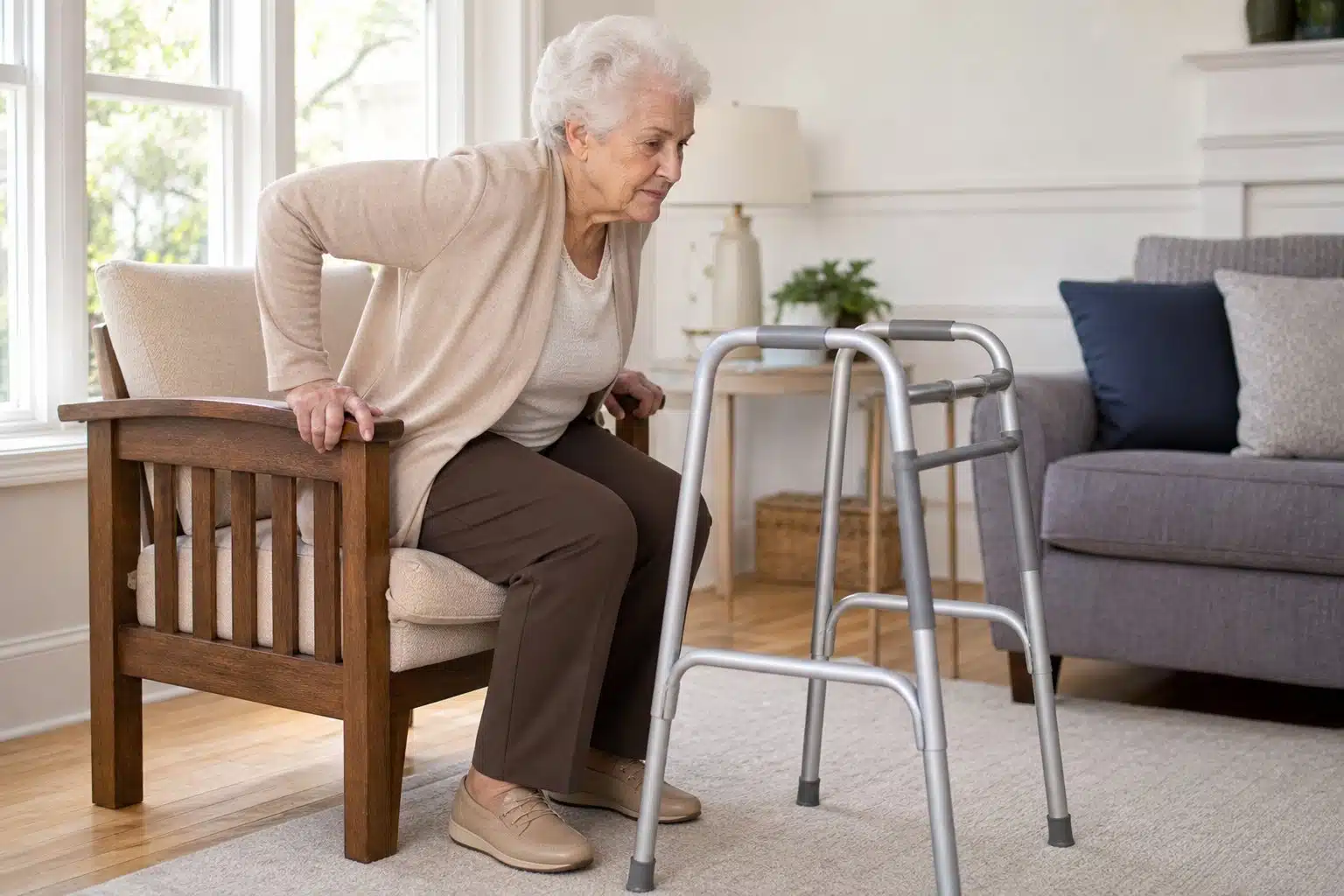
Keep Walking Aids Within Reach
A walker or cane should be accessible before the person stands up.
Position the aid where it can be reached safely without leaning or stretching.
A walker should not be used as a support for pulling oneself out of bed unless the manufacturer specifically approves that use.
: How to Make Nighttime Bathroom Trips Safer for Seniors
3. Improve Safety in Hallways and Living Rooms
Living rooms and hallways often contain hazards that become easy to overlook.
Furniture, rugs, extension cords, and uneven flooring can interfere with normal walking.
Remove Loose Rugs
Loose rugs are one of the first things I’d check during a home safety review.
Their edges can curl upward, and lightweight rugs may slide across smooth flooring.
Removing unnecessary rugs is often the safest option.
If a rug must remain, make sure it’s secured properly and lies completely flat.
Rearrange Furniture
Create clear walking routes between frequently used areas.
For example, someone should be able to move comfortably between their favorite chair, the kitchen, and the bathroom without squeezing between furniture.
Avoid placing small tables, plant stands, or footstools in common walking paths.
If a walker is used, allow additional space for turning.
Secure Electrical Cables
Electrical cords can create trip hazards, particularly when they cross doorways or walking routes.
Move cables behind furniture or use appropriate cable management products.
Don’t run electrical cables underneath rugs, where damage and overheating may go unnoticed.
Choose Stable Seating
Very low sofas and soft armchairs can make standing difficult.
A firm chair with supportive armrests may be easier to use.
The person should be able to place their feet securely on the floor and stand without excessive effort.
Avoid chairs that slide or move unexpectedly.
4. Make Stairs Safer for Older Adults
Stairs require more strength, coordination, and balance than walking across a flat floor.
For someone with poor balance, even a small mistake can lead to a serious fall.
Install Secure Handrails
Handrails provide support when going up or down stairs.
Ideally, stairs should have secure handrails on both sides where practical.
Check that the rails are firmly attached and easy to grip.
Loose handrails should be repaired immediately.
Improve Stair Lighting
Every step should be clearly visible.
Install lighting at the top and bottom of the staircase, with switches accessible from both ends.
Motion-activated lighting can help where appropriate, provided it turns on reliably before someone enters the stairs.
Keep Stairs Clear
Never use stairs for temporary storage.
Shoes, laundry baskets, bags, and other objects should be kept away from the steps.
Check for loose carpet, damaged stair edges, and uneven surfaces.
Consider Professional Advice for Stair Difficulties
If climbing stairs has become unsafe, an occupational therapist can assess the person’s abilities and home environment.
Possible solutions may include changes to handrails, improving lighting, moving essential activities downstairs, or assessing whether a stairlift is suitable.
A stairlift should be selected only after considering the person’s transfer ability, home layout, and safety needs.
5. Prevent Falls in the Kitchen
Kitchens create additional risks because people often bend, reach, carry objects, and move between different work surfaces.
Keep Frequently Used Items Within Reach
Store everyday items between approximately waist and shoulder height where practical.
This reduces the need to climb onto stools or stretch overhead.
Heavy pans and frequently used dishes should be stored where they can be lifted comfortably.
Avoid Climbing on Chairs
Standing on a chair to reach a cupboard is unsafe, particularly for someone with balance problems.
Reorganize storage so essential items can be reached without climbing.
If something is out of reach, ask for assistance rather than using unstable furniture.
Clean Up Spills Immediately
Water, oil, and dropped food can make kitchen floors slippery.
Clean spills as soon as they happen and keep walking areas dry.
Avoid floor mats that slide when stepped on.
Make Kitchen Tasks Less Tiring
For seniors who become tired while preparing meals, a stable chair designed for kitchen activities may help.
A suitable chair should have secure feet, appropriate support, and enough room to sit and stand safely.
An occupational therapist can advise on safe seating and work surface arrangements.
6. Choose the Right Walking Aid
Walking aids can improve stability for people who have difficulty walking independently.
But choosing the wrong type can introduce new risks.
Canes
A cane may help someone who needs a small amount of additional support.
The handle should be at the correct height, and the rubber tip should be in good condition.
A cane generally provides less support than a walker.
Standard Walkers
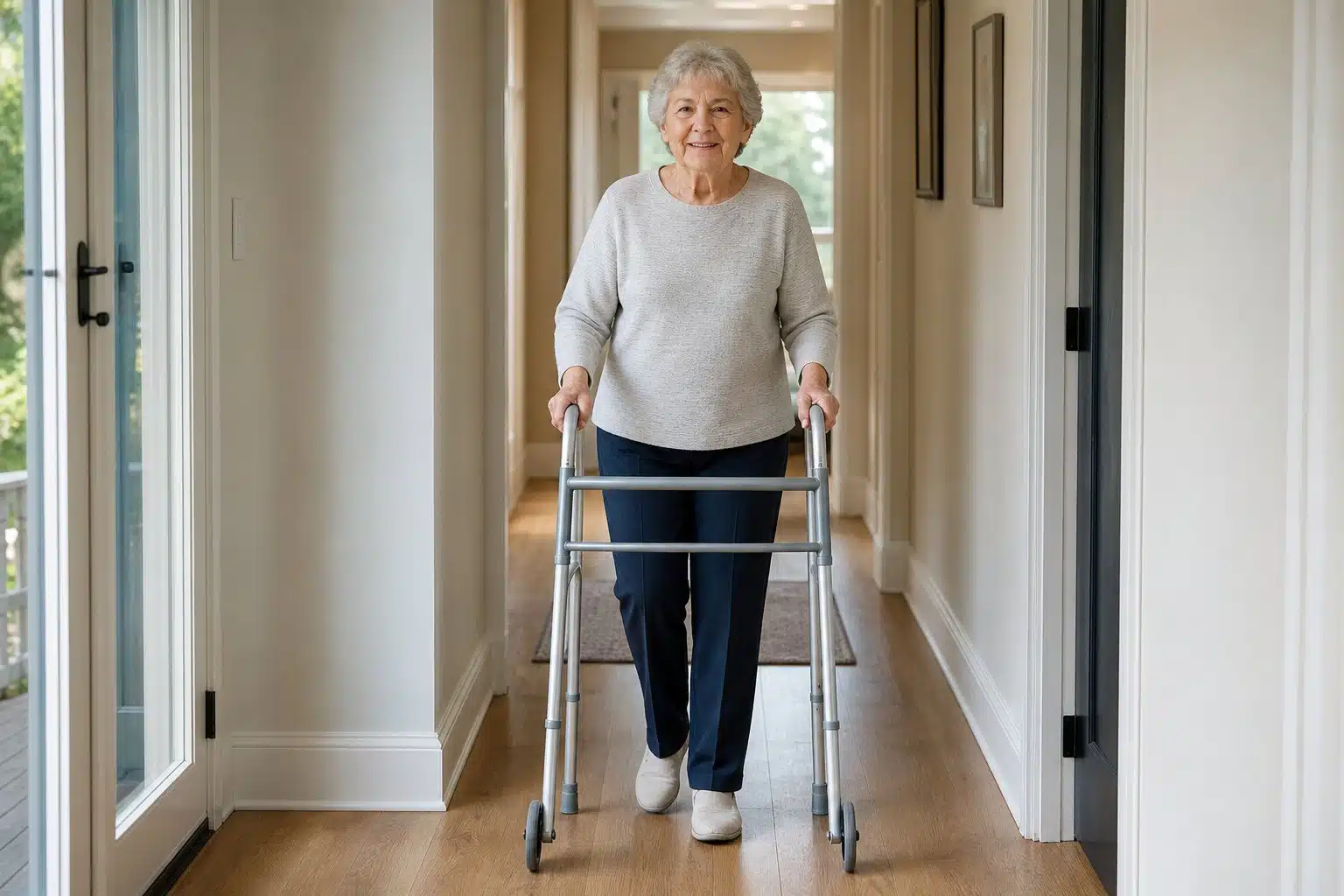
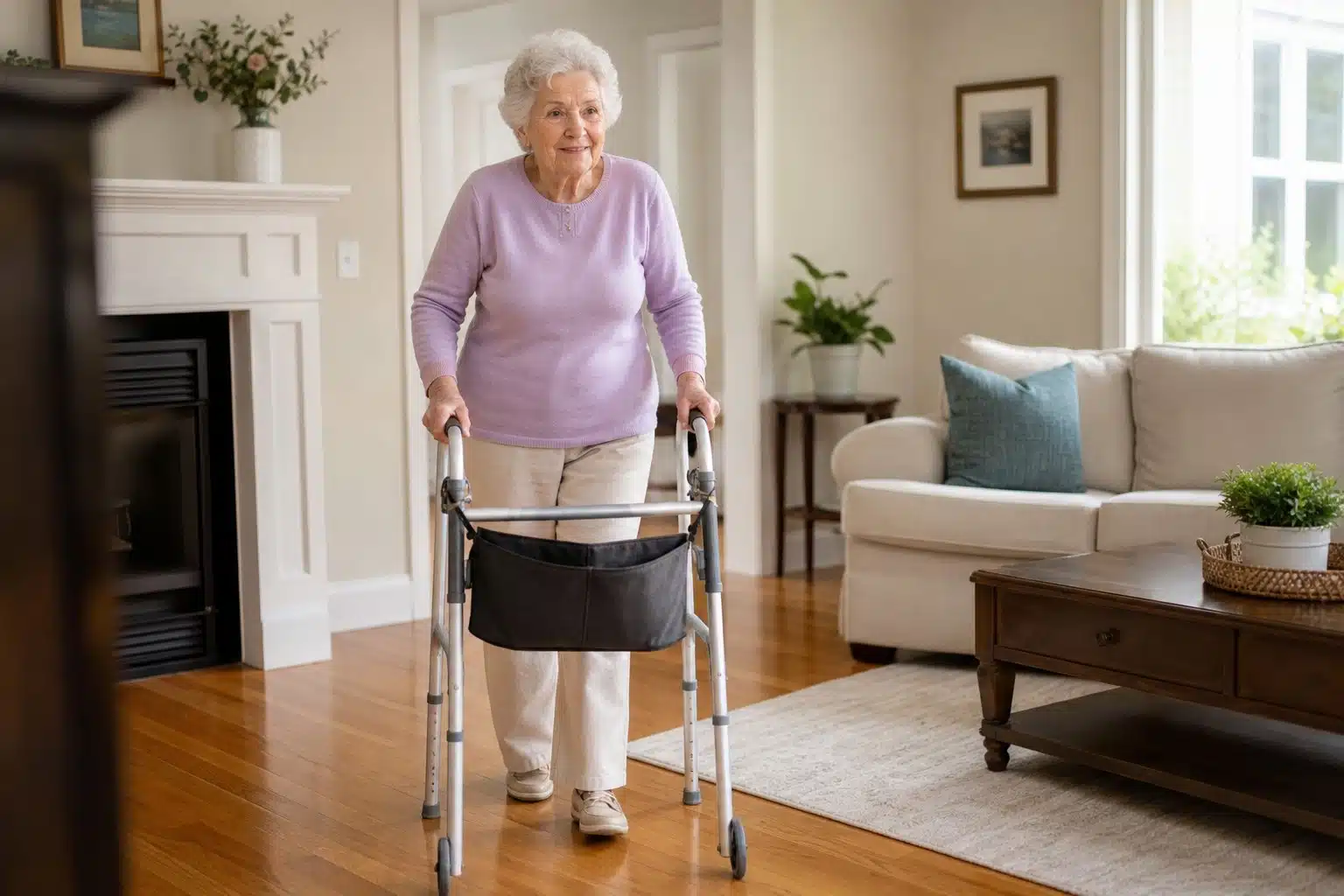
Standard walkers have four legs without wheels.
They provide a broad support base but must be lifted and moved forward.
This may be difficult for someone with limited arm strength or coordination.
Two-Wheel Walkers
Two-wheel walkers have wheels at the front and non-wheeled rear legs.
They can reduce the need to lift the entire frame while providing more controlled movement than some rolling walkers.
Four-Wheel Rollators
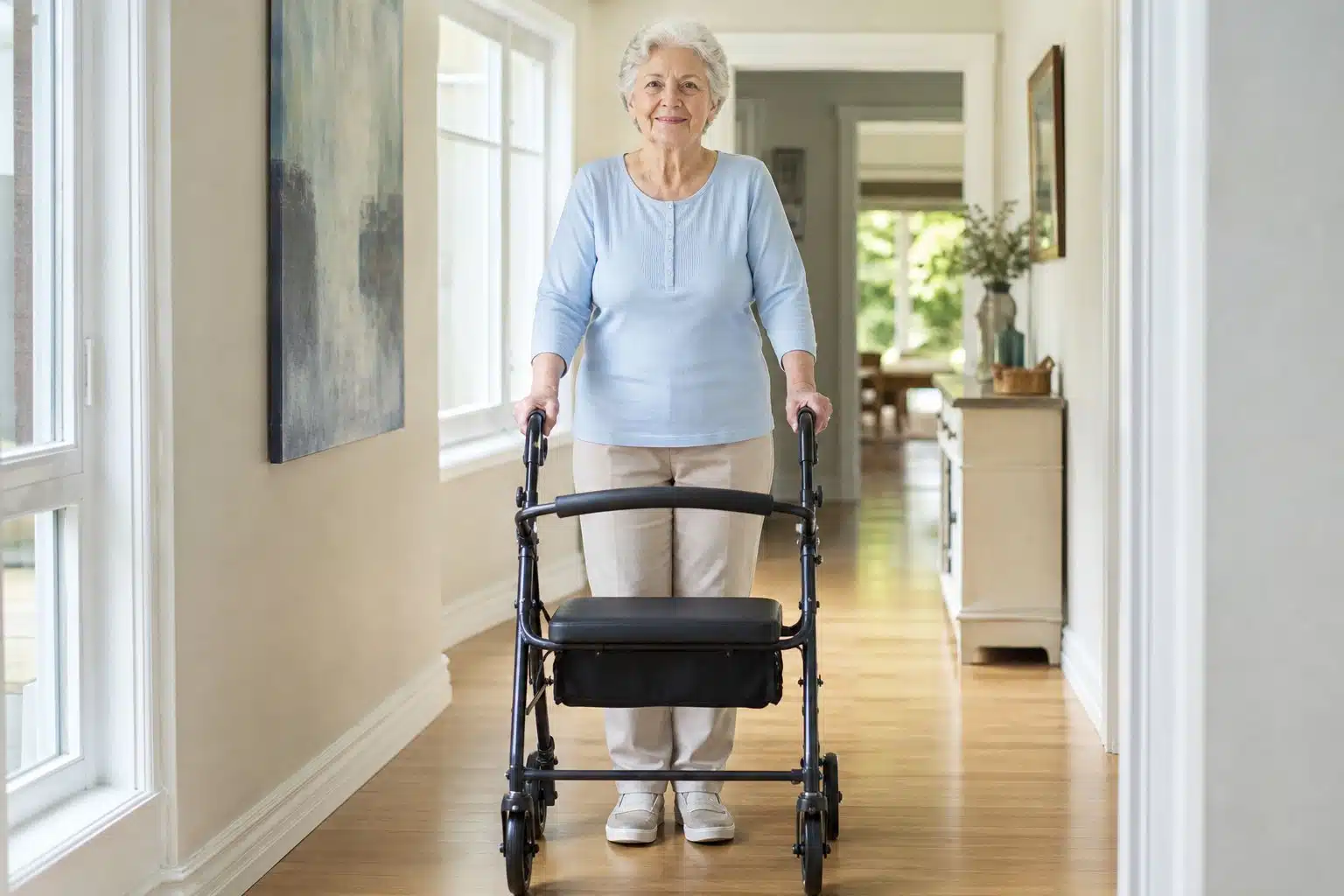
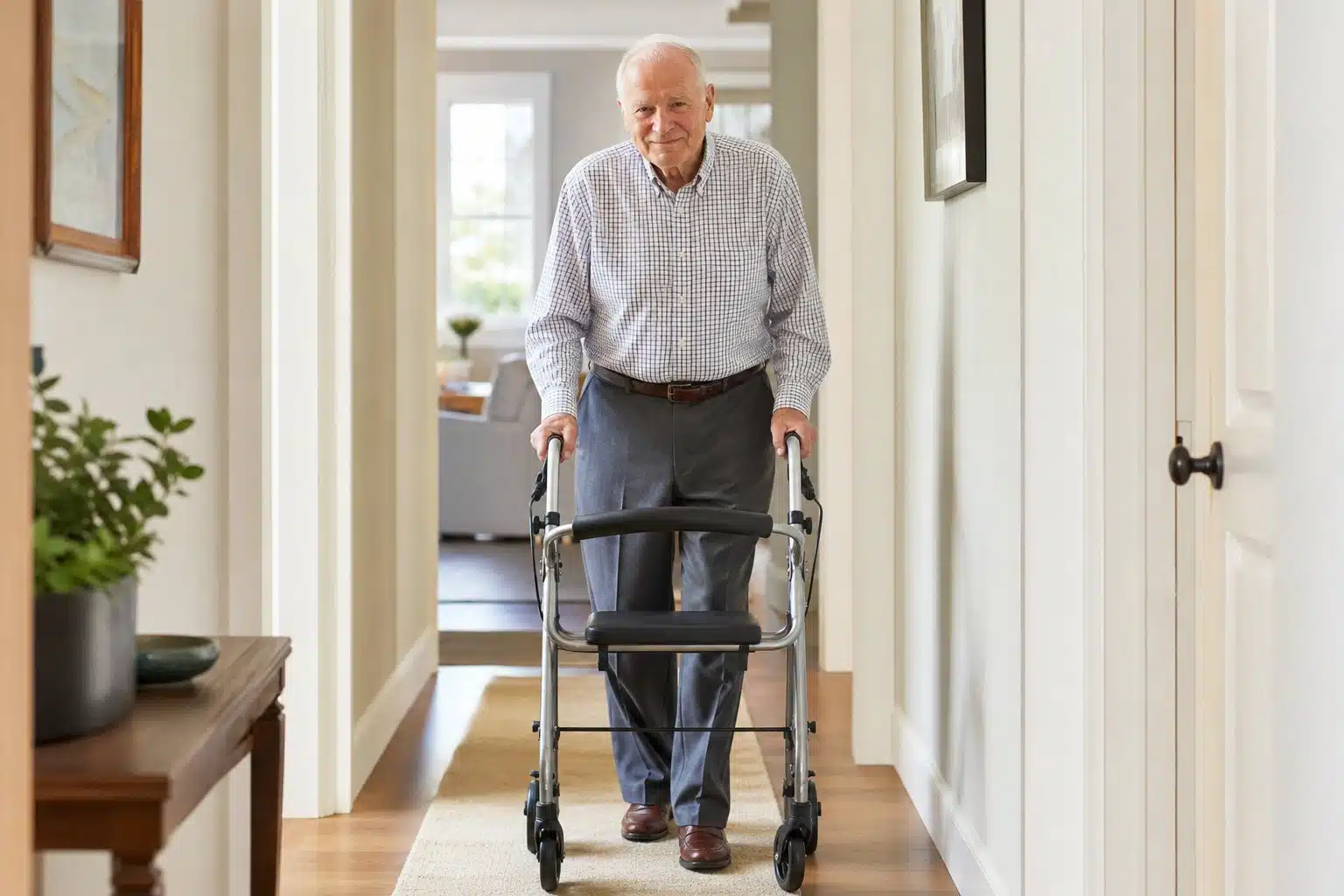
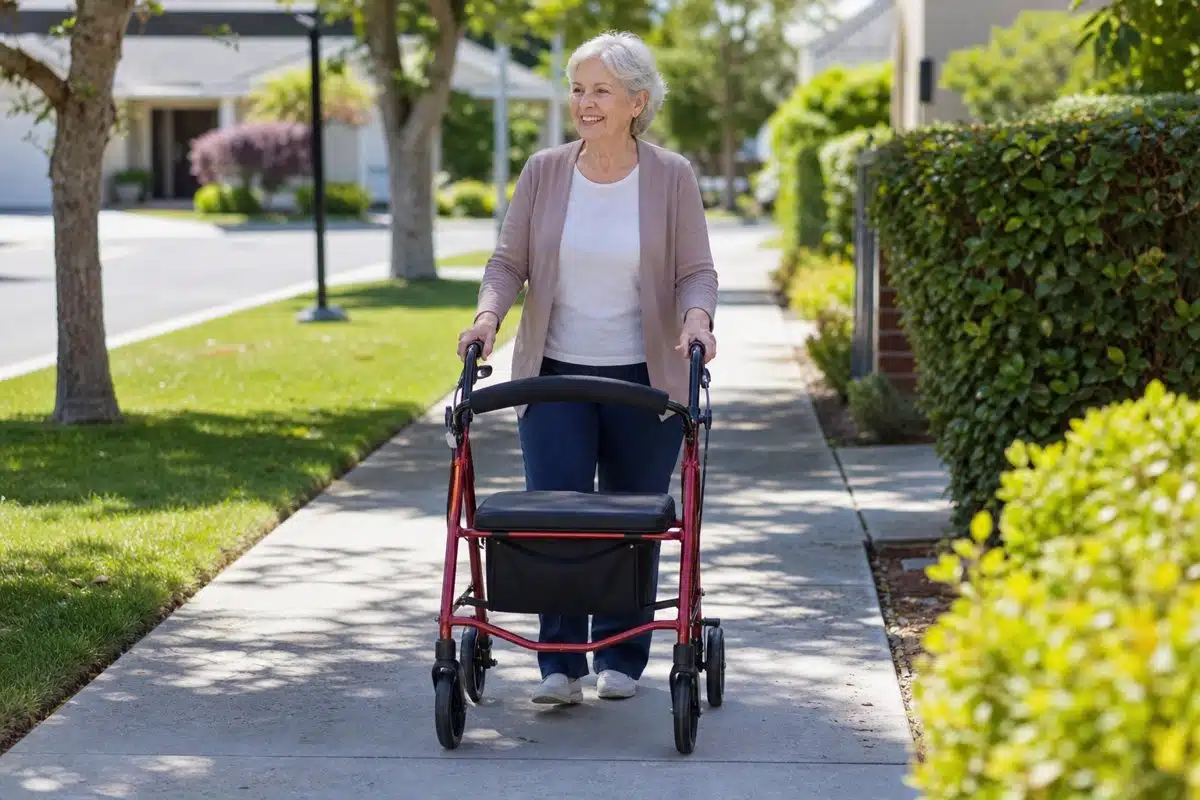
Rollators generally include four wheels, hand brakes, and often a seat.
They may suit people who can walk independently but need support or frequent rest breaks.
They aren’t suitable for everyone with significant balance difficulties because the wheels can move unexpectedly.
An appropriate mobility assessment is important before choosing a walking aid.
: How to Choose the Right Walker for an Elderly Person
7. Wear Supportive, Slip-Resistant Footwear
Footwear is an often overlooked part of preventing falls.
Loose slippers, worn-out shoes, and walking in socks can reduce stability on some indoor surfaces.
Look for Secure Fastenings
Shoes should fit properly and remain securely attached to the foot.
Adjustable straps or laces can help prevent the foot from sliding inside the shoe.
Choose Suitable Soles
Look for soles that provide appropriate traction on the surfaces used most often.
The soles should offer grip without being so sticky that they catch unexpectedly during walking.
Avoid Loose Slippers
Backless slippers and oversized footwear may slip off or interfere with walking.
Supportive indoor shoes with secure heels are often a better option.
Check Shoes Regularly
Inspect soles for wear and check whether the shoes still fit comfortably.
Foot pain, swelling, or changes in foot shape can affect walking.
A podiatrist can help with footwear problems that interfere with balance.
8. Improve Strength and Balance
Home modifications are useful, but fall prevention also involves maintaining physical ability.
Muscle weakness, poor coordination, and reduced balance can make everyday movement more difficult.
The National Institute on Aging recommends physical activity as part of reducing fall risk.
Try Suitable Balance Exercises
Balance exercises may include:
- Standing with feet closer together while holding a stable support.
- Practicing controlled weight shifts.
- Heel-to-toe walking with appropriate supervision.
- Standing on one leg with suitable support, if safe.
Exercise difficulty should match the person’s ability.
Someone with frequent falls, significant unsteadiness, or dizziness should seek professional advice before attempting new balance exercises.
Build Leg Strength
Strong leg muscles help with standing, walking, and climbing stairs.
A supervised exercise program may include controlled sit-to-stand movements and other strengthening activities.
A physical therapist can recommend exercises based on the person’s needs.
Consider Tai Chi
Tai chi involves slow, controlled movements that challenge balance and coordination.
Research supports certain tai chi programs as a way to reduce fall risk among some older adults.
Classes should be suitable for the participant’s mobility and health.
Stay Physically Active
Regular activity helps maintain strength and movement confidence.
Walking, suitable exercise classes, and individually prescribed strengthening activities may all help.
The aim is to remain active at a level that’s safe and manageable.
9. Review Medications and Health Conditions
Some fall risks aren’t caused by the home environment.
Health conditions, medication side effects, and changes in blood pressure can all contribute.
Ask for a Medication Review
A doctor or pharmacist can check whether medications are contributing to dizziness, drowsiness, or balance difficulties.
This is particularly useful when someone takes several medications.
Never stop or change prescribed medication without professional guidance.
Check Vision and Hearing
Vision problems can make steps and obstacles harder to identify.
Regular eye examinations help identify changes that may affect safe movement.
Hearing and inner-ear problems can also affect balance.
Watch for Dizziness
Feeling dizzy when standing up may be associated with a drop in blood pressure or another medical problem.
If this happens regularly, arrange a medical assessment.
Sudden dizziness with symptoms such as weakness on one side, difficulty speaking, or a severe new headache requires emergency medical attention.
Discuss Previous Falls
Any fall should be taken seriously, even if no obvious injury occurs.
A doctor can assess possible causes, including balance problems, medications, and underlying health conditions.
A previous fall increases the likelihood of falling again.
10. Make Outdoor Areas Safer
Fall prevention shouldn’t stop at the front door.
Paths, driveways, gardens, and entrances can become hazardous when surfaces are wet, uneven, or poorly maintained.
Repair Uneven Paths
Check for cracked paving, raised edges, and loose stones.
Repair uneven surfaces where possible.
Install Outdoor Handrails
Steps near entrances may benefit from secure handrails.
The design should suit the number of steps, the person’s mobility, and the surrounding space.
Improve Entrance Lighting
Outdoor lights help people see changes in ground level.
Motion-sensor lighting can be useful near doors, paths, and steps.
Keep Walkways Clear
Remove garden tools, hoses, leaves, and other objects from frequently used routes.
Take extra care during rain, snow, or icy conditions.
If outdoor surfaces are unsafe, consider postponing nonessential trips or arranging assistance.
11. Create a Fall Prevention Plan for Seniors Living Alone
Older adults who live alone may need additional precautions because assistance may not be immediately available after a fall.
A simple plan can reduce delays in getting help.
Keep a Phone Accessible
A phone should be within easy reach, particularly in the bedroom and main living area.
For someone with mobility problems, carrying a charged mobile phone may be safer than relying on a landline in another room.
Consider an Emergency Alert System
Some emergency alert devices allow users to contact a monitoring service or caregiver.
Depending on the system, features may include wearable buttons, automatic fall detection, or mobile connectivity.
Automatic fall detection doesn’t identify every fall, so it shouldn’t replace other safety precautions.
Arrange Regular Check-Ins
Family members, friends, or caregivers can arrange a suitable contact routine.
The plan should explain what happens if the person doesn’t respond.
Know What to Do After a Fall
If someone falls, they shouldn’t rush to stand up.
They should first check for pain, injury, and whether movement feels safe.
If a serious injury is suspected, they should remain as still as possible and call emergency services.
A person who cannot get up safely should call for help rather than repeatedly trying to stand.
If someone is taking blood-thinning medication or has hit their head, prompt medical assessment is particularly important.
Home Fall Prevention Checklist for Seniors
This checklist can help you identify the most common household hazards.
| Safety check | Completed |
|---|---|
| Walkways are free from clutter | ☐ |
| Loose rugs have been removed or secured | ☐ |
| Electrical cables are away from walking routes | ☐ |
| Hallways and stairs have adequate lighting | ☐ |
| Night lights illuminate the bathroom route | ☐ |
| Bathroom floors have suitable slip-resistant surfaces | ☐ |
| Grab bars are installed securely where needed | ☐ |
| Stairs have secure handrails | ☐ |
| Frequently used items are within easy reach | ☐ |
| Chairs and beds are suitable heights | ☐ |
| Walking aids are correctly fitted | ☐ |
| Shoes fit securely and provide appropriate grip | ☐ |
| Medications have been reviewed for fall risks | ☐ |
| Vision has been checked recently | ☐ |
| Outdoor paths are clear and maintained | ☐ |
| A phone or emergency alert device is accessible | ☐ |
| A plan exists for getting help after a fall | ☐ |
I recommend reviewing this checklist whenever someone’s mobility changes, after a fall, or when furniture and living arrangements change.
For a broader assessment, see Home Safety Checklist for Seniors.
Which Fall Prevention Improvements Should You Make First?
Not every household needs the same modifications.
The most useful changes depend on the person’s mobility, health, and daily routine.
For Seniors With Balance Problems
Start by clearing walking routes and reviewing footwear.
Make sure the person has an appropriate walking aid if one is needed.
A professional balance assessment can help identify whether physical therapy or another intervention would reduce risk.
For Seniors Who Fall at Night
Focus on the bedroom and bathroom route.
Improve lighting, remove floor obstacles, and make sure walking aids are accessible.
If nighttime bathroom visits are frequent, discuss possible medical causes with a healthcare professional.
For Seniors With Limited Mobility
Prioritize safe transfers from beds, chairs, and toilets.
Bathroom grab bars, suitable seating, and correctly fitted mobility equipment may help.
An occupational therapist can assess whether additional modifications are needed.
For Seniors on a Tight Budget
Begin with free improvements.
Remove clutter, reorganize furniture, keep floors dry, and move frequently used items within easy reach.
Check whether local aging services, community organizations, or health plans offer home safety assessments or assistance with modifications.
Common Questions About Preventing Falls at Home
What Is the Best Way to Prevent Falls in Elderly People?
The most effective approach combines home safety improvements, suitable strength and balance exercises, medication reviews, and management of health conditions. No single modification prevents every fall, so the best plan addresses the person’s individual risks.
What Are the Most Common Causes of Falls at Home for Seniors?
Common contributing factors include poor balance, muscle weakness, vision problems, medication side effects, and environmental hazards such as loose rugs or poor lighting. Falls often involve more than one factor.
How Can You Prevent Falls in Seniors With Poor Balance?
Remove trip hazards, improve lighting, and arrange a professional assessment of walking and balance. A physical therapist may recommend exercises and a suitable mobility aid.
What Should You Do if an Elderly Person Keeps Falling?
Arrange a medical assessment as soon as possible, even if previous falls haven’t caused obvious injuries. Repeated falls may indicate medication problems, muscle weakness, blood pressure changes, or other conditions that need treatment.
Can Falls Be Prevented Completely?
No home or exercise program can eliminate every fall risk. The aim is to reduce avoidable hazards, improve physical stability, and make sure the person can get help quickly if a fall occurs.
Final Thoughts on Fall Prevention at Home
Preventing falls at home starts with understanding where an older person is most likely to lose their balance.
I’d begin with a walk through the home, paying particular attention to bathrooms, stairs, bedrooms, and frequently used routes. Look for anything that requires someone to stretch, climb, step around obstacles, or walk across slippery surfaces.
Then consider the person’s physical needs. Better lighting and secure grab bars can help, but strength, balance, vision, and medication reviews matter too.
The aim isn’t to restrict everyday activities. It’s to make those activities safer so older adults can maintain as much independence as possible.
Trusted Sources and Further Reading
The following organizations provide evidence-based advice on preventing falls among older adults.
1. Centers for Disease Control and Prevention (CDC): Older Adult Falls Information about fall risk factors, prevention strategies, and older adult fall statistics.
2. National Institute on Aging: Falls and Falls Prevention Practical guidance on reducing fall risks, physical activity, and safer home environments.
3. CDC: STEADI Older Adult Fall Prevention Resources for healthcare professionals assessing and managing fall risk.
4. U.S. Access Board: ADA Accessibility Standards Technical accessibility guidance covering features such as grab bars, handrails, and accessible routes. These standards can inform design decisions, although they don’t automatically apply to every private home.