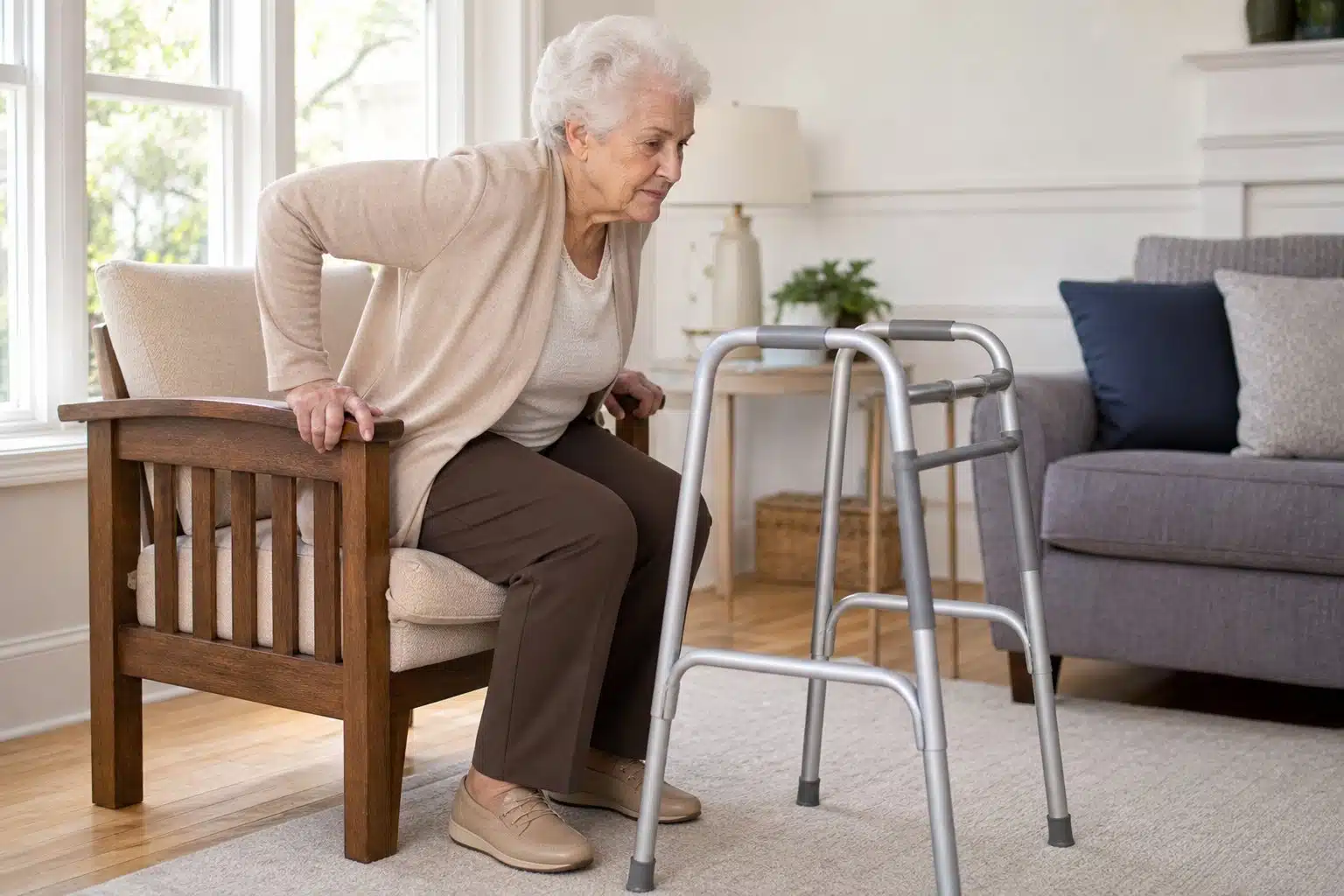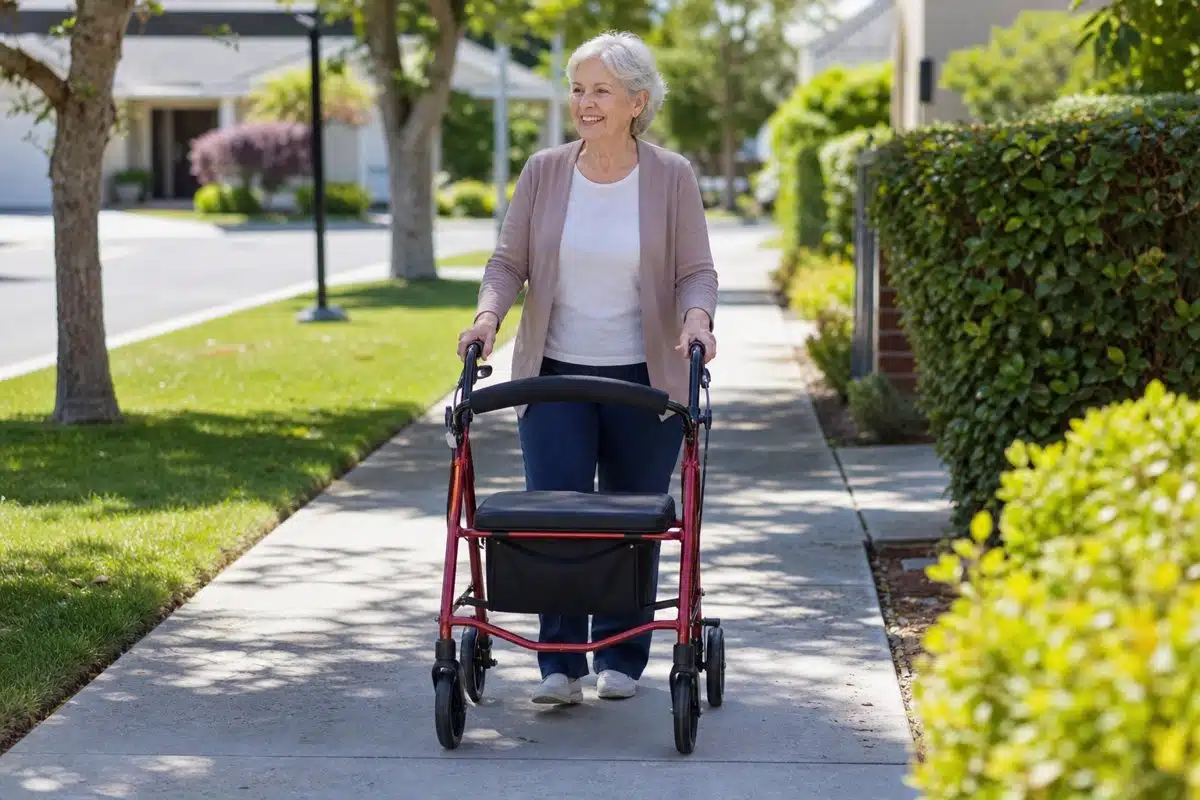

Finding the best walkers for seniors with balance problems means looking beyond lightweight frames and comfortable handles.
The right walker needs to provide reliable support, suit the person’s walking ability, and feel manageable during everyday activities.
I’ve compared seven walker options for older adults who feel unsteady on their feet, have reduced leg strength, or need additional support moving around the house.
This guide is based on product information, walker design, and established mobility safety guidance, rather than personal hands-on testing.
One point matters before choosing: a standard walker, two-wheel walker, and four-wheel rollator behave quite differently.
A walker that suits someone who tires during long walks might be unsuitable for a person who struggles to stand without support.
Best Walkers for Seniors With Balance Problems: Quick Comparison
| Walker | Best for | Weight | Price tier |
|---|---|---|---|
| Drive Medical 10210-1 | Everyday support and controlled walking | Approx. 7 lb | Budget |
| Trigger Release Folding Walker | Seniors with limited hand dexterity | Check model specifications | Budget |
| HOMLAND Folding Walker | Adjustable everyday mobility support | Check model specifications | Budget to mid-range |
| HolyHeal All-Terrain Rollator | Outdoor walking and rest breaks | Check model specifications | Mid-range |
| byACRE Carbon Ultralight Rollator | Lightweight transport and active users | Varies by version | Premium |
| Vive Mobility Lightweight Walker | Folding and everyday mobility | Check model specifications | Mid-range |
The six products supplied cover different walking needs. I’ve kept the comparison to six rather than adding an unverified seventh product simply to reach a number.
The price tiers are broad positioning estimates, not current Amazon prices. Confirm dimensions, weight, capacity, and configuration on the exact listing before ordering.
How to Choose a Walker for Seniors With Balance Problems
I would start by asking how much support the person actually needs.
Someone who feels slightly unsteady outdoors may do well with a rollator. Someone who regularly loses balance while standing may need a standard walker or a different mobility solution recommended by a physical therapist.
Choose the Right Walker Type
Standard walkers
A standard walker has four legs, usually fitted with rubber tips. The user lifts the frame, places it forward, and steps into the supported area.
Because the frame stays stationary while weight is transferred through the handles, this design can provide substantial support when used correctly.
The drawback is the repeated lifting. Seniors with weak arms, painful shoulders, or limited coordination may struggle.
Two-wheel walkers
These have wheels at the front and rubber-tipped legs or glides at the back.
The front wheels allow smoother movement without lifting the entire frame. The rear contact points help resist unwanted rolling.
For many older adults who need regular support, this is a useful compromise between stability and ease of movement.
Four-wheel rollators
Rollators usually have four wheels, hand brakes, and often a seat.
They’re convenient for longer walks and people who need somewhere to rest. But their wheels allow the frame to move more freely.
I wouldn’t automatically recommend a rollator to someone with severe balance problems, poor hand control, or difficulty operating brakes.
Look for a Stable Frame
A wide support base can improve stability, but wider isn’t always better.
A walker needs to fit through doorways and around furniture without forcing the user to twist or turn awkwardly.
Check the frame width, wheel arrangement, and manufacturer’s instructions for safe weight-bearing.
Check the Weight Capacity
Every walker has a maximum supported user weight.
Choose a model rated above the user’s actual weight and confirm whether the manufacturer permits substantial weight-bearing through the handles.
A high weight rating doesn’t automatically mean a walker provides better balance support.
Make Sure the Handles Fit
Poorly adjusted handles can encourage stooping, raised shoulders, and awkward walking.
As a general starting point, walker grips should sit around wrist-crease height when the person stands upright with arms relaxed.
The elbows should remain slightly bent while holding the grips. A physical therapist can check the fit.
Consider Hand Strength and Arthritis
A walker isn’t particularly useful if someone struggles to hold the handles or operate the controls.
Look for comfortable grips, accessible folding mechanisms, and brakes that the person can reliably use.
For seniors with arthritis, a trigger-release folding mechanism may be easier than a small push-button system.
Think About Where the Walker Will Be Used
Indoor and outdoor walkers face different conditions.
Small front wheels often work well on smooth indoor flooring. Larger rollator wheels may cope better with ordinary outdoor surfaces, although uneven ground still presents risks.
Measure narrow doorways and hallways before ordering.
: How to Choose the Right Walker for an Elderly Person
Drive Medical 10210-1: Best for Everyday Stability
The Drive Medical 10210-1 is my first choice from this selection for seniors who need a straightforward two-wheel walker.
Two-Button Rolling Walker Features Dual Push-Button Operation, Adjustable Height and Durable Aluminum Frame
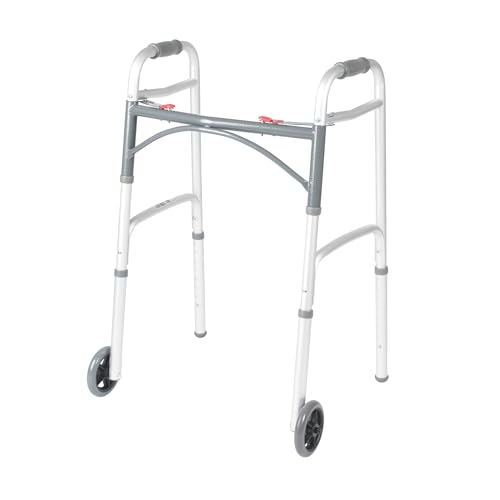
It has 5-inch front wheels, rear glide caps, and a folding aluminum frame. The design allows the user to move forward without repeatedly lifting the entire walker.
According to Drive Medical, the adult model weighs approximately 7.5 pounds, supports up to 350 pounds, and adjusts between 32 and 39 inches in handle height.
What works
The two-wheel arrangement makes sense for seniors who need more controlled movement than a four-wheel rollator normally provides.
The folding mechanism uses two buttons that can be pressed with the fingers, palm, or side of the hand. Each side folds independently, which helps with storage and maneuvering through confined spaces.
I also like that the design is relatively simple. There are no hand brakes or seat mechanisms to manage.
What doesn’t
The rear glide caps may behave differently on carpet, tile, and uneven surfaces.
There is no seat, so anyone who needs regular sitting breaks should consider another option.
Who it suits
I’d shortlist this walker for older adults who need regular walking support indoors and on suitable outdoor surfaces.
It’s a sensible starting point for someone moving from a cane to a walker, provided a physical therapist confirms the design offers enough support.
Trigger Release Folding Walker: Best for Limited Hand Dexterity
This trigger-release folding walker is worth considering for seniors who find ordinary folding buttons awkward.
Lightweight Supports Up to 350 lbs, Aluminum Easy folding and storage Walker for Elderly, Handicapped and Disabled

Its main attraction is the trigger-style release mechanism, which is designed to make folding easier for users with limited hand movement.
That matters more than people sometimes expect. A walker that is difficult to fold can become frustrating when getting into a car or storing the frame beside a chair.
What works
The trigger-release design is the main reason I’d consider this model.
For someone with stiff fingers or arthritis, the position of the release controls may be easier to manage than buttons mounted on the frame.
The folding design also makes storage more convenient.
What doesn’t
Trigger-release doesn’t automatically mean arthritis-friendly. The user still needs enough strength and coordination to operate the mechanism.
I couldn’t independently confirm the exact dimensions, walker weight, or weight capacity for this listing.
Check whether the supplied version has front wheels and suitable rear tips.
Who it suits
This is a candidate for seniors with reduced finger dexterity who need a folding walker.
I’d pay particular attention to the release mechanism before buying. Someone with painful hands should ideally try the controls in person.
HOMLAND Folding Walker: Best for Adjustable Everyday Support
The HOMLAND folding walker is another option for older adults who want an adjustable walking aid. It’s a lightweight, foldable design with adjustable and removable components.
Lightweight Aluminum Frame | Height Adjustable, Three Wheeled Rollator Walker for Indoor and Outdoor Use, Removable Storage Bag

I would focus on the exact wheel configuration before making a decision. For someone with balance problems, the way a walker contacts the floor matters more than how compact the frame looks.
What works
An adjustable frame allows the handle position to be matched to the user’s height.
Folding construction is useful for transporting a walker or storing one when space is limited.
Removable components may offer flexibility, although the exact supplied configuration needs checking.
What doesn’t
I wouldn’t assume every HOMLAND walker provides the same support.
Different wheel and foot arrangements can affect movement, especially on smooth floors.
The exact product weight, dimensions, and weight capacity weren’t independently confirmed.
Who it suits
I’d consider this walker for seniors who want an adjustable folding frame for everyday use.
Before ordering, compare its width with your home’s narrowest doorway and confirm the height adjustment range.
If the user frequently loses balance, have a physical therapist assess whether this walker provides enough stability.
HolyHeal All-Terrain Rollator: Best for Outdoor Walking
The HolyHeal all-terrain rollator targets a different type of user.
17.5" Extra-Wide Seat, 6.6" Breathable Backrest, Adjustable Height, Support 350lb, Cane and Cup Holder Foldable Walker

Unlike a conventional two-wheel walker, an all-terrain rollator is intended for people who want easier movement across outdoor surfaces.
This type of walker appeals to seniors who enjoy going outside but need additional walking support and somewhere to rest.
What works
The main advantage of an all-terrain rollator design is its focus on outdoor mobility.
Larger wheels, where fitted, can make ordinary pavement irregularities easier to negotiate than small wheels.
A rollator seat can also help users who become tired during longer walks, provided the model includes one and the brakes are properly locked before sitting.
What doesn’t
I wouldn’t choose an all-terrain rollator solely because the wheels look substantial.
Four-wheel rollators can move away from the user if pushed too far ahead or if the brakes aren’t controlled.
They may also be bulky inside smaller homes.
The exact wheel size, seat specifications, and weight capacity for this HolyHeal listing need confirmation.
Who it suits
This is an option for seniors who can walk independently with a rolling aid, operate hand brakes reliably, and need occasional rest breaks.
I would avoid recommending this type without professional assessment to someone with severe balance difficulties or repeated falls.
byACRE Carbon Ultralight Rollator: Best for Lightweight Transport
The byACRE Carbon Ultralight Rollator is the premium option in this comparison.
10.6 lbs, World's Lightest Carbon Rollator Walker with Seat for Seniors, Foldable Mobility Aid, Indoor and Outdoor Use

Its carbon-fiber construction is intended to reduce frame weight, which may appeal to seniors who regularly travel or need to load their walker into a vehicle.
What interests me most is the difference between carrying a walker and using one. A lighter frame may be easier to transport, but low weight alone doesn’t establish suitability for someone with poor balance.
What works
The carbon-fiber design is the main attraction.
A lightweight folding rollator may be easier for a caregiver to lift into a car.
For active older adults, reduced carrying weight can make everyday transport less demanding.
What doesn’t
Premium materials don’t guarantee better fall prevention.
This remains a rolling walking aid, so brake control, walking posture, and the user’s ability to control forward movement are essential.
The exact weight and dimensions depend on the version. Confirm the specifications for the linked model before buying.
Who it suits
I’d shortlist the byACRE for an older adult who already uses a rollator safely and wants something easier to transport.
I wouldn’t make this my first recommendation for a senior who needs substantial weight-bearing support or has unpredictable balance loss.
Vive Mobility Lightweight Walker: Best for Folding and Storage
The Vive Mobility Lightweight Walker is worth comparing if easy storage and everyday handling are priorities.
Narrow, Folding Walker, 9 lb | w/ 4 Wheels for Small & Tight Spaces - Light Weight for Balance, Compact Doorways, Foldable - Portable Collapsible for...

A folding walker can make a practical difference in a small home, particularly when the frame needs to be stored beside furniture or transported regularly.
The supplied listing identifies a lightweight walker, although I couldn’t independently confirm the complete specifications for this exact version.
What works
The main attraction is the lightweight design.
A manageable frame may be easier to reposition, particularly for older adults who struggle with heavier mobility equipment.
If the listed model folds compactly, that also makes transport and storage easier.
What doesn’t
I’d want to confirm the wheel configuration before recommending this walker for balance problems.
A lightweight frame isn’t automatically more stable than a heavier alternative.
I’d also check the folding mechanism, handle height range, and maximum supported user weight.
Who it suits
This walker is worth considering for seniors who need a manageable mobility aid and have limited storage space.
The final decision should depend on its actual configuration and the person’s ability to use the frame safely.
Which One Should You Buy?
For Seniors Who Need Regular Balance Support
My first shortlist choice is the Drive Medical 10210-1.
The two-wheel design offers a practical balance between forward movement and support, and its specifications are clearly documented.
That doesn’t mean it’s suitable for everyone. Seniors who need to place substantial weight through a walker should have the device type assessed professionally.
For Seniors With Arthritis or Stiff Fingers
Consider the Trigger Release Folding Walker.
Its folding mechanism may be easier to operate than conventional buttons.
I would still check grip comfort and how much force is needed to release the frame.
For Seniors Who Walk Outdoors
The HolyHeal all-terrain rollator deserves consideration if the user can control a four-wheel walker safely.
For someone who needs rest breaks, a suitable rollator with a seat may be more practical than a basic walking frame.
For Seniors Who Travel Frequently
I’d compare the byACRE Carbon Ultralight Rollator.
Its lightweight design is appealing for transport, especially when a caregiver regularly lifts the walker.
The higher-end construction makes more sense when low carrying weight is a genuine priority.
For Seniors on a Tight Budget
I’d start with the Drive Medical 10210-1 rather than paying extra for features that aren’t needed.
The best value comes from choosing the correct walker type, not the model with the longest feature list.
Standard Walker vs Rollator: Which Offers Better Stability?
This is one of the most important decisions for seniors with poor balance.
| Feature | Standard walker | Two-wheel walker | Four-wheel rollator |
|---|---|---|---|
| Wheels | None | Two front wheels | Four wheels |
| Movement | Lift and place | Push forward | Roll forward |
| Weight-bearing support | Often substantial | Often substantial | Model-dependent |
| Hand brakes | No | Usually no | Usually yes |
| Seat | No | Usually no | Often included |
| Best use | Controlled, short-distance walking | Everyday supported walking | Longer walks for suitable users |
| Main drawback | Requires lifting | Rear tips may catch | Can roll away |
A standard walker generally offers a stationary support base when all four legs contact the ground.
A two-wheel walker reduces the effort needed to move forward while retaining rear contact points.
A four-wheel rollator offers smoother movement but requires reliable control of its wheels and brakes.
For someone with severe balance difficulties, the stationary support of a standard walker may be preferable. Yet if the person cannot safely lift the frame, that advantage may disappear.
[INTERNAL LINK: Rollator vs. Standard Walker: Which Is Better for Seniors?]
How to Adjust a Walker to the Correct Height
An incorrectly adjusted walker can encourage poor posture and make walking harder.
Start with these steps:
- Ask the person to stand upright wearing their usual walking shoes.
- Let their arms rest naturally beside their body.
- Adjust the handles to approximately wrist-crease height.
- Check that their elbows bend slightly when holding the grips.
- Make sure both sides are adjusted equally and all locking pins engage fully.
- Have a physical therapist check the fit and walking technique.
A walker shouldn’t force someone to lean forward or raise their shoulders.
If the user has significant stooping, joint restrictions, or unusual posture, standard fitting guidance may need adjusting.
Common Walker Mistakes That Increase Fall Risks
Pushing the Walker Too Far Ahead
A walker should stay close enough to provide useful support.
Reaching forward toward the frame can shift the person’s weight away from their feet.
Walking Outside the Frame
Moving too far behind or outside the support area reduces the walker’s usefulness.
The correct walking pattern depends on the device and the person’s condition.
Using Worn Rubber Tips
Rubber tips and glide components wear down over time.
Inspect them regularly and replace damaged parts with manufacturer-approved replacements.
Forgetting to Lock Rollator Brakes
A rollator should have its parking brakes engaged before sitting on the seat.
Never use an unlocked rollator as support when standing up.
Pulling on a Walker to Stand
A walker can tip or move when someone pulls on its handles while rising from a chair.
Use the chair’s stable armrests or another recommended support to stand, then take hold of the walker once balanced.
Using a Walker on Stairs
Most conventional walkers aren’t designed for ordinary stair climbing.
Stairs require specific techniques, equipment, or assistance. A physical therapist should assess the safest approach.
[INTERNAL LINK: Home Safety Checklist for Seniors]
Common Questions
What Is the Most Stable Walker for Elderly Adults?
A standard four-leg walker often provides a more stationary support base than a rollator. But stability also depends on the user’s strength, coordination, walking pattern, and ability to move the frame safely.
Are Rollators Safe for Seniors With Poor Balance?
Rollators can be suitable for some seniors with mild balance difficulties who can control the wheels and brakes. People with severe instability or frequent falls should have a physical therapist assess their mobility before choosing one.
Is a Two-Wheel Walker Better Than a Four-Wheel Walker?
A two-wheel walker usually offers more resistance to uncontrolled forward movement because its rear legs remain in contact with the floor. A four-wheel rollator moves more freely and may suit people who need smoother walking and rest breaks.
Should an Elderly Person Use a Walker or a Cane?
A walker generally provides a larger support base than a cane. Someone who needs support from both arms or has significant balance problems may benefit from a walker, but the safest choice requires individual assessment.
Can Using a Walker Help Prevent Falls?
A correctly selected and fitted walker can improve support during walking and may reduce fall risk for some people. No walker guarantees fall prevention, and poor technique or an unsuitable model can increase the risk.
My Final Recommendation
For most people comparing these particular models, I’d begin with the Drive Medical 10210-1 because its design and specifications are straightforward to assess.
For someone who can safely use a rollator and wants better outdoor mobility, the HolyHeal is worth comparing. If transport weight matters most, the byACRE Carbon Ultralight is another candidate.
The key is to choose the device around the person rather than choosing the person around the device.
If a senior has frequent falls, sudden dizziness, new weakness, or worsening balance, arrange a medical assessment. A physical therapist or occupational therapist can help determine the safest walking aid and teach the correct technique.
For further guidance, see the National Institute on Aging’s fall prevention resources and the MedlinePlus guide to falls.