How to Make Stairs Safer for Elderly Adults: 15 Tips
Learning how to make stairs safer for elderly adults can help prevent falls and make everyday life at home easier.
If you’re an older adult, caregiver, or someone concerned about an aging parent, this guide covers 15 practical stair safety improvements based on established fall prevention advice and home safety recommendations.
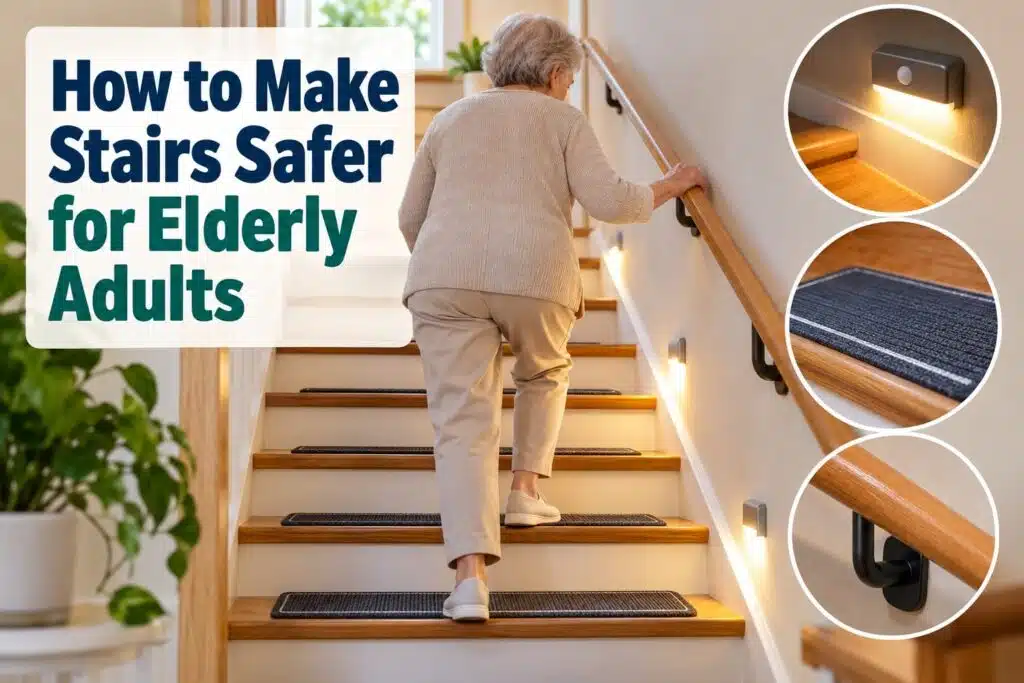
You don’t necessarily need an expensive staircase renovation. Sometimes, improving the lighting, fixing a loose handrail, or adding suitable non-slip stair treads makes a real difference.
The first step is identifying potential hazards before someone gets hurt.
Quick Comparison: Stair Safety Improvements for Seniors
| Safety improvement | Best for | Cost level |
|---|---|---|
| Secure handrails | Balance and stability | Low to medium |
| Non-slip stair treads | Slippery wooden stairs | Budget |
| Motion sensor lighting | Poorly lit staircases | Budget |
| High-contrast stair edging | Reduced vision | Budget |
| Carpet repairs | Loose or worn carpeting | Low to medium |
| Professional stair modifications | Steep or uneven stairs | Medium to high |
| Stair lift | Significant mobility limitations | High |
For most households, I would start with secure handrails, better lighting, and properly maintained stair surfaces.
A stair lift deserves consideration when physical limitations make climbing stairs unsafe despite other improvements.
Why Stairs Are a Safety Concern for Older Adults
Stairs require more balance, coordination, and leg strength than walking across a level floor.
As people age, several physical changes can make climbing stairs more difficult.
Reduced muscle strength can make stepping up harder. Arthritis may affect the knees and hips, while changes in vision can make stair edges difficult to judge.
Some medications can also cause dizziness or affect balance.
According to the Centers for Disease Control and Prevention, falls are a major health concern for older Americans.
Falls on stairs can be particularly dangerous because someone may fall across several steps rather than onto a flat surface.
Fortunately, many common staircase hazards are straightforward to identify and correct.
Common Stair Hazards in Older Homes
Some of the most common problems include:
- Loose or missing handrails.
- Slippery wooden or polished steps.
- Poor lighting at the top and bottom of stairs.
- Worn carpeting or loose stair runners.
- Uneven or damaged steps.
- Shoes, laundry, and other objects left on stairs.
- Stair edges that blend into the surrounding flooring.
- Outdoor steps covered in water, leaves, or ice.
If an older person has started avoiding stairs, holding onto furniture for support, or struggling to lift their feet, don’t dismiss these changes as ordinary aging.
They may indicate that the staircase needs attention or that a professional mobility assessment would help.
15 Practical Ways: How to Make Stairs Safer for Elderly Adults
The following stair safety tips focus on practical improvements that address common fall hazards.
Some cost very little, while others require professional installation.
1. Install Secure Handrails on Both Sides of the Stairs
A sturdy handrail is one of the most useful stair safety features.
Ideally, staircases should have continuous handrails on both sides. This gives someone access to support regardless of which direction they’re traveling.
Handrails should be:
- Firmly attached to suitable structural supports.
- Easy to grip with the whole hand.
- Continuous along the staircase where practical.
- Free from loose brackets or damaged sections.
- Accessible at the top and bottom of the stairs.
Round or graspable handrails are generally easier to hold securely than wide decorative rails.
Many residential building standards specify handrail heights around 34 to 38 inches above stair nosings, although local requirements vary.
I would avoid attaching a handrail using ordinary drywall anchors without confirming that the fixing method can safely support the expected load.
A qualified installer should check the wall structure and local building requirements.
2. Add Non-Slip Stair Treads
Polished wooden stairs can become slippery, particularly when someone walks in socks.
Non-slip stair treads add traction and can help reduce slipping.
Common options include adhesive grip strips, textured stair treads, and securely installed rubber stair coverings.
For elderly adults, I would favor low-profile products with textured surfaces and firmly secured edges.
Avoid thick mats or coverings that curl at the corners. These can create another tripping hazard.
Before installing adhesive products, check that they’re suitable for the existing stair finish.
Some adhesives can damage wood coatings or fail to bond properly.
Non-slip stair treads are particularly useful for wooden staircases without carpeting.
3. Improve Staircase Lighting
Poor lighting makes judging the height and depth of each step more difficult.
A well-lit staircase should allow someone to see every tread clearly without harsh glare or confusing shadows.
Useful improvements include:
- Brighter overhead lighting.
- Additional wall-mounted lights.
- Light switches at both ends of the staircase.
- Motion sensor stair lights.
- Illuminated switches for nighttime use.
Motion sensor lights are especially useful for older adults who get up during the night.
I like automatic lighting because nobody needs to search for a switch while approaching the stairs.
However, battery-powered lights shouldn’t replace reliable main staircase lighting.
Choose lighting that illuminates the entire staircase rather than creating bright spots surrounded by darkness.
4. Make Stair Edges Easier to See
Older adults with reduced vision may struggle to distinguish one step from the next.
This becomes particularly noticeable when the stair treads, risers, and surrounding flooring are similar colors.
High-contrast stair edge strips can help make individual steps easier to identify.
For example, a dark strip on a light-colored wooden step creates a visible boundary.
Choose strips that sit flush against the surface and provide suitable traction.
Avoid thick edging that protrudes above the tread.
This simple improvement can be particularly useful on wooden stairs, basement steps, and staircases with limited natural light.
5. Keep Stairs Completely Clear of Clutter
Stairs should never become temporary storage.
Shoes, laundry baskets, parcels, and household items create obstacles that increase the chance of tripping.
This sounds obvious, but stairs often become a convenient place to leave things that need carrying upstairs.
For someone with reduced balance, even a small object can cause a serious accident.
Keep the full width of every step clear.
Place storage baskets away from the staircase rather than on the steps.
If carrying objects makes stair climbing difficult, consider keeping frequently used supplies on both floors.
6. Repair Loose Carpet and Damaged Steps
Loose carpeting is a common hazard on older staircases.
A raised carpet edge can catch someone’s foot, particularly when descending.
Check for:
- Loose carpet around stair edges.
- Worn or torn stair runners.
- Raised carpet corners.
- Damaged wooden steps.
- Uneven tread surfaces.
- Loose or protruding fasteners.
Repairs should leave the walking surface firm, even, and free from raised edges.
For damaged wooden stairs, professional repairs may be necessary.
I would avoid covering a broken or uneven step with an adhesive tread. Fix the underlying problem first.
7. Choose Safe Footwear for Stair Climbing
Footwear makes a difference.
Loose slippers, socks, and shoes with worn soles can reduce traction or make someone less stable.
A supportive shoe with a secure fit and slip-resistant sole is generally a better choice.
Avoid footwear that slides off the heel or catches on stair edges.
For seniors who prefer slippers indoors, look for designs with secure heel support rather than open-back styles.
8. Avoid Carrying Heavy Objects on Stairs
Carrying a large laundry basket or heavy shopping bag can affect balance and block the view of the steps.
It can also prevent someone from holding the handrail.
For older adults with limited mobility, this creates unnecessary risk.
Consider moving laundry facilities to the main floor, asking for help carrying heavier items, or arranging frequently used belongings to reduce trips between floors.
Keep one hand available for the handrail whenever possible.
Never carry something that prevents you from seeing the steps clearly.
9. Add Secure Handrail Extensions Where Needed
Some staircases have handrails that stop too early.
This can leave someone without support while stepping onto or off the staircase.
Extending a handrail appropriately at the top or bottom may make the transition safer.
The extension must be securely installed and shouldn’t obstruct a doorway or walking route.
A professional installer can assess the layout and applicable building requirements.
I would avoid temporary clamp-on accessories unless a qualified professional confirms that the product and installation are suitable.
10. Check Stair Height and Depth
Not all staircases have consistent dimensions.
Older homes sometimes have uneven riser heights, narrow treads, or unusually steep stairs.
Even a small difference between steps can cause someone to misjudge their footing.
A qualified contractor can inspect the staircase for structural problems and significant differences in step dimensions.
If the staircase is particularly steep, simple accessories may not provide enough protection.
Structural alterations, an alternative route, or relocating essential rooms may be more appropriate.
11. Install Light Switches at Both Ends
Nobody should need to climb or descend a dark staircase to reach the light switch.
Make sure switches are easy to reach at both the top and bottom.
Illuminated switches may help someone locate the controls in low light.
For some homes, a qualified electrician can install two-way switching or an appropriate automatic lighting system.
This is a relatively straightforward improvement compared with major staircase renovations.
12. Keep Stair Surfaces Dry
Water, cleaning products, and tracked-in moisture can make stair surfaces slippery.
Clean spills promptly and allow the steps to dry before use.
Avoid polishing wooden stairs with products that leave a slick finish.
For outdoor steps, pay particular attention to rainwater and drainage.
If moisture regularly collects on a staircase, address the source rather than relying only on non-slip strips.
13. Use Stair Gates Carefully
A stair gate can help prevent young children or pets from entering a staircase.
For an older adult, though, a gate isn’t a substitute for proper stair safety improvements.
Some gates introduce a bottom bar that creates a tripping hazard.
A person with memory problems may also struggle to operate a gate safely.
If a gate is necessary in a shared household, choose an appropriate design and assess its effect on the older person’s movement.
For the top of stairs, use a properly installed hardware-mounted gate designed for that location.
14. Arrange a Professional Home Safety Assessment
If someone has experienced falls, has poor balance, or feels frightened on the stairs, a professional assessment is a sensible next step.
An occupational therapist can evaluate how someone moves around the home and recommend suitable modifications.
A physical therapist can assess strength, balance, and stair-climbing ability.
The National Institute on Aging provides additional guidance on preventing falls and reducing hazards at home.
Professional advice is particularly useful when someone has arthritis, reduced leg strength, neurological conditions, or a recent injury.
15. Consider Moving Essential Activities to One Floor
Sometimes the safest staircase improvement is reducing how often someone needs to use the stairs.
For an older adult with significant mobility limitations, consider whether the bedroom, bathroom, and essential living spaces can be arranged on one level.
This may involve converting a downstairs room into a bedroom or improving access to a main-floor bathroom.
Such changes require more planning than installing handrails, but they may reduce daily exposure to stair hazards.
For someone increasingly struggling with stairs, I would investigate this option before spending heavily on small accessories that won’t address the underlying mobility problem.
How to Make Outdoor Steps Safer for Seniors
Outdoor steps introduce additional hazards.
Rain, snow, ice, wet leaves, and algae can make surfaces slippery.
Poor drainage can also allow water to collect and freeze.
To improve outdoor stair safety, start by inspecting the steps for cracks, loose paving, and uneven surfaces.
Install secure outdoor handrails where appropriate, particularly on entrance steps used regularly.
Use exterior-rated, slip-resistant materials suitable for local weather conditions.
Outdoor lighting should illuminate the full staircase and surrounding landing.
Keep leaves and debris cleared, and arrange snow and ice removal before the steps need to be used.
For homes in colder regions, consider whether an alternative entrance offers a safer route during winter.
Stair Safety for Seniors With Limited Mobility
Older adults with arthritis, weak legs, balance difficulties, or mobility aids may need more than ordinary stair safety improvements.
Stair Safety for Seniors With Balance Problems
If balance is unreliable, climbing stairs without assessment can be dangerous.
Secure handrails and good lighting help address environmental hazards, but they don’t correct an underlying balance problem.
A physical therapist can assess balance and recommend appropriate exercises or mobility strategies.
Anyone experiencing new dizziness, repeated falls, or sudden changes in balance should seek medical advice.
How to Climb and Descend Stairs Safely
A physical therapist may teach a step-to technique, where both feet meet on each step before moving to the next.
For some people with one weaker or painful leg, the usual taught pattern is to lead upstairs with the stronger leg and downstairs with the weaker leg.
This technique isn’t suitable for everyone.
A professional should confirm the safest method based on the person’s strength, balance, and medical needs.
Use the handrail and avoid rushing.
Don’t attempt the stairs when feeling dizzy, faint, or unusually weak.
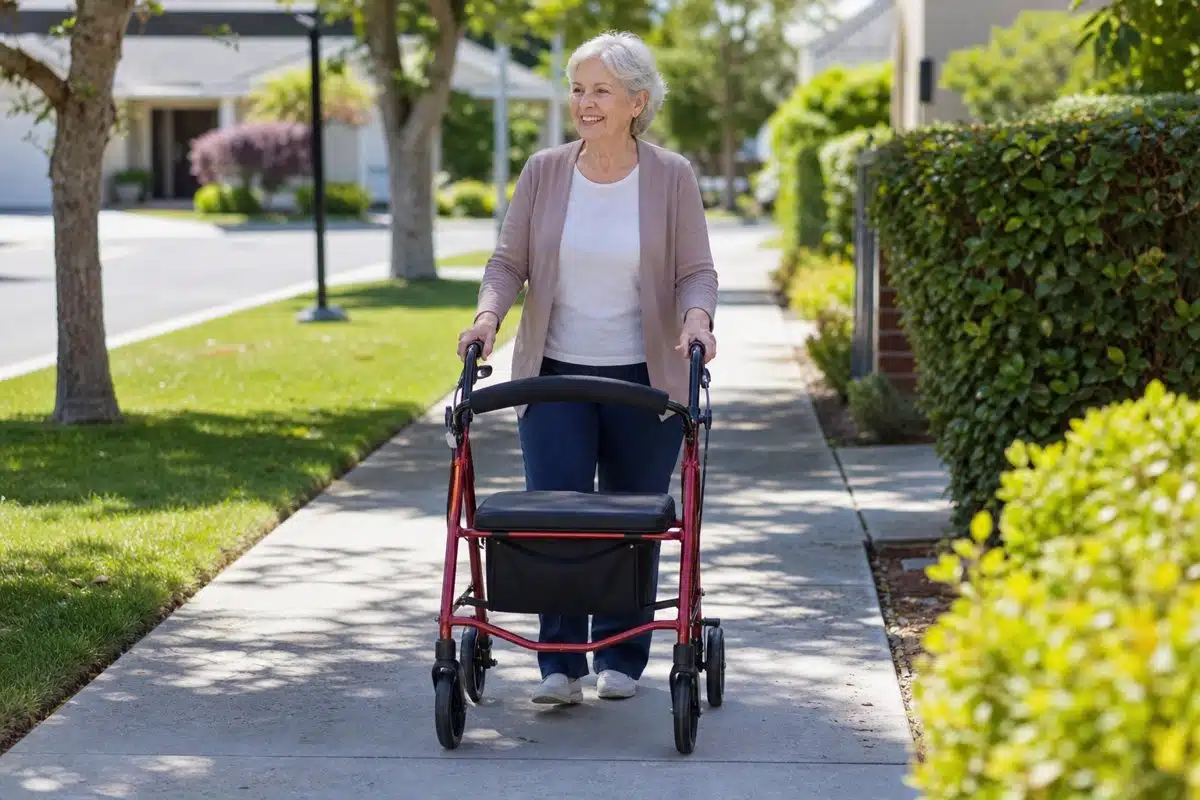
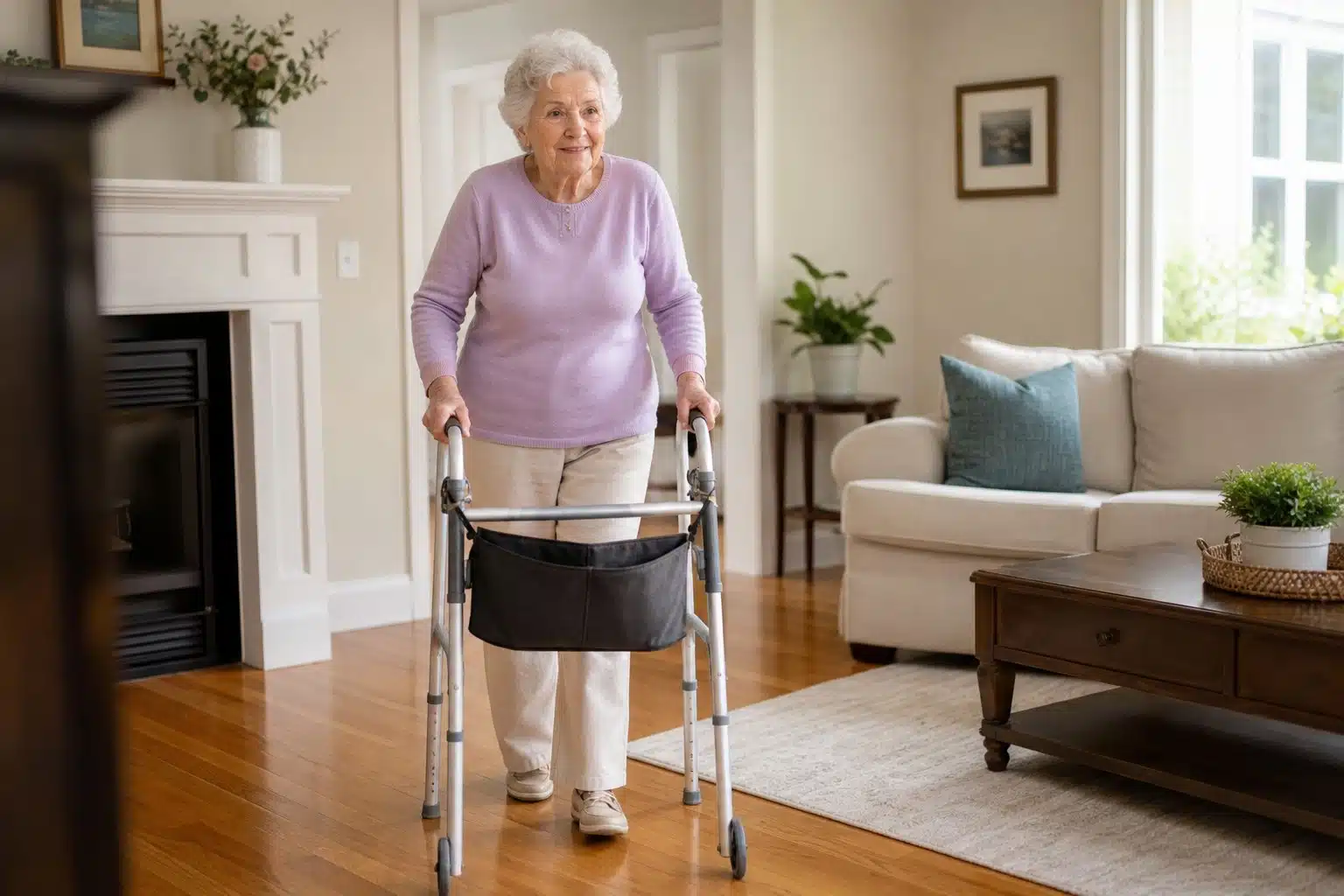
Can Seniors Use Walkers on Stairs?
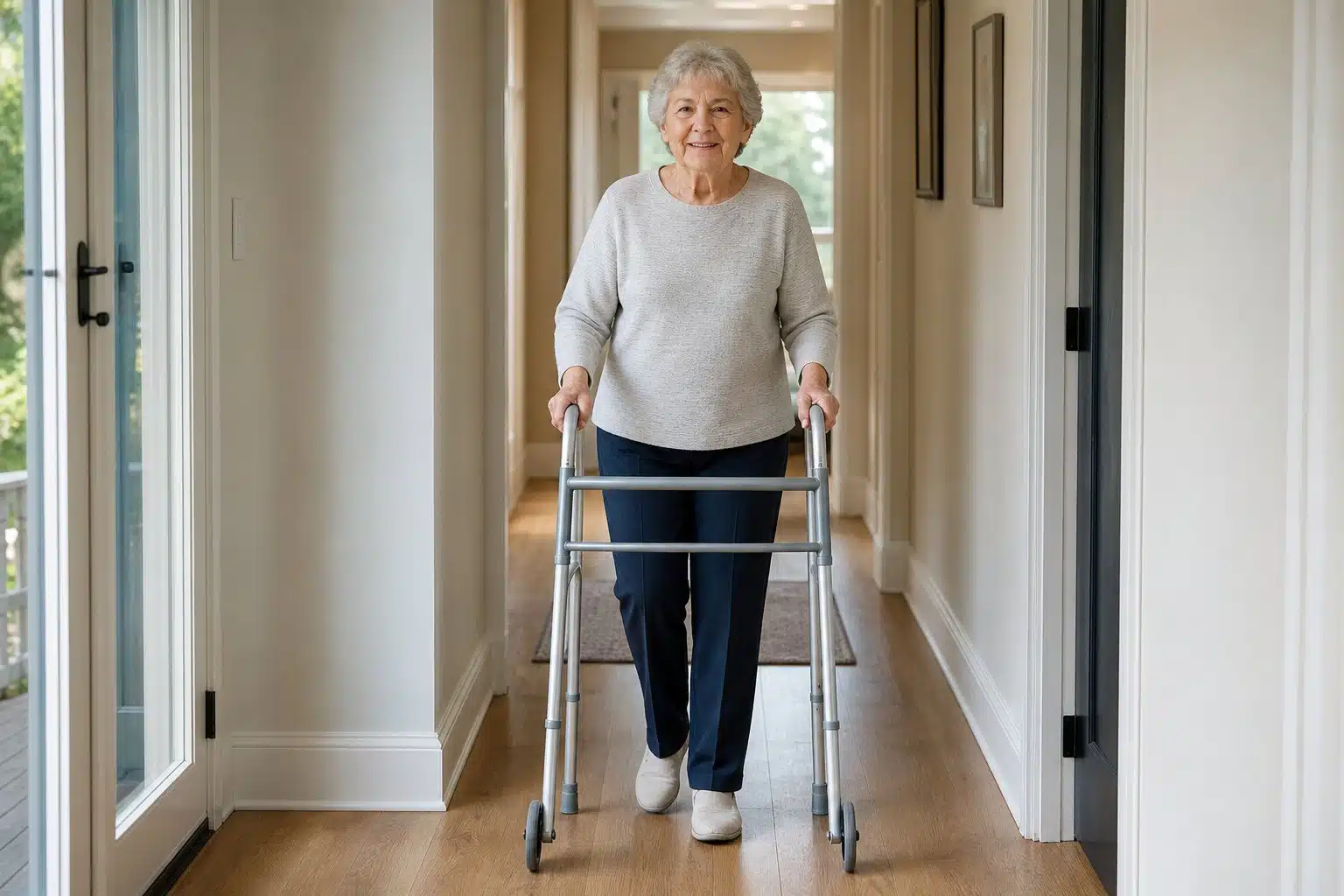
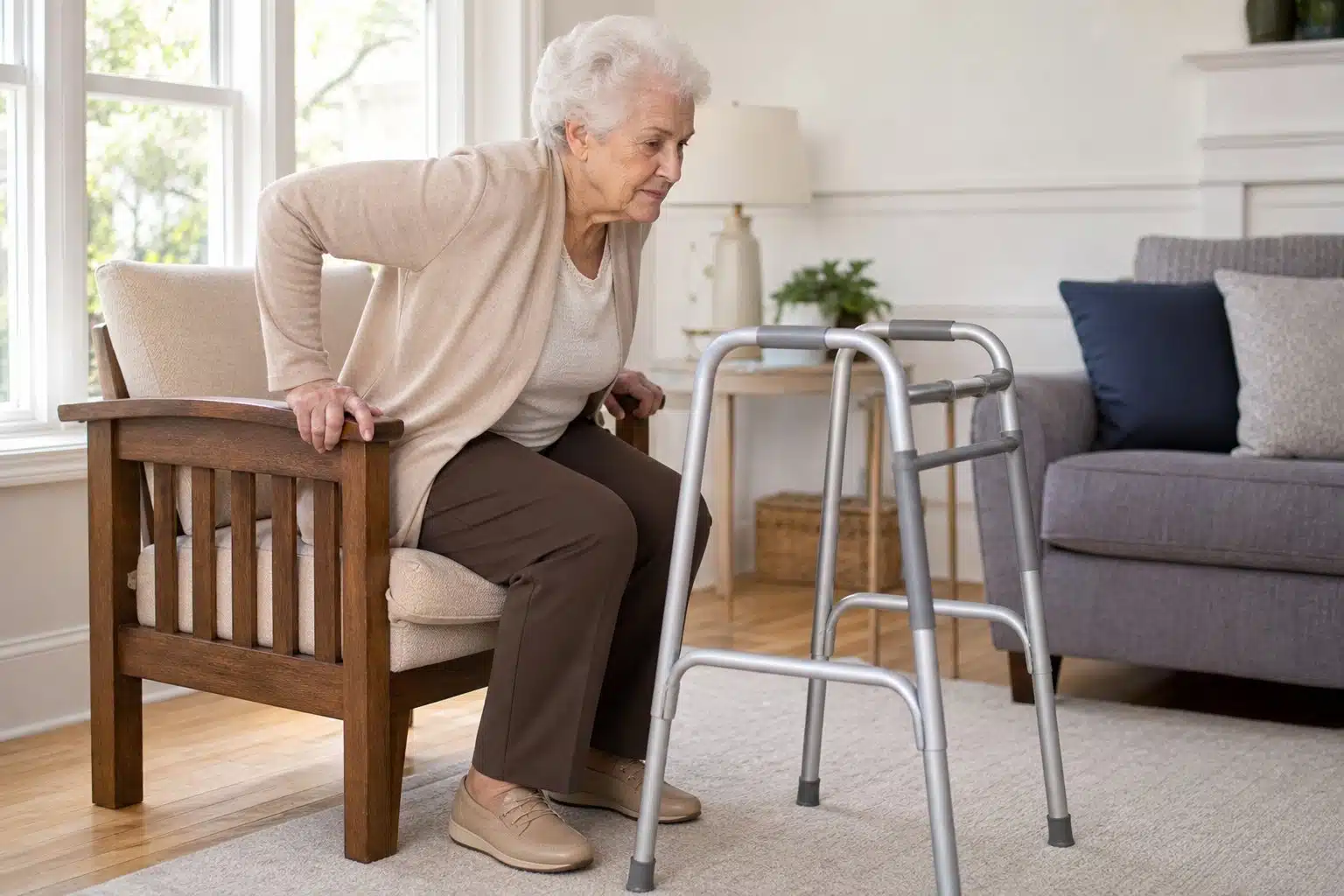
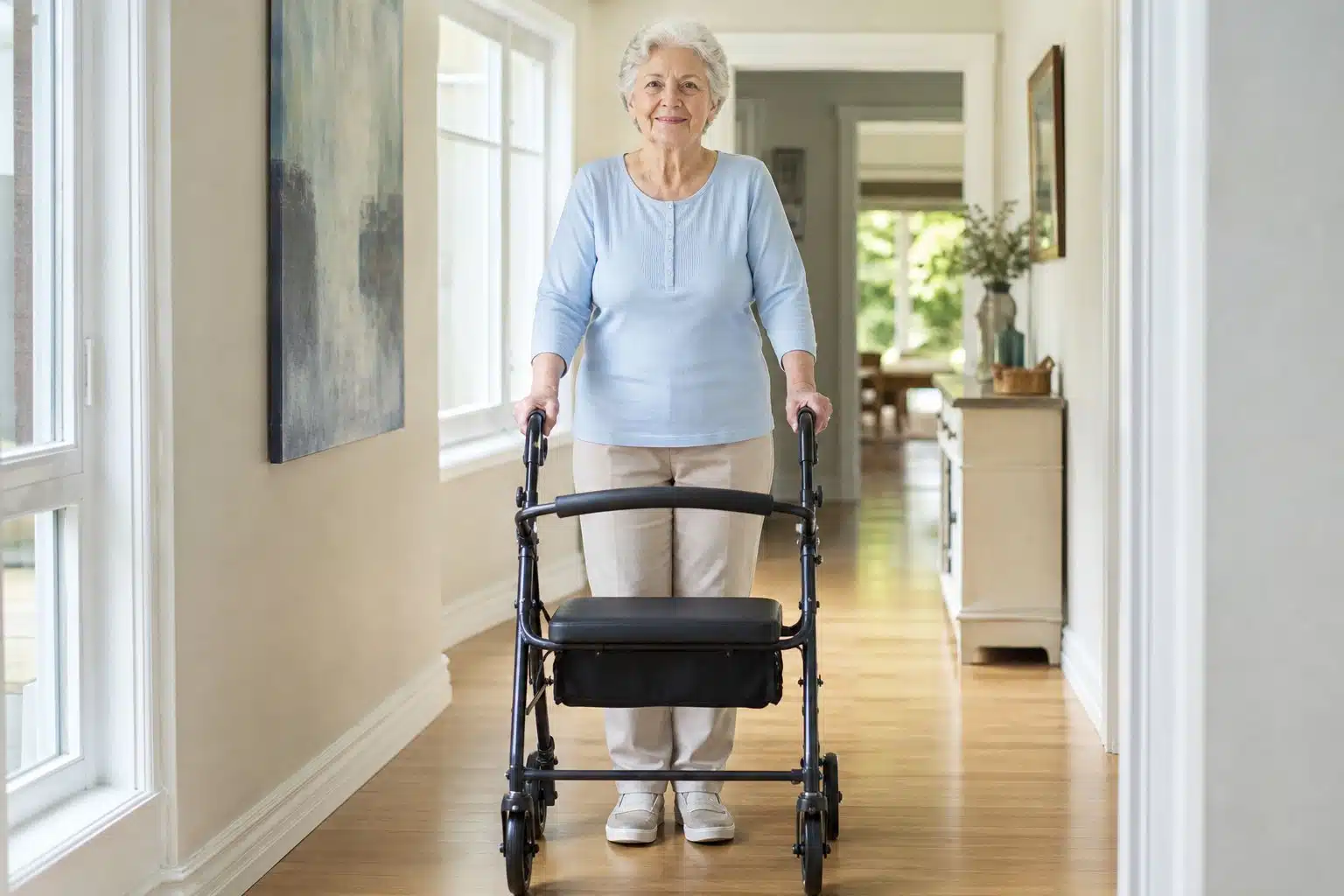
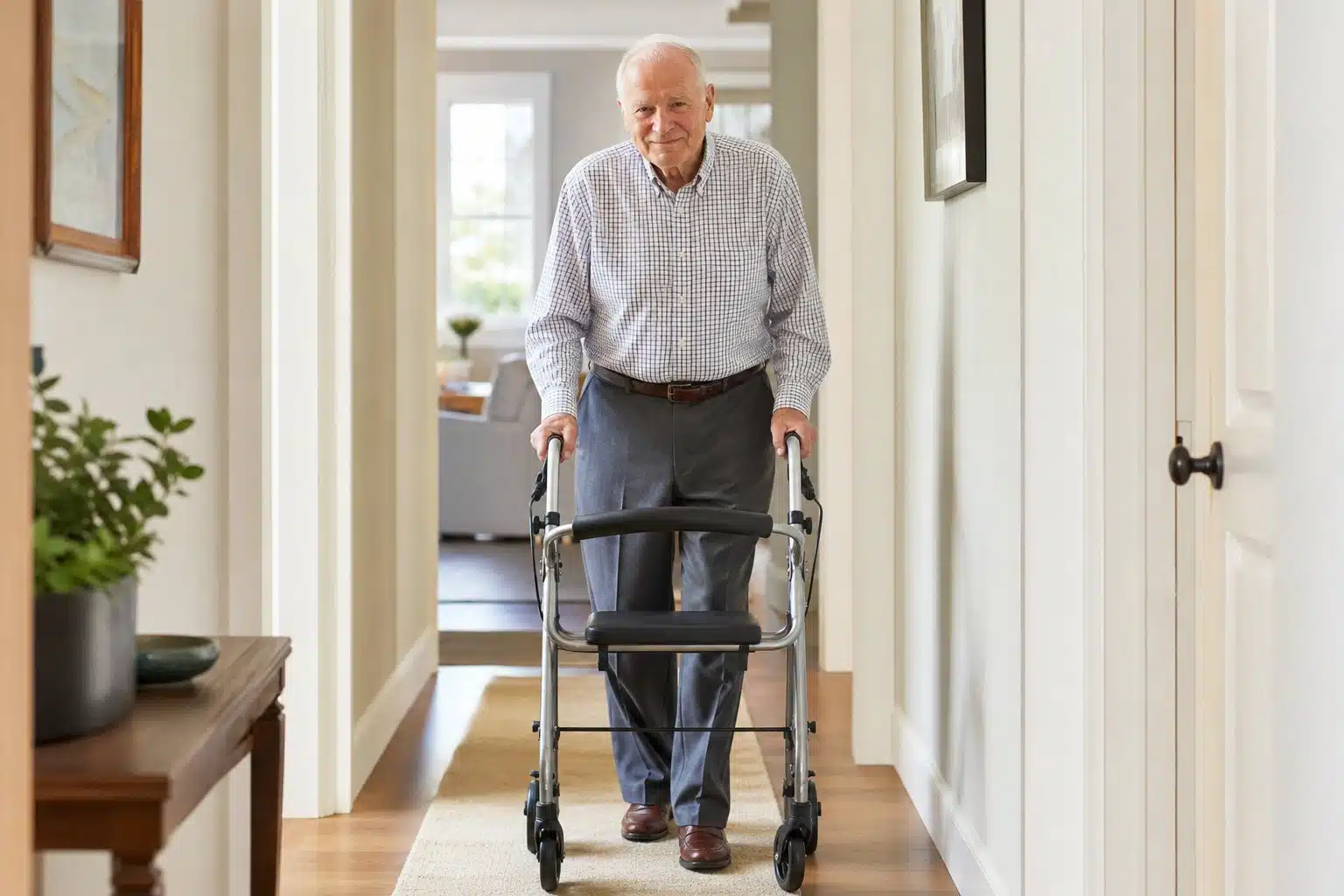
Standard walkers and rollators are designed primarily for movement across suitable level surfaces.
They shouldn’t be treated as ordinary stair-climbing equipment.
A rollator can roll unexpectedly, and lifting a standard walker onto steps can compromise balance.
Some people may receive specialist training for managing a particular step or staircase with a suitable mobility aid.
Never attempt this without assessment and specific instruction from a qualified healthcare professional.
If a senior relies on a walker for everyday movement, an occupational therapist should assess whether the staircase remains appropriate.
Read: How to Choose the Right Walker for an Elderly Person
Read: Rollator vs. Standard Walker: Which Is Better for Seniors?
When Should Elderly Adults Consider a Stair Lift?
A stair lift may help someone who has difficulty climbing stairs but can transfer safely onto and off the lift.
These systems carry a seated person along a fixed rail installed beside the staircase.
There are models for straight and curved staircases.
A stair lift may be worth considering when:
- Stair climbing causes significant pain or exhaustion.
- Leg weakness makes climbing difficult.
- Someone struggles to manage stairs despite suitable modifications.
- A professional recommends reducing stair climbing.
- Moving essential rooms downstairs isn’t practical.
A stair lift isn’t suitable for everyone.
The user must be able to transfer safely, remain seated, operate the controls, and use the safety belt as instructed.
Some people need assistance with transfers or may require a different accessibility solution.
A professional assessment should come before purchasing a lift.
Are Stair Lifts Better Than Stair Assist Devices?
Stair assist devices vary widely.
Some provide additional hand support, while others are mechanical systems designed to help someone move along the staircase.
They aren’t interchangeable with stair lifts.
A person with significant leg weakness may still be unable to climb safely using an extra support rail.
I would be cautious about products that promise to make stairs safe without addressing the person’s actual mobility limitations.
For substantial mobility problems, seek an occupational therapy assessment before choosing equipment.
How to Choose Stair Safety Products for Seniors
Stair safety products should address a specific hazard.
A product that improves grip won’t fix a loose handrail. Better lighting won’t solve severe leg weakness.
Start by identifying the problem.
Non-Slip Stair Treads
Look for thin, textured treads designed for the existing stair surface.
Check the adhesive requirements, cleaning instructions, and whether the edges sit flat.
Avoid thick products that create raised edges.
For wooden stairs, confirm compatibility with the floor finish.
Motion Sensor Stair Lights
Choose lights that provide enough illumination to see the steps clearly.
Consider battery life, sensor coverage, mounting position, and whether the light switches on before someone reaches the staircase.
Hardwired lighting is often preferable for primary illumination.
Handrail Accessories
Look for secure mounting systems and comfortable gripping surfaces.
Handrails and extensions must be compatible with the staircase and structurally supported.
Don’t rely on a decorative grab handle or temporary accessory as a replacement for a properly installed handrail.
Stair Edge Visibility Strips
Choose strips that contrast clearly with the existing stair color.
They should be securely fixed, low-profile, and appropriate for the surface.
Avoid products that peel easily or introduce raised edges.
Which Stair Safety Improvements Should You Choose First?
For most households, I would prioritize the changes that address the greatest immediate risks.
For Seniors With Slippery Wooden Stairs
Start by checking the condition of the steps.
Consider suitable non-slip stair treads, improve lighting, and make sure the handrails are secure.
Avoid loose mats or temporary coverings.
For Seniors With Poor Vision
Focus on bright, even lighting and clear contrast between stair edges.
Make sure there are no confusing shadows or reflective surfaces.
An eye examination may also help identify vision problems affecting stair use.
For Seniors With Arthritis or Weak Legs
Secure handrails are essential, but environmental changes alone may not provide enough support.
Ask a physical therapist or occupational therapist to assess stair climbing.
If climbing causes significant pain or instability, consider a stair lift or a main-floor living arrangement.
For Families on a Tight Budget
Begin with a careful staircase inspection.
Remove clutter, replace failed light bulbs, arrange repairs for loose coverings, and check that existing handrails are secure.
Then prioritize affordable improvements such as suitable grip strips and better lighting.
Don’t postpone essential structural repairs simply because they cost more.
Stair Safety Checklist for Seniors
Use this checklist when inspecting stairs at home.
- Are the handrails secure and easy to grip?
- Are suitable handrails available on both sides where practical?
- Can every step be clearly seen?
- Are light switches accessible at both ends?
- Do stair treads provide suitable slip resistance?
- Are carpet and stair coverings firmly secured?
- Are all steps even and free from damage?
- Are stair edges easy to distinguish?
- Are stairs and landings free from clutter?
- Does footwear fit securely and provide traction?
- Are outdoor steps clean and properly drained?
- Has a professional assessed any significant mobility problems?
If you find several hazards, start with problems that present an immediate fall risk.
Loose handrails, damaged steps, and significant balance difficulties deserve particular attention.
Frequently Asked Questions About Stair Safety
What Is the Safest Way for an Elderly Person to Use Stairs?
The safest method depends on the person’s balance, strength, vision, and medical needs. Secure handrails, good lighting, appropriate footwear, and a clear staircase help reduce hazards, while a physical therapist can teach a suitable climbing technique.
How Do You Make Steep Stairs Safer for Elderly Adults?
Start with secure handrails, adequate lighting, slip-resistant surfaces, and clearly visible step edges. If the staircase is unusually steep or someone struggles to climb, arrange a professional assessment because accessories alone may not make the stairs safe.
Are Carpeted Stairs Safer Than Wooden Stairs for Seniors?
Neither surface is automatically safer. Securely fitted carpet may provide traction, while loose carpet can create tripping hazards, and wooden stairs may need suitable slip-resistant treatment.
What Is the Best Non-Slip Material for Elderly Stairs?
The best material depends on the existing stair surface, indoor or outdoor use, and the person’s mobility needs. Low-profile textured treads or professionally installed slip-resistant coverings are generally preferable to loose mats or raised strips.
When Should an Elderly Person Stop Using Stairs?
There isn’t a particular age when someone must stop using stairs. Repeated falls, severe weakness, inability to use the handrail safely, or significant difficulty climbing are reasons to arrange a professional assessment and consider safer alternatives.
Final Thoughts on Making Stairs Safer
Making stairs safer for elderly adults doesn’t always require expensive renovations.
I would start with secure handrails, good lighting, slip-resistant surfaces, and clear steps. These changes address several common causes of stair-related accidents.
For someone with poor balance, arthritis, or limited mobility, the next step should be a professional assessment rather than buying more accessories and hoping they’ll solve the problem.
The aim is simple. Help older adults move around their homes with greater confidence while reducing avoidable fall hazards.
For more advice on reducing risks throughout the home, read our Home Safety Checklist for Seniors.
Sources and Further Reading
- Centers for Disease Control and Prevention: Older Adult Falls
- National Institute on Aging: Falls and Fractures in Older Adults
- U.S. Consumer Product Safety Commission: Home Safety
- 2010 ADA Accessibility Standards (accessibility reference, not a universal requirement for private residential stairs).