
Knowing how to make nighttime bathroom trips safer for seniors can help older adults reduce their risk of falls and feel more confident getting out of bed after dark.
This guide is for seniors, family caregivers, and anyone helping an older parent stay independent at home, based on fall prevention guidance from the CDC and National Institute on Aging.
Getting up to use the bathroom might seem like a simple task. But at 2 a.m., when you’re half asleep, the bedroom is dark, and your legs feel a little stiff, that short walk can become surprisingly difficult.
The good news is that many nighttime bathroom hazards are preventable. You don’t necessarily need an expensive bathroom remodel. Better lighting, a clear walking route, supportive equipment, and a few changes to your bedtime routine can make a meaningful difference.
Quick Comparison: Nighttime Bathroom Safety Solutions
| Safety solution | Best for | Installation or weight | Cost level |
|---|---|---|---|
| Motion-sensor night lights | Lighting the route to the bathroom | Plug-in or battery-powered | Low |
| Bedside motion-activated light | Seeing clearly when getting out of bed | Usually lightweight | Low |
| Bathroom grab bars | Providing support near the toilet | Secure wall mounting required | Low to medium |
| Toilet safety rails | Extra support when sitting and standing | Depends on model | Low to medium |
| Raised toilet seat | Reducing how far someone must lower themselves | Check toilet compatibility | Low to medium |
| Non-slip bathroom flooring | Improving traction on wet surfaces | Depends on flooring | Medium to high |
| Bedside commode | Avoiding a long walk to the bathroom | Portable, capacity varies | Medium |
| Personal emergency alert system | Calling for help after a fall | Wearable device | Varies, often ongoing fees |
You don’t need every item on this list. I’d start by looking at the actual problems someone faces during the night, then choose changes that address those risks.
Why Nighttime Bathroom Trips Are Risky for Older Adults
The Centers for Disease Control and Prevention identifies falls as a major health concern for older adults. Poor lighting, medication effects, balance problems, and household hazards can all contribute.
Several factors make nighttime trips to the bathroom particularly challenging.
Poor Visibility in Dark Hallways
As we age, our eyes generally need more light to see clearly. Adjusting between darkness and bright light can also become slower.
A hallway that looks perfectly safe during the day might be difficult to navigate at night.
Door frames, furniture, changes in floor level, and objects left on the floor become harder to spot.
Feeling Dizzy When Standing Up
Some older adults experience a sudden drop in blood pressure when standing, known as orthostatic hypotension.
This can cause dizziness, blurred vision, or a feeling of weakness.
Getting straight out of bed and walking toward the bathroom before the dizziness settles increases the risk of falling.
Stiff Joints and Reduced Balance
After several hours in bed, some people experience stiffness in their knees, hips, or ankles.
The first few steps may feel less steady than normal.
Anyone who uses a walker or cane during the day should have their prescribed mobility aid within easy reach at night.
Urgent Need to Use the Toilet
Bladder urgency can make people rush.
Someone worried about reaching the toilet in time may move faster than their balance allows.
This becomes particularly concerning when the bathroom is some distance from the bedroom.
How to Make Nighttime Bathroom Trips Safer for Seniors
I would focus on the entire journey, starting at the bed and ending when the person returns safely.
Making the bathroom safer is helpful, but there’s little benefit if someone has to cross a dark, cluttered hallway to reach the toilet.
1. Install Motion-Sensor Night Lights

Motion-sensor night lights are one of the simplest improvements you can make.
They switch on when someone approaches, providing light without requiring a person to find a wall switch.
I’d consider placing them near the bed, along the hallway, at the bathroom entrance, and near the toilet.
Choose lights that provide enough illumination to identify obstacles without creating uncomfortable glare.
Warm, diffused lighting often feels more comfortable during nighttime trips than a harsh overhead bulb.
Before buying, check whether the sensor detects movement from the direction someone will approach.
Some models work well in open spaces but struggle when mounted behind furniture or around corners.
Battery-powered lights are useful where outlets aren’t available, although you’ll need to check the batteries regularly.
2. Keep the Route to the Bathroom Clear

Take a walk from the bed to the bathroom and look for anything that might cause someone to trip.
Common hazards include loose rugs, electrical cables, shoes, laundry baskets, and small pieces of furniture.
Remove unnecessary objects and secure any cables away from the walking route.
I’d also avoid placing decorative tables or storage baskets in narrow hallways.
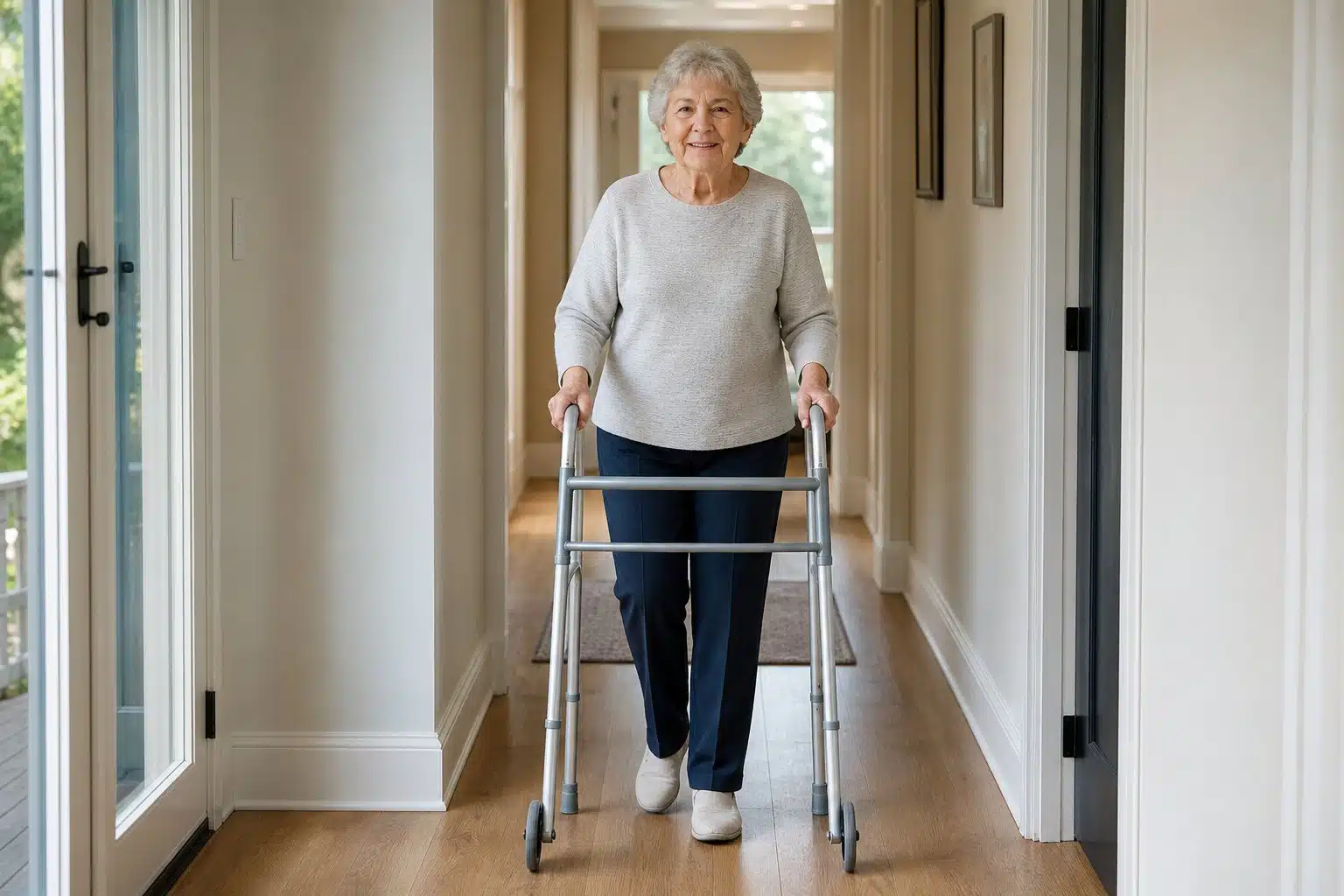
Check that doors open fully and that a walker can pass through without catching on furniture.
If flooring changes between rooms, make sure the transition is level or properly secured.
Loose mats are particularly concerning because their edges can curl or move underfoot.
The CDC recommends removing tripping hazards and improving home lighting as part of fall prevention.
: Home Safety Checklist for Seniors
3. Make Getting Out of Bed Easier
A safer bathroom trip begins before someone takes their first step.
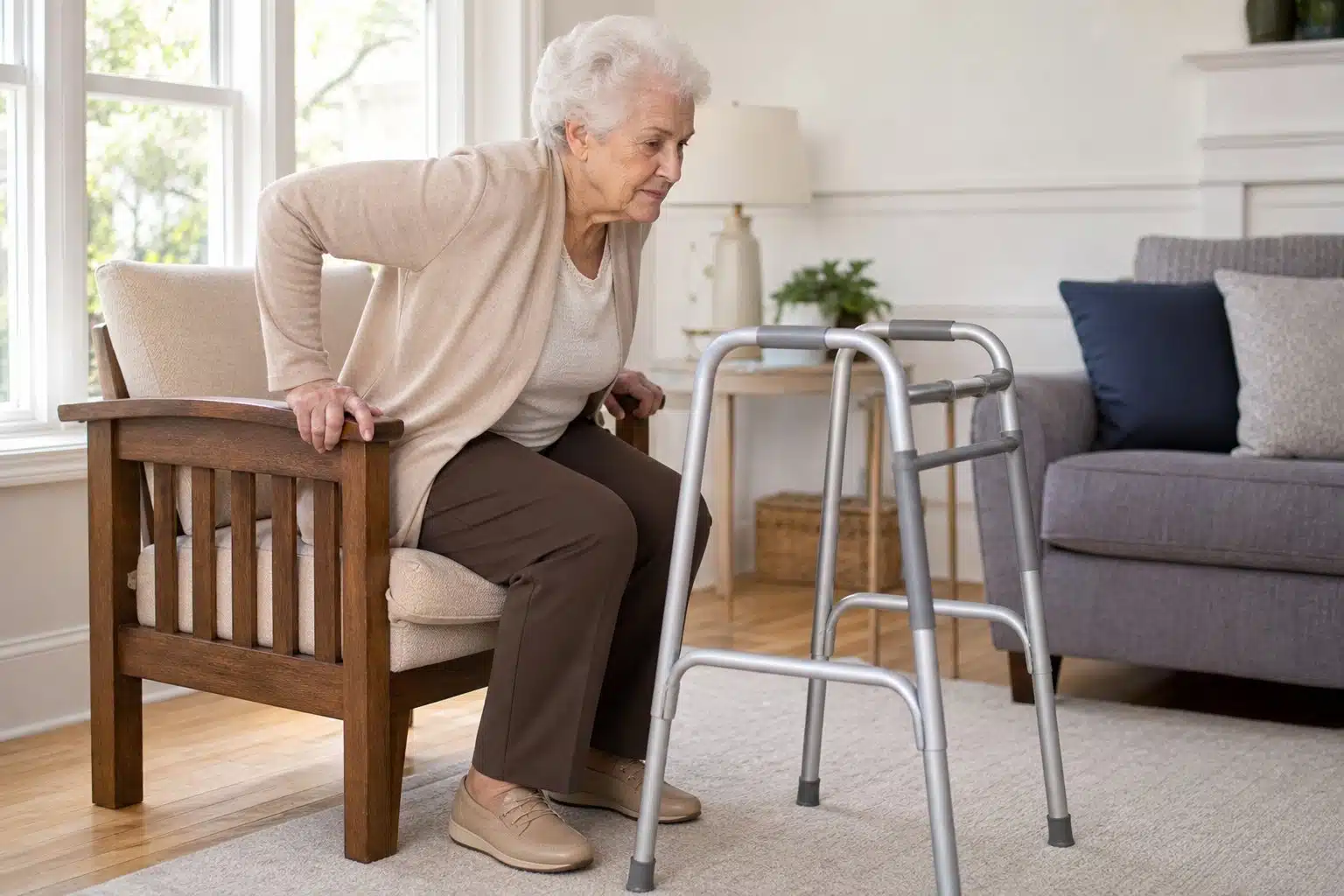
The bed should allow the person to sit with their feet supported on the floor. A bed that’s too high or too low may make standing difficult.
Encourage a simple routine:
- Sit upright slowly.
- Move toward the edge of the bed.
- Place both feet firmly on the floor.
- Pause briefly and check for dizziness.
- Stand using appropriate support.
- Wait until balance feels steady before walking.
If dizziness occurs, sit back down. Repeated dizziness, fainting, or near-falls should be discussed with a healthcare professional.
Some people benefit from a properly fitted bedside support rail or transfer aid.
Bed rails need particular care. Poorly fitted rails can create dangerous gaps where a person becomes trapped. Use only equipment suitable for the bed and the person’s needs, ideally following an occupational therapist’s assessment.
4. Install Properly Secured Grab Bars Near the Toilet

Grab bars provide a stable handhold when someone sits down, stands up, or adjusts their position.
For older adults with reduced leg strength or balance difficulties, a correctly positioned grab bar can make toilet transfers easier.
Depending on the bathroom layout, useful positions may include a horizontal bar beside the toilet or a vertical bar near the approach.
The best placement depends on the person’s height, strength, transfer technique, and wall construction.
Grab bars must be securely anchored into suitable structural support or installed with an appropriate engineered mounting system.
Don’t rely on ordinary towel rails or suction-mounted accessories as primary weight-bearing supports.
For a detailed explanation of grab bar positions and installation considerations, see:
: Where Should Grab Bars Be Placed in a Bathroom for Seniors?
5. Consider Toilet Safety Rails or a Raised Toilet Seat

Standing up from a low toilet can be difficult for someone with weak knees, arthritis, or reduced leg strength.
Toilet safety rails provide handholds beside the seat.
A raised toilet seat reduces the distance someone must lower themselves before sitting.
Some people benefit from both, although compatibility and stability need checking carefully.
Before choosing equipment, consider whether the person can transfer safely, whether the toilet seat is already an appropriate height, and whether there is enough room for a walker.
A raised seat isn’t automatically safer for everyone. If someone cannot keep their feet firmly supported, extra height may reduce stability.
An occupational therapist can help identify a suitable arrangement.
6. Choose Safe Bathroom Flooring
Bathroom floors are especially hazardous when wet.
Water from a shower, bath, or sink can leave smooth surfaces slippery.
Where possible, choose flooring with suitable slip resistance for bathroom conditions.
Keep the floor dry and repair leaks promptly.
I would avoid relying on loose bathroom rugs, even ones advertised as non-slip. They can move, curl, or catch a person’s foot or walking aid.
If a mat is necessary, choose a low-profile option with secure backing and check that it stays firmly in place.
For people with significant balance difficulties, fixed slip-resistant flooring is generally a better long-term solution.
7. Keep a Walker or Cane Within Easy Reach

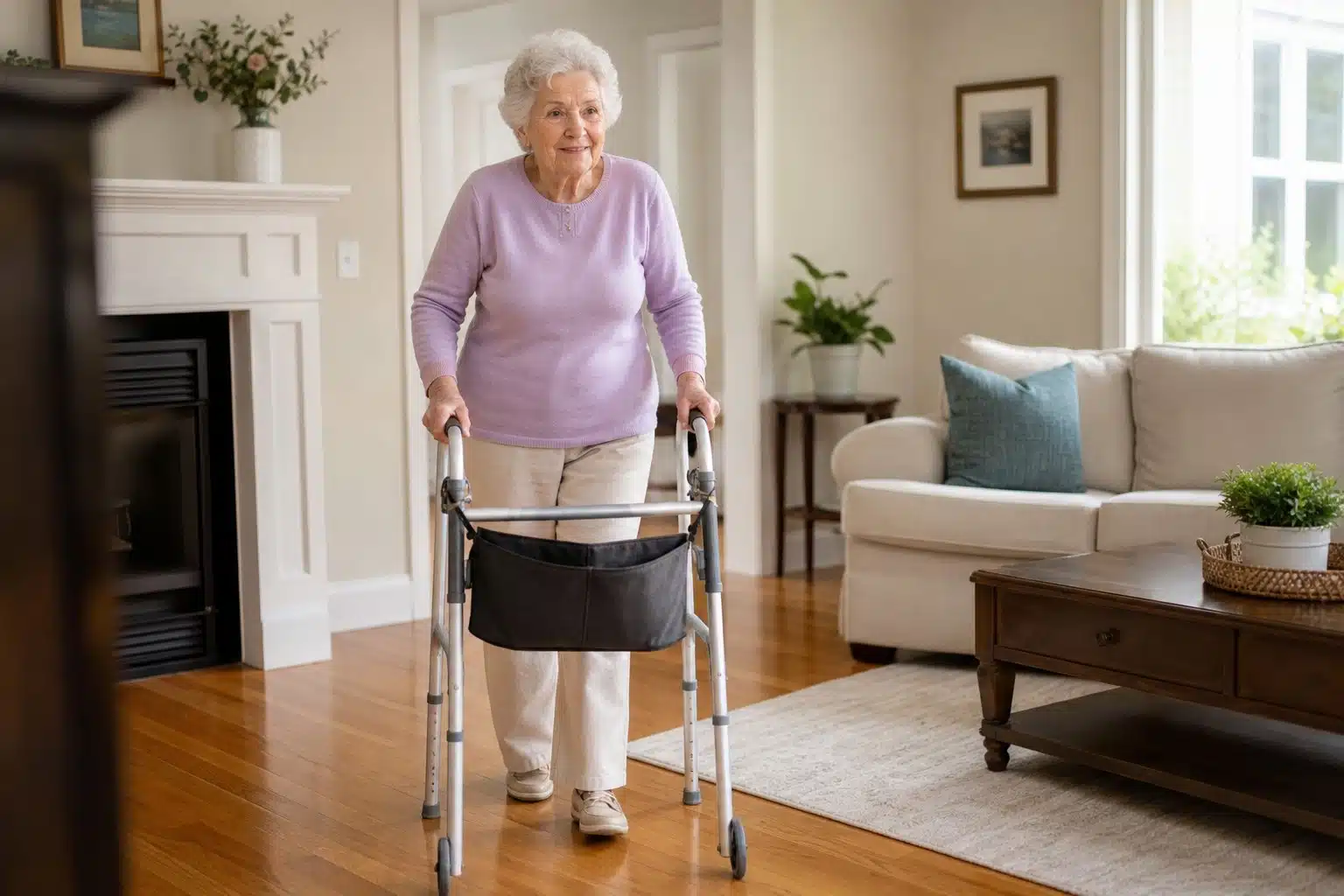
A mobility aid isn’t helpful if someone has to walk across the room to reach it.
Keep the prescribed walker or cane in a consistent position beside the bed.
Make sure the person can reach it without leaning dangerously or twisting.
Check that the walking aid is in good condition and properly adjusted.
For walkers, inspect the wheels, brakes, and rubber tips where applicable.
A walker should also fit through bedroom and bathroom doorways.
If someone regularly leaves their walker outside the bathroom because the doorway is too narrow, that needs addressing.
A smaller or different mobility aid should only be considered if it’s suitable for their balance and mobility needs.
: How to Choose the Right Walker for an Elderly Person
8. Wear Supportive, Non-Slip Footwear
Walking barefoot or wearing loose slippers can increase the risk of slipping or tripping.
Choose footwear that fits securely, has a low stable heel, and provides good traction.
Backless slippers may slip off when someone walks or turns.
I’d also avoid oversized slippers that catch on carpet edges.
For someone who needs to get up frequently, keep their footwear beside the bed in a predictable position.
They shouldn’t need to bend awkwardly or search under furniture to find their shoes.
Socks alone may provide insufficient grip, particularly on smooth bathroom flooring.
9. Consider a Bedside Commode

A bedside commode can be helpful when the bathroom is far from the bedroom or someone has difficulty walking safely at night.
It reduces the distance a person needs to travel when they urgently need the toilet.
Some commodes have armrests and adjustable seat heights.
Others can serve as toilet safety frames during the day, depending on their design.
Choose a model with a stable frame, suitable weight capacity, and appropriate seat height.
Position it on a firm, level surface with enough room for safe transfers.
A commode should never block the route out of the bedroom.
Regular cleaning and proper disposal of waste are essential.
For someone with significant mobility limitations, a healthcare professional or occupational therapist should assess whether a bedside commode is appropriate and how transfers should be managed.
10. Make Sure Help Is Available After a Fall
Even with sensible precautions, falls can still happen.
A personal emergency alert system can help someone contact assistance when they cannot reach a phone.
Options include wearable buttons, monitored alert devices, and systems that connect to a family caregiver.
Some devices detect certain falls automatically, but no system detects every fall.
For someone living alone, consider whether the device works throughout the home and whether it needs a subscription, cellular signal, or Wi-Fi connection.
A mobile phone kept beside the bed is useful too, although someone who falls in the hallway may not be able to reach it.
A caregiver call button can be useful when another person is available to respond in the home. It shouldn’t be treated as a replacement for emergency services.
How to Reduce the Need for Nighttime Bathroom Trips
Improving bathroom safety is important, but it’s also sensible to understand why someone needs the toilet frequently at night.
Waking to urinate several times is called nocturia.
It’s common among older adults, but frequent nighttime urination shouldn’t automatically be dismissed as a normal part of aging.
Possible causes include bladder conditions, diabetes, certain medications, sleep disorders, and fluid shifts associated with some medical conditions.
Review Evening Drinking Habits
Some people find that reducing large drinks shortly before bedtime helps limit nighttime urination.
Caffeine and alcohol may also worsen symptoms for some people.
But deliberately restricting fluids throughout the day can lead to dehydration, dizziness, and other problems.
A better approach is to maintain appropriate daytime hydration and discuss persistent nighttime urination with a healthcare professional.
Anyone with heart failure, kidney disease, or prescribed fluid restrictions should follow their clinician’s specific advice.
Review Medication Timing
Some medications, particularly diuretics, increase urine production.
If someone regularly needs the toilet several times during the night, ask their doctor or pharmacist whether medication timing may contribute.
Never change the dose or timing of prescribed medication without professional guidance.
Some sleeping tablets, sedatives, and other medications may also affect alertness or balance.
A medication review can help identify avoidable risks.
Use the Toilet Before Going to Bed
A final bathroom visit before bedtime is a simple habit that may help reduce the chance of waking soon after falling asleep.
It won’t eliminate nocturia caused by an underlying condition, but it can be a useful part of a consistent evening routine.
Speak to a Doctor About Frequent Nighttime Urination
If nighttime bathroom trips become more frequent, interrupt sleep regularly, or cause someone to rush, arrange a medical review.
A clinician may recommend keeping a bladder diary to record drinking habits and bathroom visits.
Seek prompt medical advice if symptoms include painful urination, blood in the urine, fever, or new difficulty emptying the bladder.
Which Nighttime Bathroom Safety Improvements Should You Prioritize?
Not every household needs the same changes.
I’d choose improvements based on the person’s mobility, the bathroom layout, and the problems they experience most often.
For Seniors Who Walk Independently
Start with motion-sensor lighting, a clear walking route, supportive footwear, and a safe bathroom floor.
These changes address common household hazards without requiring major alterations.
For Seniors With Balance Problems
Prioritize properly installed grab bars, suitable toilet supports, accessible lighting, and an appropriate mobility aid.
If someone feels unsteady when standing or turning, an occupational therapy assessment can help identify safer transfer techniques and equipment.
For Seniors Who Frequently Rush to the Bathroom
Consider whether a bedside commode would reduce the need for hurried walking.
Discuss frequent urination or urgency with a healthcare professional rather than relying only on equipment.
For Seniors Living Alone
Alongside basic fall prevention measures, consider a reliable way to call for help.
A personal emergency alert device may provide additional reassurance, particularly for someone with a history of falls.
A Simple Nighttime Bathroom Safety Checklist
Use this checklist to inspect the bedroom, hallway, and bathroom before bedtime.
Before-bed safety check
Nighttime Bathroom Safety Checklist
All 10 safety checks completed!
Common Questions About Nighttime Bathroom Safety
Why Do Seniors Fall When Going to the Bathroom at Night?
Nighttime falls may result from poor lighting, reduced balance, dizziness after standing, or rushing to reach the toilet. Medication effects, unsuitable footwear, and household trip hazards can also contribute.
What Is the Best Lighting for Seniors at Night?
Low-glare motion-sensor lighting is a practical option because it illuminates the walking route without requiring someone to find a switch. Lights should provide enough visibility to identify obstacles and changes in floor level.
Are Bedside Commodes Safe for Elderly People?
A properly selected and positioned bedside commode can reduce the need to walk long distances at night. The frame must be stable, the seat height appropriate, and the person able to transfer safely, with assistance where needed.
Should Seniors Leave the Bathroom Light On All Night?
Leaving a bathroom light on may help with visibility, but a bright light can create glare and disturb sleep. Motion-activated or dim night lighting is often a more comfortable option, provided the walking route remains clearly visible.
How Can I Stop My Elderly Parent From Rushing to the Toilet at Night?
Make the bathroom easier to reach, provide adequate lighting, and consider a bedside commode if the walking distance is a problem. Frequent urgency should also be assessed by a healthcare professional because some underlying causes are treatable.
Making Nighttime Bathroom Trips Safer Starts With Small Changes
If I were helping an older relative improve their nighttime bathroom safety, I’d start by walking the route from their bed to the toilet.
I’d check the lighting, remove anything that might cause a trip, and make sure they have stable support when standing and sitting.
Then I’d look at whether they’re rushing, experiencing dizziness, or struggling with the distance.
For some people, a few night lights and a clearer hallway may be enough. Others may benefit from grab bars, toilet safety equipment, a bedside commode, or professional mobility advice.
The goal is straightforward: make every nighttime bathroom trip as safe and manageable as possible while helping older adults maintain their independence.
For more ways to improve bathroom safety throughout the day, read our Bathroom Safety Tips for Seniors guide.
Sources and Further Reading
The following authoritative resources provide additional information on fall prevention, home safety, and bathroom accessibility.
1. Centers for Disease Control and Prevention: Older Adult Fall Prevention
Information on fall risks, prevention strategies, and reducing household hazards.
2. National Institute on Aging: Preventing Falls and Fractures in Older Adults
Guidance on fall prevention, medication considerations, and safer living environments.
3. CDC STEADI: Older Adult Fall Prevention
Clinical resources covering fall risk assessment, balance problems, and prevention.
4. U.S. Access Board: ADA Accessibility Standards
Technical accessibility guidance covering grab bars, toilet clearances, and accessible bathroom design. ADA requirements generally apply to covered facilities rather than ordinary private homes, but can provide useful design references.